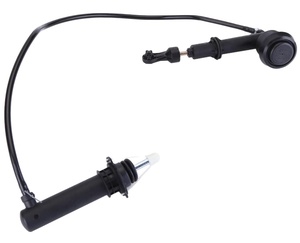

Heavy-duty powertrain assemblies, tilting units, and high-performance optoelectronic modules tested under aggressive cyclic vibration and thermal stress.
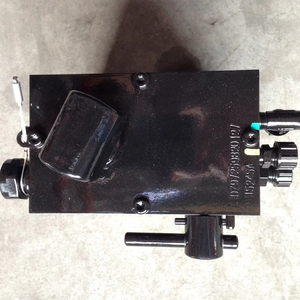
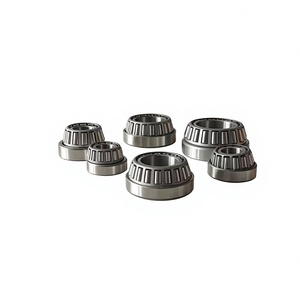
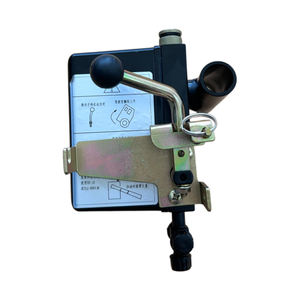

Optimizing photon emission, beam cut-off angles, and thermal dissipation systems for Japan's high-density Hanshin industrial infrastructure.
The dense multi-level expressways of Osaka (Hanshin Route 1 Loop and Route 16) require sharp Z-step optical cutoffs to eliminate glare for lower-riding passenger vehicles while maintaining a minimum 350-meter forward reach for heavy tractor-trailers navigating complex urban curves.
Port operations around Nanko, Yumeshima, and Sakishima expose optical modules to heavy saline fog, high coastal humidity, and pressurized automated wash cycles. Our pressure-equalizing ePTFE venting membranes prevent moisture pooling while blocking micro-saline particulates.
Long-distance fleet operations linking Osaka to Tokyo via the Meishin and Shin-Tomei corridors demand robust active copper-core PCB heat dissipation. Continuous 14-hour duty cycles are safeguarded by dynamic thermistor throttles that sustain luminous intensity without diode degradation.
How the 2024 Japanese logistics labor cap and heightened MLIT vehicle inspections drive commercial illumination architecture.
| Evaluation Parameter | Traditional Halogen / HID Retrofit | OEM-Tier LED Solid-State Assembly | Osaka Fleet Economic Impact |
|---|---|---|---|
| Luminous Flux / Watt | 18 – 35 lm/W (Rapid degradation) | 140 – 165 lm/W (Automotive-grade CSP) | Direct reduction of alternator draw; 1.8% fuel economy gain |
| Shaken Inspection Compliance | High failure rate due to beam scattering | Strict Left-Hand Traffic (LHT) Cut-Off | Zero re-inspection downtime at Kansai Transport Bureau checkpoints |
| Thermal Architecture | High infrared emission heats lens housing | A380 Die-Cast Housing + Anodized Fins | Prevents lens yellowing from highway salt chemical reactions |
| Driver Fatigue Index | 3200K (High eye-strain spectrum) | 5700K Daylight Spectrum (CRI > 85) | Mitigates overnight reaction lag for 2024 compliance routes |
With Japan’s driver overtime capped at 960 hours annually, nighttime transit speeds and route execution consistency are vital. Clean, unscattered illumination optimizes night driving speeds without driver fatigue, reducing route buffer times between Kansai and Kanto distribution hubs.
Modern Isuzu Giga, Hino Profia, and Mitsubishi Fuso Super Great trucks run sophisticated digital bulb-monitoring architectures. Our internal load balancers and decoupling chokes suppress line noise, clearing dashboard bulb-out codes and preventing radio-frequency hash.
Instead of requiring full unit replacement upon roadway lens impact, our modular commercial headlight platform features interchangeable polycarbonate external lenses and standardized ballast drawers, dramatically reducing lifecycle maintenance overhead for Osaka fleet yards.
Traceable manufacturing processes, standardized OEM cross-indexing, and end-to-end foreign trade management built to serve international distribution channels.
Our centralized export desk orchestrates heavy-duty truck, trailer, and industrial machinery components with rapid factory turnarounds. We bridge component engineering with direct overseas logistical routing, bypassing secondary layers to reduce overall lead times.
With thousands of active cross-reference numbers cataloged across European, Japanese, and international platforms, every component—from LED arrays and tilt pumps to clutch slave cylinders—is indexed by bolt pattern, line pressure, port threading, and voltage rating.
Our international operations are staffed by trade specialists fluent in English, Turkish, German, and French. Every inquiry is handled directly by engineering and shipping coordinators to confirm accurate technical briefs, custom private-label packing, and clean documentation.
Essential guidance on Japanese vehicle roadworthiness, shipping terms, sample checks, and custom optical manufacturing.