
260 MPa
Tensile Strength (HT250 / GG25)
< 0.05 mm
CNC Dynamic Balancing Runout
100%
OEM Cross-Reference Precision
18-24 Days
Port Caldera / Moín Transit Lead
Direct Component Supply
Heavy Commercial Vehicle Assemblies & Brake Hardware
Engineered for sustained torque absorption, severe downhill gradient thermal control, and zero premature structural cracking across American, European, and Asian heavy commercial platforms.

Hydraulic Tilt Mechanics
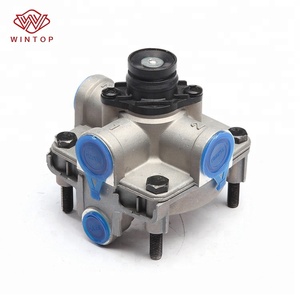
Use for Ben Truck Cabin Tilt Pump 0005538901 85.41723.6033 A0005538901
Braking Telematics & ABS
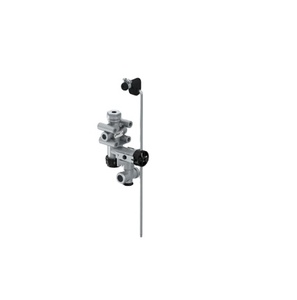
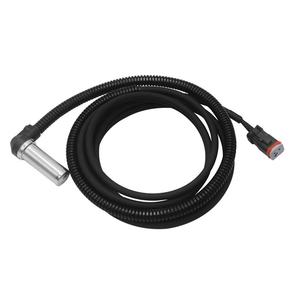
10328710 New ABS Wheel Speed Sensor for Truck Auto Part with 6 Month Warranty
Trailer Structural Systems
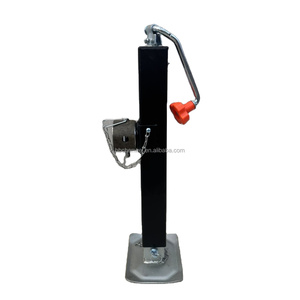
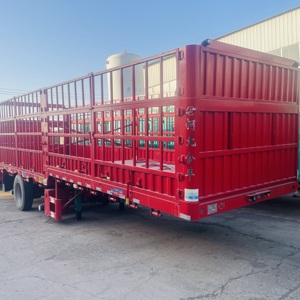
JINFENG 2/3 Axle 30-80T Steel Closed Pickup Side Wall Fence Semi Trailer Heavy Duty Landing Gear
Technical Whitepaper Analysis
Engineering Foundation Brake Drums for High Thermal Cyclic Stresses & Tropical Humidity
Commercial heavy-duty freight transport in the Republic of Costa Rica imposes mechanical demands unlike almost any other territory in Latin America. Operating between Pacific and Caribbean coastal elevations and navigating mountain passes through the Cordillera Central exceeding 3,000 meters above sea level requires foundation friction components that withstand intense friction-induced thermal spikes without material fatigue, bell-mouthing, or hot judder.
1. Microstructural Metallurgy: Grey Cast Iron HT250 / ISO 185 Grade 250
Standard aftermarket brake drums frequently suffer from micro-cracking and catastrophic circumferential fracture when exposed to sustained downhill braking maneuvers along corridors like Ruta 32 (Braulio Carrillo) or the Cerro de la Muerte on Ruta 2. Our brake drums are cast using high-density grey pearlitic iron (equivalent to SAE J431 G3000 / EN-GJL-250) optimized with precise carbon equivalents (3.9% to 4.15% CE). The micro-graphical graphite structure is controlled to ASTM Type A, size 4 to 6, guaranteeing uniform thermal conductivity (≥ 48 W/m·K) to accelerate dissipation away from the lining-contact interface.
By micro-alloying with Chromium (Cr 0.20–0.35%) and Copper (Cu 0.30–0.50%), the pearlitic matrix retains tensile stability at operating temperatures beyond 650°C. This chemical formulation prevents the phase transformation into ferrite that typically triggers severe friction loss, bell-mouth distortion, and erratic brake imbalance under commercial gross vehicle weights (GVW) reaching 48 metric tons.
2. Precision CNC Machining & Dual-Plane Dynamic Balancing
Rotational stability at operating speeds is paramount to eliminate high-frequency shudder, uneven brake shoe cam engagement, and premature failure of wheel-end oil seals and tapered roller bearings. Every drum undergoes computer-numerically controlled (CNC) internal boring and hub-pilot indexing in single-clamping operations. Runout tolerances (TIR) are locked within ≤ 0.05 mm, and radial out-of-round tolerances are held within 0.03 mm.
Furthermore, two-plane dynamic balancing is executed according to ISO 1940-1 Grade G6.3 specifications. Residual static unbalance is eradicated by precision milling slots along the perimeter flange—avoiding tack-welded balance weights that inevitably dislodge under the high-vibration environment of gravel-laden secondary agricultural access roads.
3. Atmospheric Corrosion Passivation in Marine-Tropical Environments
With annual relative humidity frequently exceeding 85% in Caribbean coastal transport sectors like Limón, bare cast iron surfaces are vulnerable to aggressive galvanic and atmospheric oxidation. Our brake drums are pre-treated through zinc-phosphate chemical bath immersion followed by an electrostatic water-dispersible anti-corrosive primer coating rated for over 240 hours of ASTM B117 neutral salt spray resistance. Non-braking surfaces are completely passivated against pitting corrosion, preserving the structural hub web thickness and stud hole integrity over multi-year operational cycles.
Localized Application Scenarios
Navigating Costa Rica’s Critical Logistics Arteries
Foundation brake drums tailored to specific hauling environments across the Central Valley, Atlantic corridor, and Pacific agricultural lowlands.
Ruta 32 & Braulio Carrillo Transit
The primary intermodal freight lifeline connecting the Central Valley to Puerto Moín. Characterized by continuous down-grade decelerations through rain forests with 90%+ humidity. Our thermal-stable metallurgy mitigates severe heat checking and catastrophic friction fade on dual-drive 6x4 tractor units hauling 40ft reefer boxes.
Pacific Corridors (Ruta 27 & Costanera Sur)
High-speed, ambient-heat heavy transport between San José, Puerto Caldera, and the southern agricultural basin. Sustained high-speed cruising coupled with emergency decelerations requires exact dynamic balancing to prevent steering vibrations and uneven tire wear under high-temperature asphalt exposure.
Agro-Industrial Agro-Logistics & Sugar Cane Haul
Off-highway harvesting of pineapples, bananas, and sugar cane in Guanacaste, San Carlos, and Puntarenas. Severe mud ingress, abrasive sand, and heavy side-tipping trailer stresses demand heavy-web drum cast configurations that resist internal abrasive scoring and rim deformation.
Fleet Modernization Trends
Commercial Vehicle Market Shifts in Costa Rica
Key regulatory, economic, and technological factors driving brake procurement requirements in San José, Alajuela, and Cartago.
Rigorous DEKRA Roadworthiness Audits
With national vehicle inspection protocols strictly enforced by DEKRA Costa Rica, commercial vehicles must demonstrate braking ovality, deceleration efficiency (>50%), and side-to-side force variation under 20%. Precision machined drums guarantee immediate compliance on roller brake testers.
Multi-Origin Fleet Composition Dynamics
Costa Rican transport companies utilize a hybrid fleet: traditional North American Class 8 tractors (Freightliner, Kenworth, Mack with Rockwell/Meritor 16.5" x 7" Q-Plus axles) running alongside modern European tractors (Mercedes Actros, Scania, Volvo) and Asian trucks (Sinotruk HOWO, Foton, Hino). Procurement desks require consolidated single-source supply covering all wheel-end standards.
Weight Reduction vs. Durability Demands
MOPT (Ministerio de Obras Públicas y Transportes) axle-load weight controls require fleet operators to optimize tare weight while maintaining absolute mechanical integrity. Fleet managers are turning to optimized web-thickness brake drums that shed unnecessary rotational mass while reinforcing outer heat bands.
Direct Sourcing Capabilities
Enterprise Strengths & Global Export Logistics
Combining the high-precision manufacturing capacity of Bursa's premier industrial ecosystem with structured B2B cross-referencing and export execution.
Bursa Industrial Center
Directly anchored in Bursa, Turkey’s epicenter for automotive engineering. Access to advanced foundries, induction melting lines, and tight-tolerance CNC production centers delivers tier-one quality at competitive landed pricing.
OEM Cross-Reference Precision
Over 10,000 active cross-references cataloged. Cross-indexing Meritor, Gunite, Webb, BPW, SAF-Holland, Mercedes, and Asian OE part numbers guarantees exact bolt-circle diameter (PCD), pilot bore, and drum offset matching.
Consolidated B2B Shipments
Combine foundation brake drums with air valves, spring brake chambers, leveling sensors, and landing gear assemblies into single consolidated FCL or LCL containers, dramatically lowering import customs fees and freight costs.
Complete Export Compliance
Full documentation suite prepared per Costa Rican Aduanas standards: Commercial Invoice, Packing List, EUR.1 / Certificate of Origin, Bill of Lading, and pre-shipment lab inspection test certificates.
Buyer Guidance
Frequently Asked Questions by Fleet Directors & Importers in Costa Rica
Essential technical, commercial, and logistical clarifications for importing heavy-duty truck brake drums and air systems.
What are the standard dimensions for Meritor-type drums used in Costa Rican fleets?
The vast majority of North American Class 8 tractors (Freightliner Cascadia, Kenworth T680, Mack Vision) and semi-trailers in Costa Rica utilize the industry standard 16.5" x 7" brake drum setup (commonly cross-referenced to Meritor 123415, Webb 66864B, and Gunite 3600AX). Standard parameters include a 16.50-inch brake surface diameter, 7.00-inch shoe surface contact width, 8.78-inch pilot hole diameter, and a 10-hole 11.25-inch bolt circle (PCD). We supply both outboard-mount and inboard-mount configurations.
How does your metallurgy prevent thermal cracking on steep mountain descents like Cerro de la Muerte?
Thermal cracking occurs when rapid localized heating causes thermal expansion constraints within low-grade graphite matrixes. Our drums utilize HT250 grade pearlitic cast iron with strictly governed lamellar Type-A graphite. This micro-structural pattern maximizes internal thermal diffusivity, allowing friction heat generated along prolonged downhill descents to dissipate rapidly into the cooling airflow. The addition of Chromium stabilizes carbides against thermal breakdown, keeping the friction surface smooth and crack-free.
What shipping ports in Costa Rica handle containerized brake drum imports?
We routinely ship maritime freight to both major oceanic gateways in Costa Rica. For Atlantic and Central Valley cargo, shipments arrive via APM Terminals Puerto Moín (Limón), which offers the shortest overland route to the San José metropolitan industrial areas. For Pacific fleets or Guanacaste distribution hubs, cargo is cleared through Puerto Caldera (Puntarenas). Typical transit from port departure to Costa Rican port customs ranges between 18 and 24 days depending on vessel routing.
Can we consolidate brake drums with air valves and suspension parts in one container?
Yes, multi-category cargo consolidation is one of our key operational strengths. Heavy cast-iron brake drums naturally maximize container weight (payload mass) before filling volumetric capacity (cube). We optimize 20-foot and 40-foot container loadings by pairing dense palletized brake drums with lighter volumetric components—such as rolling lobe air springs, height control valves, slack adjusters, brake calipers, and cabin tilt pumps—drastically decreasing your freight cost per individual unit.
What anti-corrosion protection is applied to withstand Limón's extreme coastal moisture?
Every brake drum is treated with an anti-corrosion protective finish on non-friction structural faces (flange, hub mounting web, and external cooling ribs). The coating consists of a phosphate conversion layer sealed with a waterborne electrostatic barrier primer that resists 240+ hours in standard salt spray tests. Drums are packed on fumigated ISPM-15 heat-treated wooden pallets, vacuum-wrapped with moisture-impervious shrink film containing volatile corrosion inhibitors (VCI) to ensure rust-free arrival at your warehouse.
How do you guarantee our imported drums will pass DEKRA annual inspection standards?
DEKRA vehicle test lanes in Costa Rica utilize high-precision roller dynamometers that flag brake force fluctuation and ovality exceeding 20% between wheels on the same axle. Our drums undergo single-setup CNC boring with total indicated runout kept under 0.05 mm and dual-plane dynamic balancing to ISO G6.3. This eliminates drum out-of-roundness, ensuring smooth pedal feel, even lining bite, and zero testing rejections during technical roadworthiness checks.