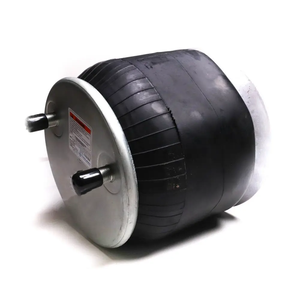
Chassis · Suspension

Direct OEM-grade replacements engineered in China's automotive export hubs. Fully interchangeable by cross-reference number, vehicle chassis code, and technical dimensional parameters for the greater Moscow transit hub.
The operational profile of heavy commercial trucks traversing the Central Federal District—centered around the Moscow Ring Road (MKAD), the Central Ring Road (A-113/TsKAD), and radial trunk corridors to Saint Petersburg (M-11) and Kazan (M-12)—places unique thermo-mechanical stress on engine lubrication circuits. In sub-zero winters, where ambient temperatures plunge to -30°C to -40°C, standard aftermarket oil coolers frequently fail due to high-viscosity cold-start pressure spikes. When heavy mineral or semi-synthetic 15W-40 lubricants congeal, dynamic start-up oil pressure often surges past 12 to 18 bar before the pressure relief valve cracks. Thin-walled or inadequately brazed cooling fins fracture at the core-to-header plate weld seams, causing catastrophic oil-to-coolant contamination.
As a leading China truck oil cooler manufacturer and exporter directly partnering with fleet distributors and aggregate parts hubs across Moscow, our manufacturing line integrates continuous vacuum brazing (Nocolok process) alongside proprietary internal turbulator geometry. By utilizing high-purity virgin aluminum alloys (3003-series core tubes with 4343/3003 composite cladding), our oil coolers achieve uniform metallurgical bonding across all fluid matrices. Each unit undergoes multi-stage burst validation in accordance with strict GOST and ISO 9001 standards, resisting pulsation fatigue up to 35 bar and ensuring operational reliability throughout intense stop-and-go orbital transit and sub-arctic long-haul routes.
Analyzing thermal dissipation demands and environmental factors across three dominant regional fleet applications.
Long-distance European and Chinese tractor units (Kamaz-54901, Shacman X3000/X6000, SITRAK C7H, FAW J7) demand continuous 85°C to 105°C oil stabilization under steady gross vehicle weights (GVW) up to 44 metric tons. Our heavy-duty plate-fin oil coolers eliminate thermal runaway during prolonged high-torque highway hauling.
Winter highway maintenance in the Moscow region deploys heavy calcium chloride and sand slurries. Our exterior oil cooler surfaces feature automotive-grade electro-deposition coating and marine-grade anti-corrosive passivation to withstand over 1,000 hours of ASTM B117 salt spray exposure without micro-pitting.
Extended idling and low-speed crawling on MKAD cause insufficient dynamic airflow over traditional frontal radiators. Our integrated oil cooler modules include optimized oil-passage turbulators to boost internal Reynolds numbers, maintaining maximum conductive heat rejection into the engine coolant circuit regardless of vehicle forward speed.
How fleet mechanics, independent regional wholesalers, and logistics operators are restructuring their thermal supply chain.
With Chinese commercial vehicles (Sinotruk, Shacman, Foton, FAW, Dongfeng) capturing dominant market share in Russia, demand for genuine-spec replacement parts has surged. Fleets require direct Chinese factory connections that supply precisely indexed OEM numbers without cross-tier distributor markup.
Moscow aggregate depots maintain mixed fleets containing legacy European trucks (Volvo FH, Scania R, Actros, MAN TGX) alongside modern Chinese tractor heads. Suppliers providing verified cross-reference indexing across both OEM cultures enable workshops to streamline inventory, minimizing bays sitting idle for lack of specialized coolers.
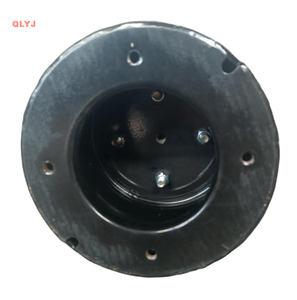
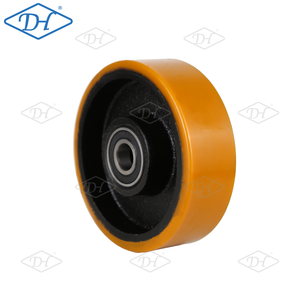
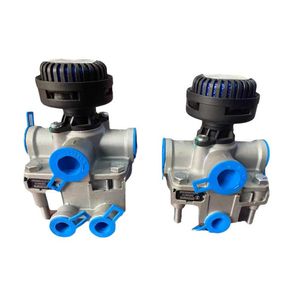
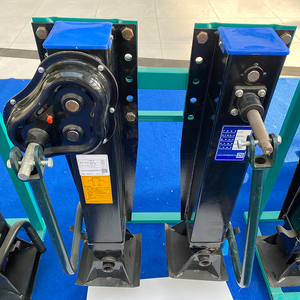
B2B importers avoid single-category freight expenses by consolidating high-turnover air brake relay valves, landing gears, PU pallet rollers, and heavy suspension bags into unified 40HQ container shipments. Direct factory supply hubs with multi-category engineering portfolios reduce landed logistics overhead per unit.
Combining state-of-the-art aluminum thermal manufacturing lines in China with dedicated foreign trade coordination, we bridge technical precision with seamless international logistics. Every product leaving our factory undergoes rigorous dimensional verification, ISO/TS 16949 compliant manufacturing procedures, and complete structural audits.
Integrated Cross-Reference Database: We index hundreds of OEM casting and stamping references, linking Chinese factory part codes to Scania, Volvo, MAN, Mercedes-Benz, Kamaz, and Shacman part numbers. Buyers receive zero-deviation fitment guarantees with thread, port, mounting boss, and core dimensions verified prior to batch dispatch.
Multilingual Export Logistics Desk: Operating with comprehensive documentation capabilities (Commercial Invoices, Detailed Packing Lists, Certificates of Origin, and complete customs clearing declarations), our desk coordinates rail freight via the Manzhouli-Zabaikalsk and Erenhot-Naushki corridors directly to Moscow terminal hubs (Vorsino, Bely Rast, Silikatnaya), cutting transit cycles down to verified schedules.
Clear, direct answers regarding metallurgical testing, cross-referencing, MOQ limits, and Russian freight clearance.
Connect directly with our engineering and export desk to obtain OEM cross-reference mappings, bulk pricing structures, and factory-direct technical catalogues customized for the Moscow transit corridor.