Trailer Chassis
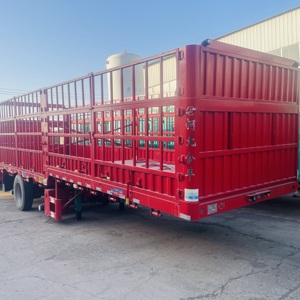

Direct manufacturer supply, rigorous dimensional verification, and cross-reference precision matching the demanding duty cycles of Chicago's regional freight network.
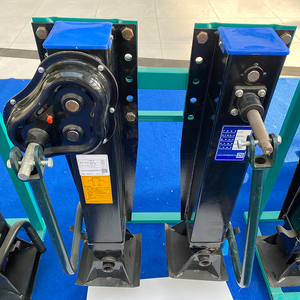
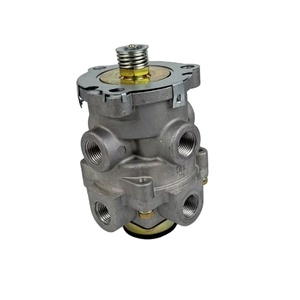
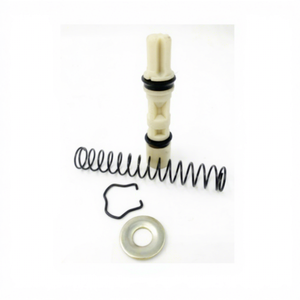
A technical whitepaper examining torsional fatigue mitigation, ductile casting metallurgy, and CNC micro-tolerances in heavy Class 8 commercial axle systems.
In Class 7 and Class 8 commercial heavy vehicles, the differential planetary carrier represents the core kinematic node within the tandem axle assembly. Tasked with splitting input drive torque across planetary pinion gears while balancing rotational deltas during cornering, the carrier is continuously exposed to complex multi-axial torsional stresses and heavy shock loading. In typical North American fleet applications, improper tooth engagement, pin bore ovality, or minor casing deflection under high load can immediately trigger catastrophic differential failure.
As an OEM manufacturing partner and exporter, our foundries deploy precision casting processes using QT-700-2 / ASTM 100-70-03 ductile iron. By managing graphite nodularity exceeding 90%, our carrier bodies achieve tensile strengths beyond 700 MPa with an elongation profile tailored to absorb severe shock loading. This metallurgical threshold prevents the brittle fracture propagation common in cheaper gray iron castings when navigating loaded stop-and-go interchanges or dock shunting maneuvers.
The service life of planet spider gears, thrust washers, and pinion shafts depends directly on the centerline precision of the carrier’s planetary pin bores. A divergence of merely 12 microns in bore parallelity introduces angular misalignment across the planetary gear train, creating edge-loading on gear teeth and inducing accelerated micro-pitting.
Our manufacturing plants utilize 5-axis horizontal CNC machining centers configured with custom hydraulic clamping fixtures that eliminate multi-stage rechucking errors. Pin bore diameters, thrust face perpendicularity, and bearing journal fits are cut in a single clamping setup, guaranteeing true positional tolerances within ±0.008 mm. Each carrier undergoes automated washing and high-pressure deburring to eliminate cast flash that could contaminate 75W-90 synthetic gear oil.
| Engineering Attribute | Standard Commercial Grade | Custom OEM Heavy-Duty Spec | Direct Operational Advantage |
|---|---|---|---|
| Material Substrate | Standard Ductile GGG-50 / 65-45-12 | Nodular Iron QT-700-2 / ASTM 100-70-03 | +35% higher ultimate tensile strength under peak starting torque |
| Pin Hole Bore Parallelism | ≤ 0.025 mm | ≤ 0.008 mm (CMM Certified) | Eliminates planetary gear cocking and premature gear tooth spalling |
| Thermal Treatment | Air Cooling / As-Cast | Controlled Normalizing & Stress-Relieving Anneal | Relieves internal casting stresses; stops long-term geometric creep |
| Surface Protection | Basic Industrial Primer | Anti-Corrosion Phosphate + Cathodic Dip | Withstands harsh chemical de-icers, calcium chloride, and salt wash |
Serving regional intermodal terminals, steel hauling routes, and extreme climatic cycles across Chicagoland and the upper Midwest.
Chicagoland operates as the largest freight rail gateway in North America. Railyards across Bedford Park, Elwood, and CenterPoint Intermodal demand relentless low-gear shuttle operations. Continual stop-and-drop container drayage exposes differential carriers to repetitive torque spikes that crack standard units. Our carriers provide reinforced webbing specifically optimized for heavy low-speed tractive effort.
Connecting Northwest Indiana mills across the I-80, I-90, and I-94 corridors requires Class 8 configurations operating near maximum gross combination weight (GCW) thresholds. The high-rigidity structural design of our custom planetary carriers resists casing deflection under maximum payload, ensuring uniform gear mesh across tandem driving axles even on steep highway ramps.
Midwestern winters deliver temperatures plunging well below -20°F combined with heavy calcium chloride road brine exposure. Lower-grade irons turn brittle at sub-zero temperatures, leading to sudden carrier housing cracks under thermal contraction. Our QT-700-2 ductile alloy is charpy impact-tested to guarantee ductile fracture toughness in freezing operational conditions.
Strategic structural shifts shaping how Chicago fleet operators, rebuilders, and Tier-1 distributors procure drivetrain components.
Fleet maintenance facilities in Illinois and Wisconsin are actively bypassing multi-tier parts distribution layers. Sourcing directly from certified foundry-exporter operations lowers replacement parts expenditures by 25-40% while securing direct accountability for batch metallurgy and engineering tolerances.
With the rising capital costs of new Class 8 power units, Midwest transport operators are extending tractor service lives beyond 850,000 miles. Rebuilders require replacement planetary carriers with virgin metal structures rather than re-sleeved or fatigued cores to avoid costly warranty claims.
Midwestern aftermarket wholesalers are enforcing ISO/IATF 16949 conformance alongside full PPAP Level 3 documentation. Importers require complete material chemical certifications, Brinell hardness reports, and dynamic balancing proof before onboarding overseas carrier lines.
Combining world-class manufacturing infrastructure, rigorous metallurgical control, and international trade coordination.
Electric induction melting and automatic green-sand molding deliver void-free castings with nodularity above 90% and consistent tensile performance.
Dedicated technical libraries cross-match parts with Dana Spicer, Meritor, Mack, Detroit, and Eaton references to ensure rapid, zero-error drop-in installation.
Full support for North American maritime import corridors, handling customs clearance, DDP/CIF terms, and consolidation across multiple commercial truck part groups.
Full prototyping capabilities from CAD blueprints or sample parts, with laser marking, private label stamping, and tailored packaging for rebuild specialists.
Clear, direct answers regarding tolerances, OEM interchanges, import logistics, and custom production timelines.
Yes. Our tooling facility frequently reverse-engineers or customizes planetary carriers based on physical samples, STEP/IGES files, or OEM engineering drawings. We develop custom wooden pattern molds or steel tooling, deliver first-article inspection (FAI) reports with full CMM mapping, and provide sample validation runs before serial casting begins.
Our production capabilities cover major North American and global commercial axle platforms, including Dana Spicer (DS404, DSP40, D46-170 series), Meritor / Rockwell (RT-40-145, RT-46-160 series), Mack, Eaton, and European formats (Mercedes-Benz, MAN, Volvo). Inquiries are checked directly against OEM casting numbers and cross-reference records.
We manage ocean freight via East Coast ports or Midwest intermodal rail hubs (such as Chicago BNSF / UP ramps). We coordinate all necessary documentation, including commercial invoices, ISF filings, bills of lading, and mill test certifications, offering flexible delivery terms from FOB to CIF and DDP direct to your loading dock.
For tooling setups requiring custom casting molds, initial production batches generally begin at 50 to 100 units. For existing carrier patterns already in our production library, orders can be consolidated in smaller quantities or grouped alongside our other product lines, including landing gear, brake valves, and wheel hubs.
We run mold-filling flow simulations to eliminate shrink cavities and cold shut defects. Production batches undergo 100% ultrasonic non-destructive testing (NDT), magnetic particle crack detection on critical stress radii, and periodic destructive section testing. Material test certificates covering tensile, yield, and Brinell hardness accompany every production run.
Yes. Beyond bare precision-machined carrier housings, we assemble and deliver complete differential carrier repair kits—integrating planetary spider cross shafts, pinion gears, side gears, bronze/steel thrust washers, and high-strength locking hardware assembled and balanced to OEM standards.
Whether you are managing a severe-duty fleet in the Chicago intermodal corridor, rebuilding Class 8 commercial differentials, or expanding your regional parts catalog, connect with our engineering and export team for technical drawings, cross-references, and pricing.