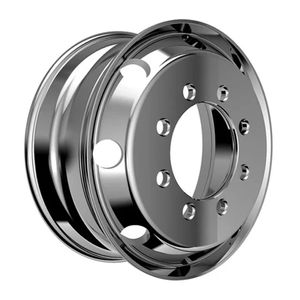

From heavy truck clutch covers and geared flywheels to high-tensile trailer chassis systems and precision sensors, inspect our factory wholesale inventory calibrated for Southeast Asian logistics operators.
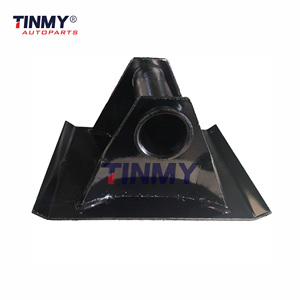
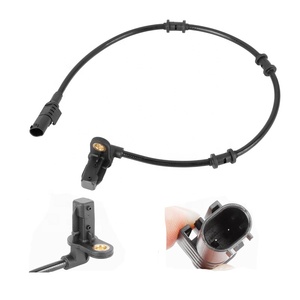
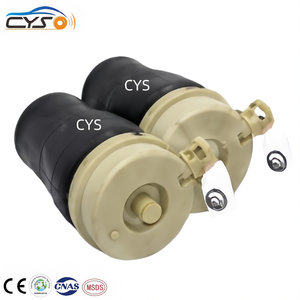
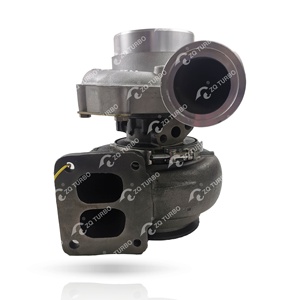
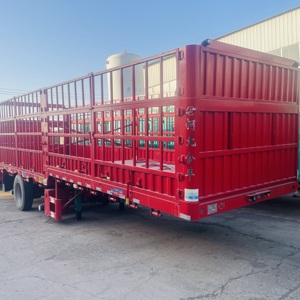
Why standard aftermarket pressure plates suffer premature warping, thermal hot spotting, and friction fade in Indonesian urban-interprovincial operations.
In urban Jakarta's perpetual traffic gridlock, commercial trucks make up to 120 gear engagements per hour. We formulate our pressure rings from high-graphite HT250 and alloyed nodular iron (QT500-7). The laminar graphite structure serves as an internal heat conductor, dispersing interface temperatures exceeding 480°C across the thermal mass to suppress micro-cracking and friction fade.
Diaphragm relaxation causes clutch slippage, localized glazing, and driveline shudder under peak torque. Our manufacturing process employs German-grade 50CrV4 alloy spring steel, tempered through isothermal salt bath quenching. This imparts an exceptional yield strength of over 1,450 MPa, preserving constant clamp load throughout 1.5 million engagement cycles under equatorial ambient temperatures.
Rotational unbalance creates destructive radial shear forces along transmission input shafts, accelerating pilot bearing failure and synchronizer wear. Every clutch cover assembly is dynamically balanced using dual-plane computerized balancing tables. We enforce a residual unbalance threshold below 80 g·mm for 380mm–430mm commercial assemblies.
| Clutch Assembly Metric | Standard Aftermarket Casting | Our OEM-Tier Heavy-Duty Standard | Operational Impact in Jakarta Operations |
|---|---|---|---|
| Pressure Plate Material | Recycled Grey Iron (HT180 - HT200) | Pearlitic Alloyed Cast Iron (HT250 / QT500-7) | Prevents thermal warping and friction surface pitting during stop-start port haulage. |
| Diaphragm Spring Steel | 65Mn Carbon Spring Steel | Cold-Rolled 50CrV4 Vanadium Alloy Steel | Zero clamp load degradation across high thermal cycles; eliminates clutch slippage. |
| Friction Face Runout Tolerance | ≤ 0.20 mm | ≤ 0.08 mm (Dual CNC Lathe Precision) | Eliminates low-speed pedal pulsation and cab vibration under heavy gross loads. |
| Dynamic Balancing Standard | ISO 1940 G16 (≤ 250 g·mm) | ISO 1940 G6.3 (≤ 80 g·mm) | Protects transmission input shaft bearings and prevents seal leaks on long hauls. |
| Thermal Dissipation Threshold | 350°C Continuous Duty | 520°C Intermittent Peak Duty | Withstands overload climbing on Cipali incline sections and Trans-Java highway routes. |
Heavy commercial transport in Indonesia operates under extreme environmental and infrastructural strains. Our clutch assemblies are customized for the exact operating environments faced by local fleet operators.
Tanjung Priok, handling over 65% of Indonesia's international trade, creates intense stop-and-creep driving profiles on the Jakarta Intra-Urban Tollway and Marunda access arteries. Constant half-clutch slippage generates continuous heat soak. Our heavy-duty assemblies incorporate ventilated pressure plate designs that increase airflow by 28%, directly mitigating the risk of clutch disc glazing and cover warpage.
Connecting Jakarta to Surabaya via the Cikampek-Palimanan (Cipali) expressway, linehaul trucks haul 30 to 50 tonnes of consumer goods and industrial cargo. Continuous high-speed cruise combined with abrupt deceleration at toll plazas induces intense cyclical torque reversal. Our precision ground friction surfaces ensure smooth torque transmission without torsional judder.
Automotive, electronics, and fast-moving consumer goods logistics servicing Cikarang Dry Port and Karawang industrial estates demand round-the-clock reliability. Vehicle downtime halts assembly lines. Fleets relying on Hino Ranger, Mitsubishi Fuso Fighter, and UD Quester trucks demand drop-in OEM interchangeability without manual linkage modifications.
Aggregates and sand hauled from West Java quarries operate on steep gradients and rough tertiary roads. Severe gross vehicle weights trigger intense clutch engagement forces. The reinforced ductile cover housings on our units withstand torsional deflection under maximum engine torque output, ensuring precise disengagement clearance.
Strategic supply chain shifts, regulatory enforcement, and evolving vehicle fleets dictate new procurement criteria for Indonesian spare parts distributors and logistics enterprises.
The Indonesian Ministry of Transportation (Kemenhub) continues expanding weigh-in-motion (WIM) sensors across toll networks to curb vehicle overloading. As transport companies modify fleets toward compliant multi-axle configurations, commercial powertrains require clutch covers with optimized torque-to-weight ratios that maximize payload efficiency while providing generous safety margins against overload shock.
Indonesia's nationwide adoption of high-blend Palm Oil Methyl Ester (B35/B40) biodiesel introduces subtle shifts in diesel combustion characteristics, producing heightened low-RPM torsional oscillations. Clutch pressure plates and damper systems must exhibit superior resonance isolation to protect gearbox gears from micro-pitting caused by cyclic torsional vibrations.
While Japanese makes (Hino, Isuzu, Mitsubishi Fuso) retain substantial market share, Chinese heavy trucks have surged across infrastructure and container drayage sectors. Importers in Jakarta require manufacturing partners capable of consolidating Japanese, European (Scania, Volvo, Mercedes Actros), and Chinese (Howo, FAW J6) clutch part numbers within single mixed container shipments.
Eliminating intermediaries to deliver guaranteed metallurgy, OEM-calibrated clamping loads, and end-to-end export documentation directly from China's primary automotive casting hub.
Operating automated DISA moulding lines and electric induction furnaces, our foundries maintain tight control over carbon equivalent (CE), silicon-to-carbon ratios, and pearlitic grain structure. We eliminate porosity and hard spots that shorten friction life.
Every product code in our catalogue is indexed against global OEM part numbers, Sachs, Valeo, Exedy, and LuK references. We ensure exact matching of bolt circle diameters, dowel pin hole placements, lift-off clearance, and release bearing contact radii.
Navigating Indonesian customs (Bea Cukai) requires precision documentation. Our international trade team coordinates export customs clearance, Form E ASEAN-China Free Trade Certificate of Origin, and container optimization to cut landed logistics costs.
Direct answers concerning customs documentation, minimum order quantities, cross-reference checking, and quality guarantees for B2B transactions.
We provide full trade documentation required by the Directorate General of Customs and Excise (Bea Cukai). This includes the Commercial Invoice, Packing List, Bill of Lading (B/L), and critically, the ASEAN-China Free Trade Certificate of Origin (Form E). Under Form E, qualifying automotive chassis and drivetrain components imported into Indonesia benefit from reduced or zero preferential import tariff rates, lowering your landed wholesale cost.
Our top-volume export applications for the Greater Jakarta and Java market include:
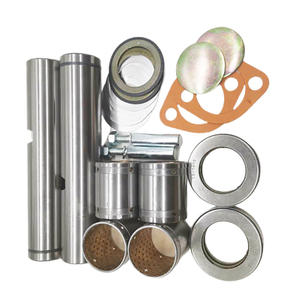
Yes. Many distributors in Jakarta prefer mixed container loads to optimize working capital and minimize storage inventory holding costs. We regularly consolidate clutch pressure plates and driven discs with forged aluminium truck rims, semi-trailer landing gear sets, kingpin kits, brake chambers, and air valves into a single 20GP or 40HQ container, fully itemized on a unified packing list.
High humidity across Jakarta and coastal storage depots near Tanjung Priok can trigger flash corrosion on bare cast iron surfaces. Every pressure plate undergoes automated surface degreasing, an anti-rust phosphate conversion treatment, and precision application of dry-film rust preventative oil on friction surfaces. Components are sealed in heavy-gauge VCI (Volatile Corrosion Inhibitor) plastic bags before packaging in reinforced 5-ply export cartons.
For standard high-running references (e.g., Hino 380mm, Fuso 350mm/430mm, Isuzu 325mm), our typical MOQ is 30 to 50 units per part number. For specialized European heavy-duty applications or custom private-label branding, MOQs generally start at 100 units. Standard production lead times run between 25 to 35 calendar days from deposit confirmation, with direct ocean transit from Ningbo or Shanghai to Tanjung Priok taking approximately 10 to 14 days.
We provide a Factory Inspection Certificate for each batch, encompassing: clamping load and release travel load-displacement curves, friction face flatness and runout measurements (≤ 0.08mm), residual dynamic imbalance verification (≤ 80 g·mm), and metallurgical hardness logs (HB 190–240). Pre-shipment video inspections or third-party audits (SGS, TUV) are welcome upon buyer request.
Provide your required OEM part numbers, vehicle makes, or technical drawings. Our international automotive export engineers will deliver comprehensive cross-reference validation, pricing schedules, and sea-freight transit timelines directly to your team.