Heavy-Duty
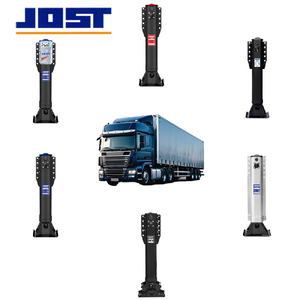

Engineered for harsh operating environments across European and international heavy-duty transport platforms. Guaranteed OE fitment, verified tolerance standards, and traceable materials.
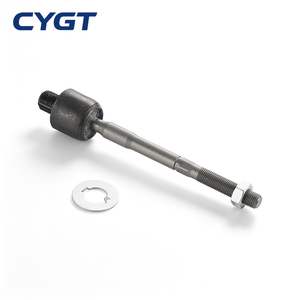
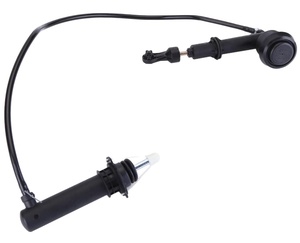
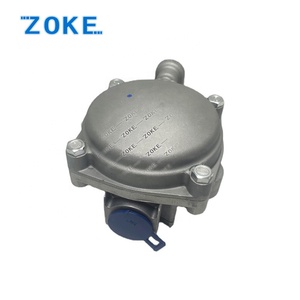
Why Tier-1 commercial vehicle fleets prioritize structural hermetic seals, photobiological safety, and intelligent surge mitigation in side marker and clearance light assemblies.
High-efficacy SMD LED chips generate concentrated thermal loads within compact clearance housings. Premium factories utilize Aluminum-core Metal Core Printed Circuit Boards (MCPCB) paired with thermally conductive epoxy potting. This keeps diode junction temperatures well below the critical 85°C threshold, effectively eliminating lumen depreciation over 50,000+ operational hours.
Traditional mechanical gaskets fail when exposed to prolonged thermal cycling and cyclical road spray. Leading exporters enforce ultrasonic lens welding combined with polyurethane vacuum encapsulation. This prevents capillary moisture migration during high-pressure thermal washdowns (up to 100 bar at 80°C), protecting fragile internal wire bonds against corrosion.
Severe inductive voltage spikes (load dump) frequently occur when truck alternators disengage. Our verified manufacturers engineer integrated constant-current buck-boost regulator ICs with ISO 7637-2 transient suppression and full CISPR 25 Class 3/ECE R10 EMC compliance, shielding onboard GPS, telematics, and CAN-bus telemetry from electromagnetic interference.
| Evaluation Parameter | Standard Commercial Grade | Heavy-Duty Industrial Tier-1 Standard | Operational Fleet Impact |
|---|---|---|---|
| Enclosure Hermeticity | IP65 / IP67 (Mechanical Rubber Gasket) | IP68 / IP69K (Full Vacuum Potting & Ultrasonic Fusion) | Eliminates lens condensation and corrosion premature failures |
| Operating Input Voltage | 12V or 24V Static Nominal Inputs | 9V – 33V Multi-voltage Adaptive Wideband IC | Universal cross-compatibility across light trailers and 24V prime movers |
| Lens Material Architecture | Recycled Polystyrene or Low-grade Acrylic | UV-Stabilized Optical Makrolon® Polycarbonate (PC) | Prevents yellowing, micro-cracking, and structural stone shatter |
| Transient Spike Protection | Basic Zener Diode Limiter (<40V) | TVS Clamping Diodes + Inductive Choke (ISO 7637-2 Pulse 5a/5b) | Prevents field driver blowout during alternator peak load-dump spikes |
How fleet electrification, dynamic sequential signaling regulations, and supply chain decarbonization are reshaping B2B buying patterns through 2030.
Regulatory shifts under UNECE R48 (Revision 6) emphasize enhanced spatial visibility. Fleets are moving from static amber side markers to multi-functional units featuring synchronized dynamic indicators that communicate lane departures directly alongside trailer perimeters.
Fleet labor shortages have elevated quick-connect plug systems (such as Click-In 2-pin AMP Superseal and Deutsch DT04) into default procurement specifications. Tool-free replacement protocols slash workshop maintenance downtime by over 65% during routine vehicle inspections.
Next-generation marker light housings are being configured as aerodynamic nodes for auxiliary blind-spot radar systems and localized ambient temperature sensors, integrating seamlessly into autonomous tractor-trailer digital backbones.
European ESG mandates now require measurable reductions in virgin petroleum plastics. Tier-1 manufacturers are certifying bio-circular polycarbonates and lead-free alloy solder pastes, ensuring whole-lifecycle compliance with EU end-of-life vehicle (ELV) directives.
Positioned in Nilüfer, Bursa—the heart of Türkiye’s automotive manufacturing cluster—our export desk coordinates high-specification commercial vehicle lighting, braking valves, suspension components, and driveline assemblies directly into global distribution networks. We bridge the gap between engineering rigor and export execution.
"International parts procurement fails when buyers encounter mismatched port dimensions, missing customs clearance certificates, or premature component burnout. Our Bursa desk solves this by verifying physical schematics and regulatory certifications before goods leave the production bay."
Critical insights covering technical verification, regulatory markings, minimum commercial quantities, and export customs clearance.
Initiate direct communication with our technical export desk. Submit your required OEM references, schematics, or projected annual container schedules for volume quotes.
Get a Quote