
Direct export matching for global commercial vehicle fleets, semi-trailers, and severe-duty prime movers. Backed by full metallurgical cross-referencing and export-grade verification.
In heavy commercial transportation, wheel-end fastening hardware is categorized as a safety-critical Class-A joint assembly. Wheel studs on heavy-duty commercial trucks, severe-duty dumpers, and multi-axle semi-trailers must withstand complex, triaxial dynamic stress matrices—including static axial pre-loads, high cyclic shear stresses during braking and cornering, and localized torsional vibration generated by uneven pavement surfaces. As a tier-leading Chinese wheel stud manufacturing and exporting consortium, we engineer wheel fastening solutions that mitigate catastrophic wheel separation, thread stripping, and shear fatigue under the most arduous logistics operating conditions.
Low-grade commercial fasteners typically utilize generic carbon steels such as Q235 or 35K, which present severe risks of catastrophic brittle fracture under cold-climate dynamic impact. Our precision truck wheel studs are forged strictly from vacuum-degassed structural alloy steels, specifically 40Cr (AISI 5140) for Property Class 10.9 and 42CrMo / 42CrMo4 (AISI 4140) for Property Class 12.9 applications.
The controlled addition of Chromium (0.90%–1.20%) and Molybdenum (0.15%–0.30%) ensures superior hardenability throughout the cross-section of heavy studs (diameters exceeding M22 and M24). This homogeneous martensitic matrix eliminates the brittle core phenomenon. The sulfur and phosphorus contents are strictly maintained below 0.025% via continuous ladle refining, preventing intergranular micro-fissuring during severe thermal cycles caused by recurring downhill retarder braking.
To preserve continuous grain flow lines, our manufacturing lines deploy high-tonnage multi-station cold-heading formers for wheel studs up to M24×110mm. Unlike turning or hot forging—which can interrupt metallic grain lines or initiate surface decarburization—multi-station progressive cold forming forces the austenitic grain boundary to follow the exact profile of the stud head, collar, and knurling. This delivers an approximate 28% enhancement in fatigue endurance limits along the critical under-head radius, where dynamic shear stress concentrates during abrupt lateral maneuvers.
| Property Parameter | Class 10.9 Specification | Class 12.9 Specification | Inspection Standard / Protocol |
|---|---|---|---|
| Nominal Tensile Strength (Rm) | 1,040 – 1,090 MPa | 1,220 – 1,280 MPa | ISO 898-1 / ASTM F606M Tensile Rig |
| Proof Load Stress Ratio (Sp) | 830 MPa (80% Rm) | 970 MPa (88% Rm) | Axial Extensometer Proof Testing |
| Core Hardness Matrix | 32 – 39 HRC | 39 – 44 HRC | Rockwell C Scale (Cross-Section Core) |
| Thread Manufacturing Process | Post-Heat-Treat Rolling (Rolled Grain) | Post-Heat-Treat Rolling (Rolled Grain) | Optical Microstructure Etching (500x) |
| Surface Protection System | Black Oxide / Phosphate / Dacromet | Geomet 500B / Zinc-Nickel Alloy | ASTM B117 / ISO 9227 Salt Spray |
| Knurl Interference Fit Fitment | 0.18 mm – 0.35 mm Oversize | 0.22 mm – 0.40 mm Oversize | Laser Micrometer 100% Inspection |
In conventional manufacturing, threads are cut or rolled prior to heat treatment. While cheaper, this practice exposes the thread roots to micro-oxidation, decarburization, and dimensional distortion during the quenching cycle. Our high-integrity truck wheel stud lines employ Post-Heat-Treatment Thread Rolling. Planetary cylindrical dies deform the hardened steel blanks under massive hydraulic pressures, inducing profound compressive residual stresses at the thread roots.
Because fatigue cracks can only propagate under tensile stress, these residual compressive stresses counteract external dynamic tension, effectively quadrupling the cycle-to-failure threshold under rotational bending fatigue tests (conforming to DIN 74361 and SAE J1102 guidelines).
The global procurement paradigm for commercial automotive fasteners has shifted from low-cost piece pricing toward Total Cost of Joint Integrity (TCJI). Fleet executives, trailer manufacturers (OEMs), and tier-1 parts distributors across Europe, North America, and the Asia-Pacific region are prioritizing several critical shifts:
Global fleets demand studs and wheel nuts with tightly calibrated torque-tension performance (coefficient of friction μ = 0.10 to 0.14). Uncontrolled friction leads to either stud snapping from over-tightening or dangerous wheel back-off from under-clamping.
Traditional acid pickling and electro-galvanizing introduce atomic hydrogen into high-strength steels (>1000 MPa), causing delayed sudden fractures. Modern procurement standards mandate non-electrolytic zinc flake dip-spin coatings (Geomet / Dacromet).
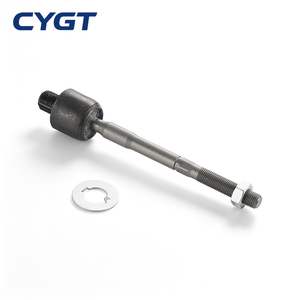
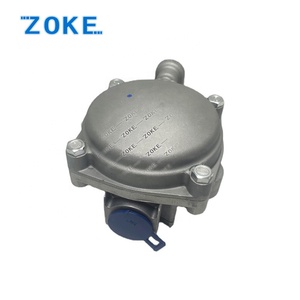
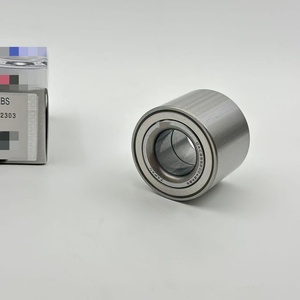
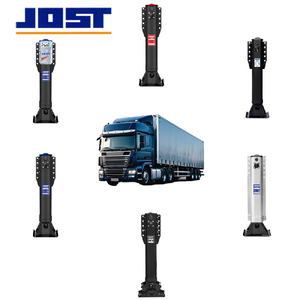
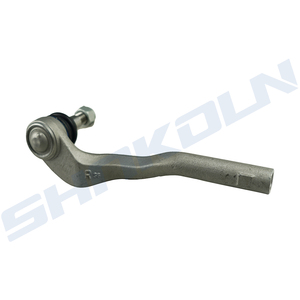
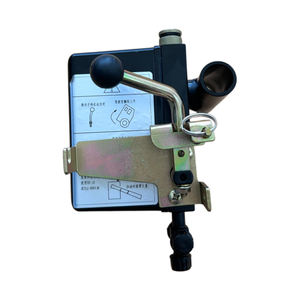
Procurement teams are cutting administrative costs by pairing wheel studs with adjacent chassis components—including brake discs, hub bearings, slack adjusters, tie rod ends, and trailer landing gear—under a unified quality compliance umbrella.
As commercial battery-electric trucks (BETs) and fuel-cell freight haulers enter mainstream fleet operation, axle curb weights and instantaneous wheel torque have escalated by 30% to 50%. This structural evolution is driving three major technical milestones in Chinese wheel stud manufacturing:
1. Serration & Knurl Interference Redesign: The knurled body of a press-in truck wheel stud prevents rotation during wheel nut torque application and maintains perpendicular alignment with the hub face. We now utilize modified helical and stepped diamond knurling geometries. This minimizes hub bore broaching damage during field replacement while maintaining over 680 N·m of back-out torque resistance.
2. Advanced Non-Electrolytic Thin Flake Coatings: Environmental regulations (REACH / RoHS) have banned hexavalent chromium (Cr6+). Our automated finishing facilities utilize waterborne zinc-aluminum flake coatings that achieve over 1,000 hours of neutral salt spray testing without red rust, with coating thicknesses restricted to 5–8 microns to avoid interfering with thread pitch diameters.
3. Optical & Eddy Current In-Line Sorting: Human visual inspection is obsolete for zero-defect automotive mandates. Our finished fasteners pass through 360-degree high-speed optical glass sorting carousels and differential eddy-current coils. This automated system identifies surface seams, missing threads, head crack defects, and incorrect heat-treatment hardness in real time at a rate of 450 parts per minute, ensuring a PPM rate < 15 across mass export shipments.
From metallurgical verification to turnkey international export clearance, our manufacturing ecosystem provides high-reliability supply chain security for distributor networks worldwide.
Complete traceability from raw billet heat numbers through cold-heading, induction hardening, thread rolling, and final packaging.
Rapid digital cross-referencing matching BPW, SAF-HOLLAND, Meritor, Dana, Scania, Volvo, Mercedes-Benz, and Fruehauf part numbers.
Consolidate wheel studs with brake chambers, hub bearings, landing gear, valves, and steering joints into a single shipping container.
Certificates of Analysis (3.1 MTR), complete dimensional CMM reports, Certificate of Origin, and export customs clearance documentation.
Clear, technical answers to common queries regarding metallurgy, torque-tension testing, knurl fitment, packaging, and international export procedures.
Connect directly with our fastener engineering team and international export desk. Submit your OEM cross-reference, dimensional drawing, or tender specification for rapid, factory-direct quotation and sample arrangement.
Send an Inquiry