
Explore heavy-duty vehicle chassis assemblies, forced-induction turbochargers, hydraulic actuating units, and precision-tested braking mechanisms built to rigorous international standards.
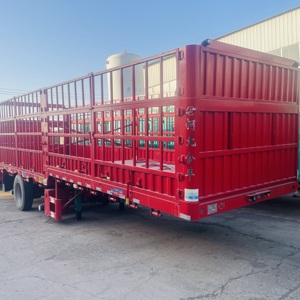
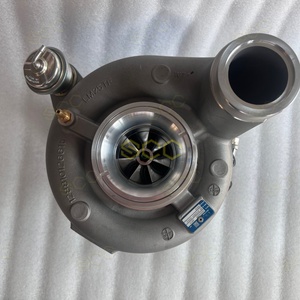
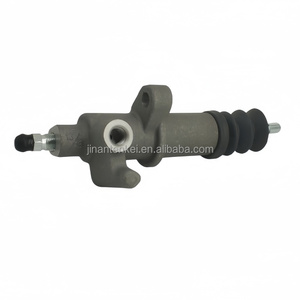
Commercial vehicle fleet managers, tier-1 replacement distributors, and municipal transit agencies are transitioning toward direct factory partnerships to balance tight cost per kilometer requirements with zero-failure safety standards.
Modern Chinese manufacturing facilities leverage advanced semi-metallic, low-metallic, and advanced ceramic-doped NAO composites. Commercial transport operates under heavy thermal duty where friction fade resistance up to 550°C is mandatory to protect against total brake loss.
By integrating synthetic aramid fibers, structural carbon, and treated mineral strands, contemporary brake lining kits dramatically mitigate rotor and drum micro-grooving while providing up to a 35% life extension compared to legacy composite blocks.
The failure of heavy-duty drum brake linings frequently traces back to internal shearing loads caused by imperfect rivet hole placement. Leading export factories employ automated multi-axis drilling rigs guaranteeing dimensional tolerances within ±0.05 mm.
Pre-chamfered contact arcs and engineered wear-indicator groves guarantee immediate bedding-in upon installation, significantly lowering workshop servicing downtime and eliminating high-frequency squeal during early operational hours.
Procurement teams have abandoned isolated friction block purchasing. The modern standard mandates full Brake Lining Repair Kits equipped with application-matched copper or steel tubular rivets, return springs, retainers, and grease packs.
Consolidated kitting simplifies warehouse inventories for aftermarket distributors while removing cross-assembly discrepancies on heavy-duty vehicles such as Scania, Volvo FH, Mercedes Actros, BPW axles, and Sinotruk heavy platforms.
| Evaluation Parameter | Legacy Aftermarket Benchmark | Certified Factory Export Standard | Compliance Test Method |
|---|---|---|---|
| Nominal Friction (μ) | 0.32 – 0.36 (Varied) | ✓ 0.38 – 0.44 Stable | SAE J661 / Krauss Dynamometer |
| Thermal Degradation Limit | Starts at 280°C | ✓ Maintained up to 480°C | ISO 26867 Dynamometer Simulation |
| Shear Strength Threshold | ≥ 2.5 N/mm² | ✓ ≥ 4.2 N/mm² | ISO 6312 Hydraulic Test Jig |
| Brake Drum Compatibility | Abrasive; causes scoring | ✓ Smooth transfer layer formation | Continuous Fleet Telemetry Logging |
| Heavy Metal Compliance | Trace elements detected | ✓ RoHS & REACH Compliant (Copper-Free) | XRF Spectrometry Analysis |
Strategic purchasing behavior in the automotive and commercial haulage sector is transforming rapidly under the influence of raw material volatility, ESG compliance, and digital consignment tracing.
Global environmental statutes—particularly North American Better Brakes legislation and European environmental limits—are eliminating copper and zinc content. China's top friction material manufacturers are leading the migration toward ceramic-mineral hybrid scaffolds that satisfy Level 'N' zero-copper thresholds (<0.5% by weight) while preserving high-load stopping power.
Fleet operators cannot tolerate warehouse downtime stemming from incorrect catalog entries. Modern procurement portals unite OEM, WVA, FMSI, and KNB cross-referencing databases. Every crate leaving China's export hubs now carries individualized matrix tracking linked to manufacturing batch records, pressing run data, and batch dynamometer logs.
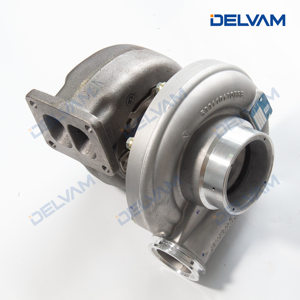
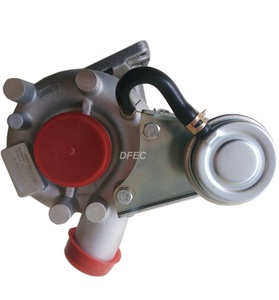
Rather than placing fragmented orders across separate casting factories, rubber vulcanizers, and friction producers, procurement agents favor supply hubs that consolidate friction kits, slack adjusters, brake chambers, wheel hubs, and turbocharger components into unified shipments, radically reducing port clearance tariffs and ocean freight costs.
Combining heavy-duty engineering expertise, rapid prototype turnaround, and comprehensive export documentation handling for international B2B importers.
State-of-the-art automated positive molding presses, CNC grinding stations, and thermal curing tunnels with an annual throughput exceeding 2.5 million brake lining sets.
Every formula undergoes in-house Link dynamometer testing, continuous shearing load verification, and strict ECE R90 and IATF 16949 audit compliance.
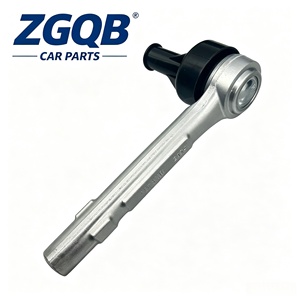
One-stop supply capability matching brake kits with slack adjusters, spring brake chambers, air modulators, steering tie rods, and diesel turbochargers.
Seamless processing of commercial invoices, packing lists, Certificate of Origin, Form E, A.TR, and EUR.1 documentation to expedite border customs release.
Direct technical answers addressing friction coefficients, international shipping requirements, sample validation, and private label support.
Whether you require a dedicated 40ft container of WVA-certified brake lining kits or a consolidated consignment of commercial brake chambers, turbochargers, and steering links, our engineering and export team is ready to assist.