
Every assembly is manufactured under rigorous ISO/TS 16949 standards, engineered with micron-level tolerances to reduce rolling friction, prevent lubricant migration, and ensure compliance with stringent European road safety protocols.
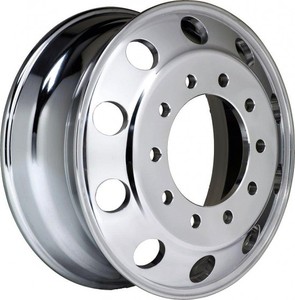
In modern commercial vehicles operating along German motorways, the wheel hub assembly serves as the single critical bridge between chassis kinetics and the road surface. For line-haul vehicles servicing the A10 Berliner Ring and radial arterial highways (A11, A12, A13, and A24), the operational envelope is notoriously demanding. Fleets experience sustained high-speed cruising coupled with abrupt stop-and-go thermal cycles within Berlin's low-emission zones (Umweltzone).
Traditional manually-packed tapered roller bearing configurations have become obsolete due to installation variance and runout vulnerabilities. Our direct factory supply centers on Compact Hub Units (Generation 3 and Cartridge Type Systems). These units integrate hardened outer raceways directly within ductile cast iron (EN-GJS-500-7) or micro-alloyed forged steel housings. By calibrating the internal clearance during automated factory induction assembly, we eliminate end-play misalignment, radically decrease friction horsepower loss, and prevent micro-spalling triggered by excessive preload or bearing thermal runaways.
Commercial transit and freight hubs in northeastern Germany demand tailored component configurations that survive severe salt exposure, frequent stop cycles, and cross-border haulage demands.
Berlin serves as the primary transshipment node between Western Europe and Poland. Articulated 40-tonne tractor-trailers staging out of GVZ Großbeeren and GVZ Freienbrink experience extreme cyclic radial loads. Our unitized wheel hubs withstand heavy payload shifts while maintaining low rolling resistance to ensure optimum fuel economy over extended long-haul duty cycles.
Low-floor buses and municipal service vehicles operating in inner-city Berlin endure relentless stop-and-start cycles and continuous curb impacts. Our specialized wheel hub assemblies feature reinforced labyrinths and fluorine-rubber (FKM) multi-lip seals that prevent brake dust ingress and resist operating temperatures exceeding 160°C caused by continuous retarder action.
Winter maintenance across the Federal State of Brandenburg exposes wheel-ends to aggressive de-icing chemicals, road brine, and gravel grit. Our hub castings feature anti-corrosion electro-deposition coating (e-coat) and anti-galling wheel stud platings (ISO 898-1 Class 10.9) to prevent galvanic corrosion and ensure rapid wheel demounting during roadside servicing.
| Parameter / Specification | OEM European Standard | Our Factory Certified Specification | Engineering Benefit for Berlin Operators |
|---|---|---|---|
| Housing Material | EN-GJS-400 Ductile Iron | EN-GJS-500-7 / Forged 42CrMo4 | +28% yield strength against catastrophic curb impact fracture |
| Bearing Configuration | Separable Tapered Rollers | Unitized Generation 3 Cartridge | Eliminates manual pre-load error; 0% risk of spindle galling |
| ABS Sensor Ring | Separate Stamped Steel Tone Ring | Integrated Magnetic / Multi-Pole Encoder | Direct signal fidelity for Knorr/Wabco EBS Modulators |
| Rotational Runout | < 0.015 mm | < 0.005 mm Precision Ground | Eliminates high-speed brake pedal pulsation & uneven rotor wear |
| Lubrication Specification | Standard NLGI 2 Lithium Grease | Fully Synthetic High-Temp Polyurea NLGI 3 | Non-melting up to 210°C; continuous protection during downhill braking |
Navigating the commercial vehicle paradigm shift across the DACH region from heavy maintenance reduction to smart predictive wheel-end telemetry.
German workshop labor costs regularly exceed €120/hour in urban centers like Berlin-Spandau and Neukölln. Fleet directors are shifting entirely away from repacking loose bearings. Procuring fully pre-set, sealed-for-life wheel hub assemblies reduces wheel-end overhaul times from 140 minutes to under 35 minutes per axle, driving down Total Cost of Ownership (TCO) across vehicle lifetimes.
With Berlin accelerating clean-air logistics requirements, electric commercial vehicles (such as the Mercedes-Benz eActros and Volvo FH Electric) are capturing local distribution routes. The instantaneous torque profiles and increased unsprung mass of battery-electric trucks impose up to 40% higher torsional stress on drive-axle wheel hubs, necessitating increased fatigue limits and optimized raceway profiles.
In accordance with the European General Safety Regulation (GSR II), commercial trailers and tractor units operating in Germany must deploy smart telematics. Our newest hub variants are engineered with integrated chambers for axle-end temperature transmitters and high-precision ABS tone rings compatible with next-gen EBS modulators to detect abnormal heat signatures before bearing seizure occurs.
Combining elite automotive production infrastructure with frictionless international logistics, clear OEM cross-referencing, and proactive European trade compliance.
Strategically anchored in Bursa—the historical center of automotive excellence—we maintain direct production capacity, cutting out multiple tiers of broker markup and supplying Berlin with unbeatable price-to-quality ratios.
Shipments bound for Germany move under the EU–Türkiye Customs Union. Our dedicated export desk executes compliant A.TR movement certificates and EUR.1 documentation for zero-customs duty clearance at German border stations.
Our centralized engineering database matches your exact part numbers across major commercial builders: Mercedes-Benz, MAN, Scania, Volvo, DAF, Iveco, SAF-HOLLAND, BPW, and JOST, eliminating misfits and premature returns.
Orders are supervised directly by experienced foreign trade and engineering personnel fluent in German, English, and Turkish. Quotations, technical datasheets, and batch tracking are delivered promptly and transparently.
Everything you need to know about lead times, certifications, customs procedures, and technical specifications for the German market.