
High-efficiency boosting units verified for Japanese commercial platforms (Isuzu, Hino, Mitsubishi Fuso, UD Trucks) and European long-haul heavy transports operating across Kanagawa, Saitama, and Chiba.
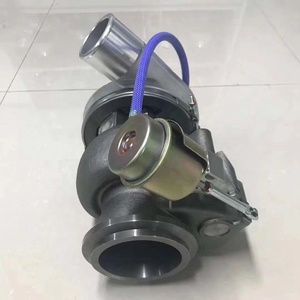
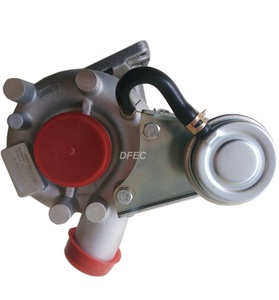
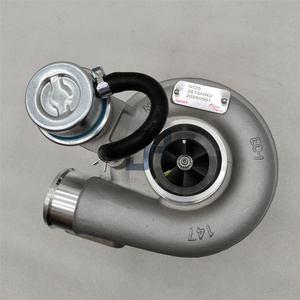
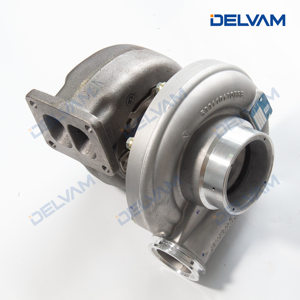
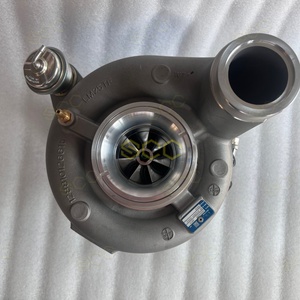
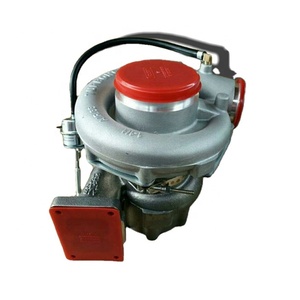
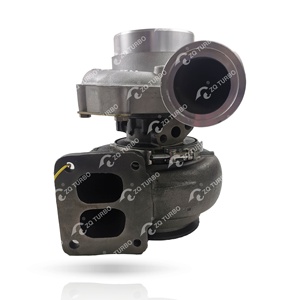
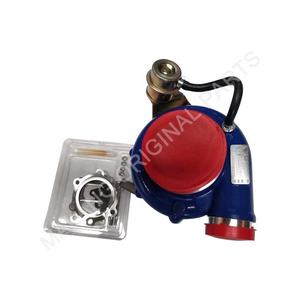
Operating commercial heavy trucks in the Tokyo Metropolitan Area presents engineering and operational challenges distinct from anywhere else in East Asia. Tight emission regulations governed by the Tokyo Metropolitan Government Bureau of the Environment, continuous stop-and-go congestion on the Shuto Expressway (Metropolitan Expressway), and round-the-clock drayage between Tokyo Port and inland logistics hubs in Saitama and Gunma demand turbocharger units that combine exceptional transient response with rigorous thermal endurance.
Container haulage operations through the Ohi and Aomi Container Terminals require heavy-duty turbochargers capable of withstanding heavy payload starts, salt-air exposure, and idle-to-boost cycles without turbine carbon buildup.
Last-mile distribution trucks traversing central Tokyo (Chiyoda, Shinjuku, Koto) demand low-inertia compressor wheels. Our billet wheel upgrades minimize turbo lag, drastically cutting soot discharge during stop-and-go acceleration.
Long-distance fleet operations on the Tomei and Kan-Etsu Expressways operate sustained high-boost levels for hours. Our nickel-alloy turbine housings prevent micro-cracking and wastegate port fatigue under continuous 850°C+ conditions.
The commercial fleet ecosystem in Kanto is undergoing a significant transition driven by decarbonization benchmarks, driver shortages, and the "2024 Logistics Problem" in Japan. Fleet workshops and independent component distributors require suppliers that adapt to shifting technical architectures.
With statutory caps on truck driver overtime in Japan, fleets cannot tolerate unscheduled downtime. Mechanics rely on complete "drop-in" turbo assemblies with pre-calibrated VNT/VGT electronic actuators to achieve 1-hour workshop turnaround times.
Post-New Long-Term emission vehicles throughout Tokyo utilize complex variable nozzle mechanisms. Sourcing has pivoted from conventional fixed-geometry chargers toward VGT/VNT units machined to tight metallurgical clearances that resist carbon binding.
Escalating costs from Japanese domestic Tier-1 dealers have spurred procurement managers across Tokyo, Yokohama, and Chiba to partner directly with dedicated international exporters offering OEM cross-referenced, high-durability replacement units.
As a global supplier with operational roots in leading automotive industrial zones and deep trade capabilities, we eliminate the friction, incorrect cross-references, and quality ambiguities common in the heavy-duty commercial aftermarket.
Structured product data mapping links original manufacturer codes, aftermarket part matrices, casting numbers, and vehicle engine models to prevent mismatch errors.
Every cartridge (CHRA) undergoes vibration sorting rig (VSR) dynamic balancing at up to 250,000 RPM, preventing premature journal bearing wear and oil-seal blowby.
Turbine housings cast from high-silicon ductile iron (SiMo) and Inconel alloy turbine wheels resist micro-cracking and thermal distortion under severe diesel combustion.
Full export documentation support including Commercial Invoices, Packing Lists, Certificates of Origin, and express air/sea freight routing directly to Narita, Haneda, or Tokyo Port.
Direct technical and logistical answers regarding cross-border B2B orders, fitment validation, customs formalities, and supply reliability.
We verify compatibility against the engine model, chassis VIN number, OEM part number, and turbocharger nameplate tag (Garrett, Holset, IHI, MHI, or BorgWarner cross-references). Prior to shipment, bolt patterns, oil inlet/drain thread sizes, and actuator harness pins are cross-referenced to ensure 100% plug-and-play installation.
Yes. Our turbocharger assemblies are manufactured to strict OEM aerodynamic specifications. By maintaining exact volumetric efficiency, airflow curve characteristics, and boost response, our units prevent excessive particulate formation, protecting DPF and SCR systems from premature soot loading and fault codes.
Every commercial export consignment is provided with formal Commercial Invoices, detailed Packing Lists with Harmonized Tariff System (HS Code) classifications, Air Waybills (AWB) or Ocean Bills of Lading (B/L), and Certificates of Origin to ensure rapid, trouble-free customs clearance via Japan Customs.
Yes. Many fleet buyers consolidate turbocharger assemblies with related engine and chassis spares—such as gaskets, oil feed lines, air brake modulators, and hub components—into a single palletized or container shipment to optimize freight and customs handling fees.
For inventory units dispatched via express international air freight (DHL/FedEx/Direct Air Cargo to NRT/HND), transit times are typically 4 to 7 business days from order confirmation. For bulk sea freight to Tokyo Port or Yokohama Port, transit schedules are coordinated based on designated sailing windows.
Yes. All turbocharger assemblies supplied with integrated electric actuators undergo multi-point bench calibration and electronic stroke validation before packing. This eliminates the need for manual actuator adaptation during workshop installation, preventing boost pressure error codes.
Have an OEM part number, turbocharger nameplate code, or bulk sourcing schedule? Connect with our dedicated export desk for competitive commercial terms, rapid identification, and prioritized shipment to Tokyo.
Inquire Now