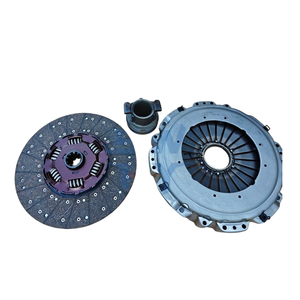
Manufacturer Direct Sales Truck Spare Parts Clutch Kits 1425316100001 Clutch Pressure Plate Assembly
Technical Specs

Precision-engineered spare parts catalog configured for heavy-duty commercial fleets, cross-border tractors, and severe-duty trailers navigating the Central Asian transportation infrastructure.
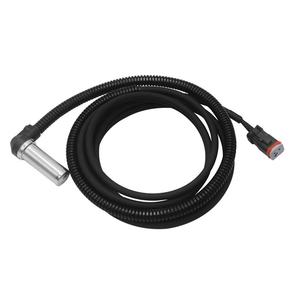
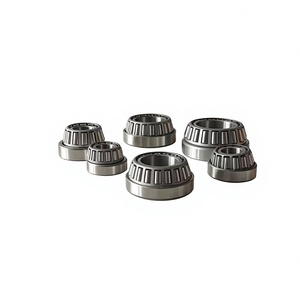
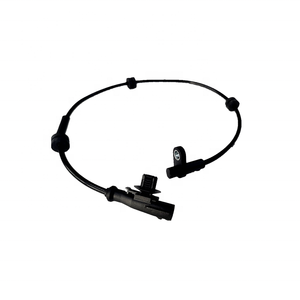
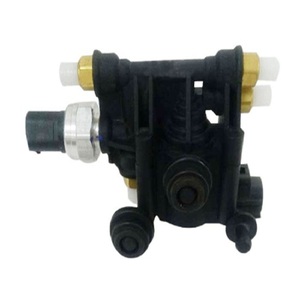
Uzbekistan’s geographic position as the heart of Central Asian logistics exposes commercial heavy-duty vehicle chassis to punishing duty cycles. International transit through the M39 highway, traversing arid landscapes between Tashkent, Samarkand, and Bukhara, demands leaf springs that resist premature sagging, micro-crack fatigue, and thermal embrittlement. Standard commercial spring packs built for uniform asphalt surfaces frequently experience structural failure under high-payload cross-border freight routes connecting to Kazakhstan, Kyrgyzstan, and China.
While low-tier aftermarket alternatives commonly use standard carbon or silicon-manganese alloys (60Si2Mn / SUP9), rigorous transport corridors require chromium-vanadium (50CrV4 / 51CrV4) formulation. The addition of Chromium and Vanadium refines grain structure during heat treatment, maintaining a minimum tensile strength of 1450–1750 MPa and exceptional yield-to-tensile ratios. For fleet managers and distribution hubs operating in Navoi and Tashkent, this translates to heightened resistance to permanent deformation under variable gross vehicle weights (GVW).
The lifespan of a commercial leaf spring is determined before paint application. Premium manufacturers utilize computer-controlled gas furnaces ensuring uniform austenitizing temperatures, followed by rapid oil quenching and controlled tempering cycles to attain a consistent Core Hardness between 388 and 461 HBW (Brinell Hardness). Following precise eye-rolling and robotic camber setting, leaf surfaces undergo automated dual-sided high-velocity shot-peening. This process induces beneficial residual compressive stress on the upper convex tension surface, elevating cyclic fatigue thresholds beyond 150,000 stress cycles under complete oscillation loads.
Commercial vehicles operating within the Republic of Uzbekistan fall into distinct logistical categories, each placing divergent mechanical demands on steering and drive axle suspension geometry.
European and Turkish tractor units (Mercedes-Benz Actros, MAN TGX, Volvo FH, Scania R-Series) traversing long-haul cross-border corridors. Parabolic multi-leaf setups guarantee cargo stability, minimize deadweight, and absorb severe harmonic vibrations across regional border transitions.
Heavy tri-axle tippers and dump trucks (KAMAZ, Shacman, Sinotruk HOWO) operating within the Navoi Mining & Metallurgical Combinat (NMMC) and Almalyk industrial sectors require heavy multi-leaf trapezoidal springs with reinforced main leaves to withstand extreme point-load stresses.
Agro-industrial transport throughout the Fergana Valley and Samarkand agricultural hubs involves frequent transition between unpaved rural loading zones and paved arterial bypasses. Engineered multi-leaf springs provide progressive damping to shield axle stubs and differentials.
Uzbekistan continues to demonstrate the fastest-growing logistics capacity within Central Asia. Several transformative industrial developments directly influence how fleet purchasing managers and automotive distributors procure suspension components:
While historically dependent on high-leaf-count conventional multi-springs common to legacy CIS chassis, the rapid influx of modern Chinese commercial tractors (Sitrak, Faw Jiefang, Foton) and European commercial haulers has propelled demand for high-stress parabolic leaf springs. Parabolic designs reduce unsprung vehicle mass by 25–35%, directly translating into improved fuel efficiency and payload optimization over long desert highways.
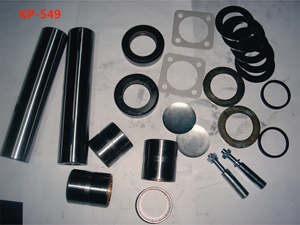
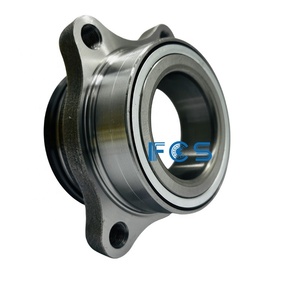
Importers and workshop chains in Tashkent and Andijan are actively moving away from multi-tier re-exporters in favor of direct manufacturer partnerships that offer certified OEM cross-references, complete metallurgical tracing, and compliant international commercial documentation. The capability to consolidate leaf springs alongside complementary chassis items—such as clutch assemblies, king pin sets, wheel bearings, and ABS sensors—substantially reduces total landed logistical costs.
Combining modern industrial manufacturing with deep foreign trade coordination, we eliminate compatibility errors and delivery bottlenecks for commercial vehicle distributors across Uzbekistan.
Critical metallurgical, documentation, and ordering parameters verified for local purchasing agents and regional distributors.