Braking · Hydraulic/Pneumatic

Explore heavy-duty spare components verified against original drawings, precision casting tolerances, and rigorous sealing benchmarks for European operating environments.
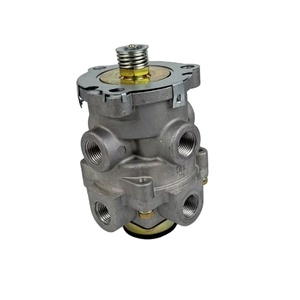
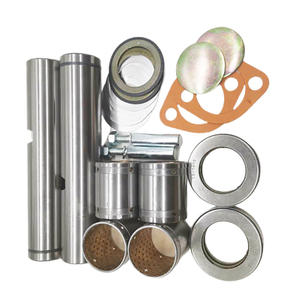
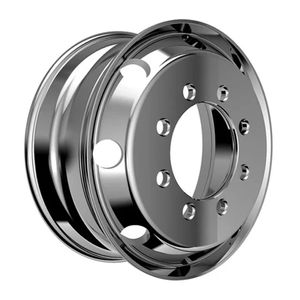
In modern commercial heavy-duty vehicles, the Air Processing Unit (APU)—often designated as an Electronic Air Control (EAC) or Electronic Air Processing Unit (E-APU)—has evolved far beyond a passive mechanical desiccant canister. It operates as the mission-critical central nervous system for commercial vehicle pneumatic circuits. By consolidating the air dryer, multi-circuit protection valve (four-circuit valve), digital system pressure regulator, and electronic control solenoid array into a single unibody die-cast housing, the APU dictates downstream efficiency across the service brake circuits, air suspension leveling, pneumatic clutch actuation, and trailer supply lines.
For fleet maintenance engineers and component distributors across Europe, understanding the internal mechanical tolerances is paramount. High-output twin-cylinder compressors generate discharge air temperatures upwards of 160°C loaded with vaporized lubricating oil, water condensate, and particulate matter. If the desiccant cartridge and integrated coalescing pre-filter fail to strip oil aerosols down to <0.1 mg/m³, micro-droplets precipitate into downstream ABS/EBS axle modulators. In cold weather, this emulsion coagulates, causing sticky poppet valves, cracked O-rings, and delayed brake response times. Our precision-machined APU housings feature automotive-grade aluminum alloys, micro-finished internal valve bores, and premium HNBR seals engineered to eliminate cross-circuit blow-by under extreme cyclic vibration.
Operating commercial freight through Bulgaria places unique thermodynamic and mechanical demands on commercial vehicle compressed air management systems.
Navigating the Stara Planina passes (Petrohan, Beklemeto, Shipka) forces heavy-haul trucks into prolonged engine braking and pneumatic modulation. Constant cycling of exhaust brakes and automated transmissions consumes immense air volumes, driving APU duty cycles beyond 45%. Thermal saturation requires rapid desiccant regeneration without continuous blow-off pressure drops.
Fleets staging intermodal freight around Burgas and Varna encounter maritime ambient humidity exceeding 85% paired with saline atmospheric exposure. Moisture ingress into uncalibrated purge valves causes internal galvanic corrosion between steel valve springs and aluminum walls. Specialized anodized internal conduits and high-capacity desiccant beds are non-negotiable.
The Turkish-Bulgarian border at Kapitan Andreevo/Kapıkule represents one of the busiest land border crossings on earth. Extended idling in hours-long freight lines causes engine compartment heat soak while compressor discharge air cools unevenly. Electronic APU purge algorithms must manage condensation expulsion even during low-RPM idle without depleting auxiliary reservoir reserves.
Analysis of ongoing structural shifts in fleet procurement, emissions standards, and maintenance strategies across Eastern and Southeastern European corridors.
Bulgarian international haulers operating Euro 6 Mercedes Actros, Volvo FH, and DAF XF are retiring traditional mechanical four-circuit valves in favor of software-managed electronic air processing units. These units interface via CAN-bus to disengage the engine compressor during high-torque climbs, saving fuel and reducing carbon footprint metrics across long-haul routes.
Unplanned downtime on high-priority routes (Corridor IV and Corridor X) incurs crippling penalties. Bulgarian workshop networks increasingly mandate premium oil-coalescing desiccant cartridges during routine 12-month PM cycles, pairing them with full valve rebuild kits rather than waiting for catastrophically contaminated downstream brake modulators.
Global supply chain volatility has pushed Bulgarian parts distributors (across Sofia, Plovdiv, Ruse, and Stara Zagora) away from high-tariff, long-lead East Asian container shipments. Leveraging the Bursa-Bulgaria industrial corridor enables delivery within 24 to 72 hours via Kapitan Andreevo under streamlined ATR customs arrangements.
Bulgarian annual roadworthiness tests (GTP - Godishen Tehnicheski Pregled) have heightened scrutiny on commercial brake imbalance and reservoir pressurization latency. Fleets can no longer afford sluggish multi-circuit valve opening pressures. Certified APUs calibrated to strict OEM opening thresholds (Circuit 21/22 at 8.5 bar, Circuit 23/24 at 7.0 bar) are now mandatory.
Headquartered in Nilüfer, Bursa—the epicenter of automotive industrial manufacturing—we bridge the gap between heavy-duty engineering excellence and seamless international trade. Backed by decade-long expertise in foreign trade, parts identification, and strict export documentation, we ensure European B2B buyers receive precision-calibrated components without bureaucratic friction.
Direct technical and operational answers to address cross-border compliance, pneumatic diagnostics, and order fulfillment.
For electronic air processing units (E-APU/EAC), exact electronic cross-referencing is essential. We require the 10-digit OEM part number (e.g., Knorr K020624, Wabco 932 510 series, or truck manufacturer codes such as Mercedes A 001 431 7915). Our technical desk verifies the software parameter configuration, connector pinouts (K-Line vs. high-speed CAN-bus), and auxiliary solenoid voltage ratings (24V heavy-duty standard) before dispatch to ensure plug-and-play synchronization without dashboard DTC error codes.
Because goods originate within the EU–Türkiye Customs Union framework from Bursa, we prepare comprehensive commercial invoices, detailed packing lists with net/gross weights and HS codes (e.g., 8421.39 for air dryers/processing units), and where applicable, the A.TR movement certificate. This allows Bulgarian importers to benefit from duty-free customs clearance, minimizing border dwell times to routine electronic transit declarations.
Bursa's geographic proximity to northwestern Turkish highway logistics corridors provides unmatched transit speed. Dedicated road freight shipments typically arrive in Sofia, Plovdiv, or Haskovo within 24 to 48 hours following customs dispatch. Groupage and consolidated pallet loads typically clear within 3 to 4 business days, significantly faster than Western European or overseas alternatives.
Yes. We supply both complete factory-assembled, tested APU units and granular sub-assembly rebuild kits. This includes multi-circuit protection valve diaphragms, purge valve maintenance kits, heating elements (24V anti-freeze thermal switches), pressure relief cartridges, and premium oil-separating desiccant cartridges (M39x1.5 or bayonet connections).
Units destined for Balkan winter operations feature heavy-duty 24V/100W heating coils embedded around the purge exhaust valve seat. This prevents moisture freezing and valve seizure during sub-zero operations down to -40°C across the Danubian Plain. Internal rubber seals are molded from hydrogenated nitrile butadiene rubber (HNBR), maintaining elastic memory and sealing integrity under severe thermal shock.
For qualified order volumes, we support customized brand packaging, laser etching of customer SKU part codes, individualized barcoding, and neutral wooden crate master packaging. All private-label batches undergo identical strict end-of-line pneumatic pressure bench tests with accompanying quality compliance sheets.