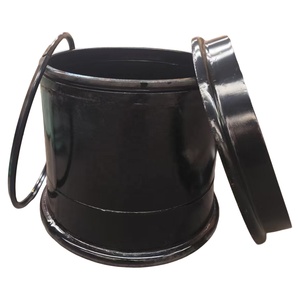
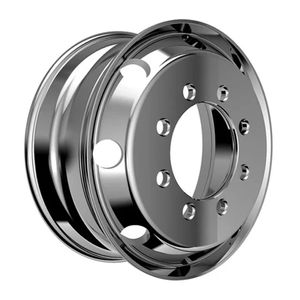
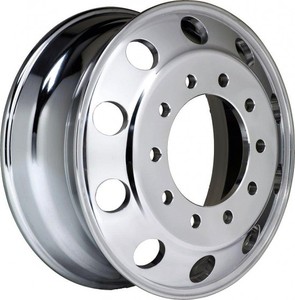
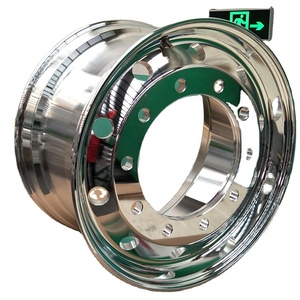
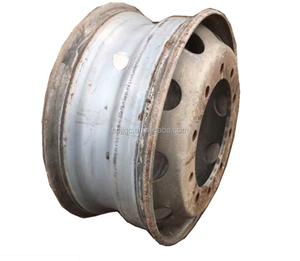
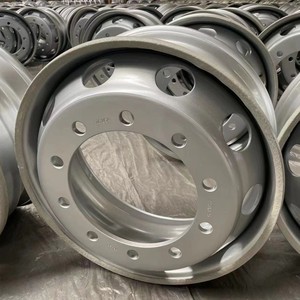
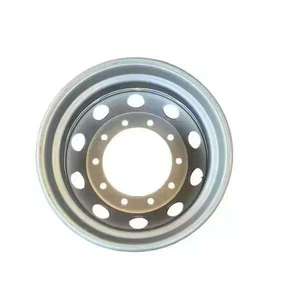
OTR 3PCS Loader Wheel Rim Hub 20-26 Inch Road Roller Steel Wheel Rims for 23.1-26
- Material: High-Tensile Structural Steel
- Structure: 3-Piece Demountable Lockring
- Application: Canadian Infrastructure & Mining
Precision manufactured according to strict North American ETRTO and TRA standards. High-strength forgings, reinforced dual-spacing steel discs, and extreme load ratings tested for Class 7-8 regional and long-haul operations.
Heavy freight in Canada is fundamentally different from continental operations in Europe or Asia. Cross-border corridors, remote resource roads, and sub-zero freeze-thaw cycles require precise mechanical resilience.
Class 8 tractors hauling raw timber, iron ore, and heavy biomass navigate unpaved access corridors in regions like the Abitibi-Témiscamingue and Northwestern Ontario. These applications require reinforced 14mm thick wheel discs that resist torsional stress caused by deep gravel ruts and uneven crowning.
Our heavy-duty steel wheels utilize cold-expanded disc technology to prevent radial micro-fissuring around bolt holes during dynamic lateral torque spikes.
Long-haul corridors connecting Montreal, Toronto, Calgary, and Vancouver demand minimum rolling resistance and strict rotational mass optimization. Fleets running tandem-tandem and tridem dry-vans switch from dual steel wheels to 22.5×8.25 forged 6061-T6 aluminum assemblies.
Weight reductions exceeding 500 kg per tractor-trailer combination allow fleet dispatchers to maximize revenue payload under Canadian Federal Bridges Formula restrictions.
Operating across Alberta, Saskatchewan, and Manitoba, 8-axle Super B-Train grain and petroleum tankers run at gross vehicle weights up to 63,500 kg (140,000 lbs). Dual-wheel tridem sets encounter continuous cyclic brake drum heat dissipation up to 350°C during engine braking.
Our forged aluminum rims offer 3.2 times the thermal dissipation conductivity of carbon steel, significantly extending air brake drum life and reducing wheel-end seal burnouts.
A technical breakdown of changing provincial axle standards, weight regulations, and environmental operating environments shaping wholesale wheel selection across Canada.
Procuring commercial truck wheel rims for the Canadian aftermarket requires a granular understanding of MOU (Memorandum of Understanding) on Interprovincial Weights and Dimensions. Unlike standardized US Interstate guidelines, Canadian provinces maintain stringent gross axle weight rating (GAWR) mandates, particularly regarding seasonal thaw restrictions.
| Regulatory & Engineering Vector | Standard North American Specification | Canadian Severe-Duty Optimized Requirement | Engineering Mitigation Implemented |
|---|---|---|---|
| Low-Temperature Toughness | SAE J267 room temp yield: ~345 MPa | Charpy V-Notch Impact at -40°C ≥ 27J | Micro-alloyed Q345E / Normalized Low Carbon Steel |
| De-icing Chemical Corrosion | Standard primer + single powder coat (500h) | Magnesium Chloride / CaCl brine proof (1000h+) | Dual Zinc-Phosphate Cathodic Electrocoat + Fluoropolymer |
| Tandem / Tridem Super B Loads | Standard dual rated: 3,250 kg per rim | Heavy haul rated: 3,750 kg - 4,125 kg per rim | Reinforced hub-bore radius flange with 14mm thick mounting plate |
| Hub Pilot Precision (ISO 4107) | Center bore tolerance: ±0.25mm | Ultra-low runout radial tolerance: ≤ 0.12mm | 100% automated CNC lathe machining of disc center pilot bore |
1. The Shift to Wide-Base Singles vs. Dual Wheels: While wide-base single tires (such as 445/50R22.5 mounted on 22.5×14.00 rims) offer superior fuel economy, Canadian fleets historically faced payload penalties in provinces like Ontario and Quebec due to localized road damage concerns. However, as provincial transportation ministries harmonize axle weight allowances for wide-base tires with dual-tire configurations, demand for precision offset super-single forged rims has grown by over 18% year-over-year in line-haul fleets.
2. Corrosion-Resistant Finishes for Calcium Chloride Resistance: Canadian winters rely heavily on liquid calcium chloride and magnesium chloride road brines. These chemical de-icers penetrate traditional powder coat micro-cracks, causing galvanic corrosion and wheel nut torque loss. Advanced Canadian fleet purchasing now specifies wheel finishes tested to ASTM B117 salt spray standards exceeding 1,000 continuous hours without creepage from the bolt holes.
Backed by extensive automotive manufacturing depth, structured engineering documentation, and end-to-end container logistics handling directly from Tier-1 manufacturing hubs.
Every batch passes destructive cornering fatigue testing exceeding 1,000,000 cycles under 1.5x nominal radial loads per SAE J267 and ISO 3894. We verify microstructure grain boundary integrity via automated ultrasonic crack detection.
Full cross-reference database matching leading global part numbers (Accuride, Alcoa, Maxion) with exact technical equivalence. We maintain complete traceability from virgin ingot lot chemistry to individual laser-etched serial codes.
We coordinate freight straight through major Canadian hubs—providing complete customs documentation, Certificate of Origin, mill test reports, and optimized container packing cubes designed to eliminate transit scuffing.
Addressing critical technical, logistics, and compliance considerations when importing commercial truck wheel rims into Canada.
Yes. All exported commercial wheel rims conform fully to SAE J267 recommended practices and carry DOT-T markings as required under Canada Motor Vehicle Safety Standards (CMVSS) and US DOT regulations. Each rim is stamped with rim size, offset, manufacturing date, factory identifier code, and rated maximum load/inflation capacity.
The vast majority of modern Canadian Class 7-8 fleets utilize the 10-hole, 285.75mm bolt circle (PCD) with a 220mm center bore Hub-Piloted mounting system (utilizing M22×1.5 flange nuts). We also manufacture ISO 4107 10-hole 335mm PCD wheels for vocational European cab-overs and agricultural applications, as well as classic stud-piloted configurations upon demand.
Our steel wheels undergo a multi-stage pretreatment including automated grit blasting, zinc phosphate chemical conversion, and automated cathodic electrodeposition (E-coat) followed by an exterior durable acrylic powder coat. This achieves over 1,000 hours of resistance to neutral salt spray testing (ASTM B117) without blister formation or paint detachment around the hand holes and flange bead seat.
Yes. We understand Canadian aftermarket warehouse inventory balancing. We regularly consolidate standard 22.5×8.25 steel wheels, forged aluminum steer rims, and wide-base 22.5×11.75 trailer rims within a single 40ft High Cube container. We also provide wheel-end accessory consolidation including valve stems, wheel nuts, and brake components.
Production lead time typically averages 25 to 35 calendar days depending on custom surface finishing requirements. Ocean transit to Port of Vancouver (for Western distribution via CP/CN rail) averages 18-22 days, while transit to Port of Montreal or Halifax (for Eastern distribution) averages 28-35 days. We provide direct FOB, CIF, or DDP terms tailored to your brokerage setup.
We provide a comprehensive 5-Year Limited Structural Warranty on forged aluminum truck wheels and a 2-Year Warranty on commercial steel wheels. This covers material porosity, weld separation, disc fatigue cracks, and paint failure under normal commercial operating conditions. Batch trace numbers are permanently stamped onto every wheel rim for instant audit validation.