Hydraulic Friction
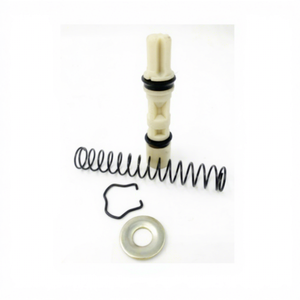

Manufactured to withstand severe thermal cycling and high-payload duty cycles. Each kit and assembly undergoes dynamometer profiling, ultrasonic bond validation, and precise dimensional cross-referencing for Japanese, European, and transcontinental haulage platforms.
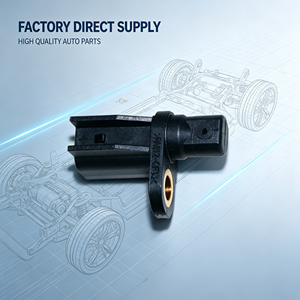
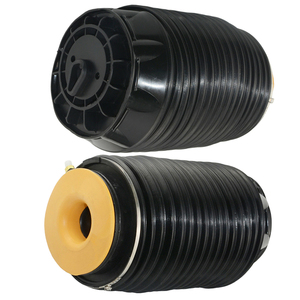
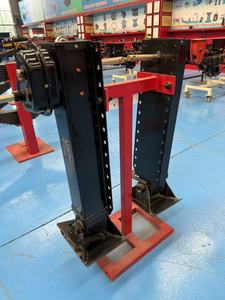
Modern commercial heavy trucks operating in high-density corridors—such as the Nagoya-Chukyo metropolitan region—require friction interfaces engineered far beyond baseline replacement parameters. Drum brake assemblies face severe mechanical stress: when a 36-ton gross combination weight decelerates from highway cruising speeds, kinetic energy transforms into friction heat exceeding 600°C within the contact arc. Substandard brake lining kits experience resin glass transition, leading to instantaneous friction coefficient decay (brake fade), drum cracking, and critical stopping distance increases.
Our Nagoya export factory utilizes hot-pressed, composite semi-metallic and ceramic-matrix formulations. By combining aramid fibers, spherical bronze particulates, synthetic graphite, and high-temp novolac phenolic resins, our brake lining kits provide a predictable frictional profile across wide thermal spectrums. Crucially, the formulation is calibrated to preserve the mating cast-iron drum's metallurgical integrity, preventing micro-grooving and premature heat crazing.
Each lining kit segment is precision ground using 5-axis computer-controlled tooling to ensure zero-point radial taper against standard SAE, JIS, and DIN drum diameters, drastically speeding up bed-in intervals.
Engineered counterbore hole depths and high-ductility brass/steel blind rivet compatibility stop lining displacement during panic stops, anti-lock pulse cycling, and continuous descending retarder braking.
Embedded damping grooving and particulate-binding matrix prevent low-frequency squeal (1–3 kHz) and reduce respirable brake dust, compliant with strict regional environmental port mandates.
Laboratory comparative data based on Chase Dyno and full-scale dynamometer test cycles according to SAE J661 and JIS D4411 methodologies.
| Parameter / Property | Conventional Aftermarket Lining | Nagoya Industrial Heavy Kit (Our Spec) | Operational Advantage |
|---|---|---|---|
| Normal Friction Coefficient (F) | 0.32 - 0.36 | 0.40 - 0.44 (Class FG/GG) | 18% shorter stopping distance at loaded Gross Axle Weight (GAWR) |
| Hot Friction Recovery (Fade Test @ 350°C) | < 0.26 | 0.38 - 0.41 | Near-zero torque fade during sustained downhill exhaust braking |
| Rivet Hole Shear Strength | > 22.0 MPa | > 38.5 MPa | Prevents lining detachment from the shoe core under emergency ABS stops |
| Specific Wear Rate (cm³/N·m) | 1.85 × 10⁻⁷ | 0.92 × 10⁻⁷ | Extends reline cycles from 80,000 km to over 130,000 km |
| Mating Drum Surface Wear Impact | High (Rz > 12μm micro-gouging) | Minimal (Uniform glaze, Rz < 4.5μm) | Protects costly hub-drum assemblies, eliminating premature turning |
The Greater Nagoya industrial cluster—anchored by the Port of Nagoya, Japan's busiest automotive hub by cargo throughput—operates thousands of heavy tractor-trailer combinations moving continuous automotive sub-assemblies, heavy machinery, and steel coils across the Tomei, Meishin, and Isewangan Expressways.
In this high-duty-cycle operating profile, stop-and-go drayage near container terminals places intense low-speed thermal stresses on foundation brake components. Brake lining kits must avoid glazing during prolonged idling while offering instantaneous torque grab when merging onto expressways with maximum payload ratings. Our factory-tailored friction kits are matched to these multi-regime demands, serving both regional domestic fleets and container chassis exporters shipping units globally via Nagoya Harbour.
As Japanese commercial fleets transition toward battery-electric (BEV) and hydrogen fuel cell (FCEV) freight haulers, commercial brake lining demands are shifting. Regenerative braking takes over primary low-intensity slowing, leaving friction brakes disengaged for longer intervals.
When mechanical braking is suddenly engaged in an emergency, cold-drum friction performance is critical. Standard linings perform poorly when cold; our low-temperature initial-bite additives ensure that cold brake torque is within 95% of peak operating torque from the very first pedal actuation. Additionally, anti-corrosive friction face additives suppress moisture adhesion during extended rainy seasons, avoiding friction drop-off after river corridor transit.
Combining world-class manufacturing precision, deep supply-chain linkages, and direct international logistics capabilities.
Every brake lining kit, valve, and sensor is mapped to exact OEM references (JIS, Mercedes-Benz, Volvo, Scania, DAF, Ford, Hyundai). Our engineering team verifies dimensions, hole spacing, and curvature to avoid costly fitment errors before dispatch.
Combine brake lining kits with wheel hubs, ABS sensors, slack adjusters, and air springs into single multi-category container orders. Simplify customs clearance, save sea freight, and keep inventory lean.
Full commercial compliance: Certificate of Origin, tailored packing lists, testing certificates, and bilateral free trade paperwork. Your import processes proceed smoothly with no dockside delays.
With a decade of international trade and logistics expertise, our technical sales desk communicates in English, German, and Turkish, ensuring fast commercial and technical alignment on every production run.
Everything procurement heads and fleet distributors need to know about purchasing commercial brake lining kits and brake system hardware.
Whether you require standard aftermarket brake lining sets, heavy-duty trailer hardware, or complete axle rebuild assemblies, connect with our technical trade desk today for OEM cross-matching, test certifications, and container-level pricing.