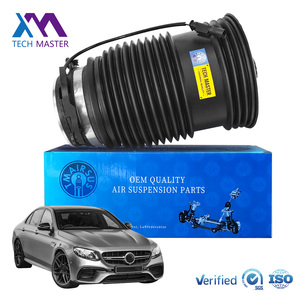
Direct supply matching original equipment (OE) tolerances, ISO/TS 16949 & IATF 16949 certified manufacturing lines, and engineered cross-references for commercial vehicle fleets operating in South Korea.
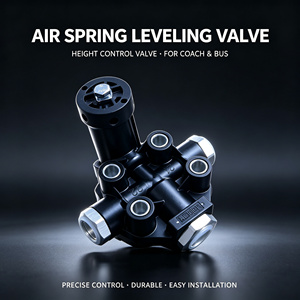
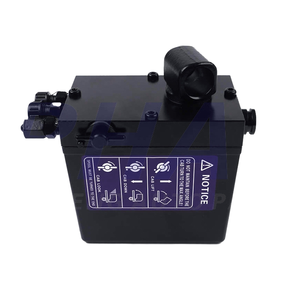
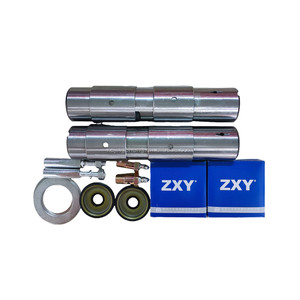
A rigorous evaluation of wheel-end mechanics, thermal dissipation thresholds, and structural integrity under South Korean commercial transport operational profiles.
The Seoul-to-Busan corridor (Gyeongbu Expressway) represents South Korea's highest gross-vehicle-weight (GVW) throughput artery. Tractors operating between Incheon Port container yards, Uiwang ICD (Inland Container Depot), and Greater Seoul logistics hubs undergo relentless cyclic loading.
Our heavy-duty truck wheel hub assemblies are forged using high-grade spheroidal graphite ductile iron (QT450-10 / GGG40) and advanced bearing steels (GCr15/100Cr6), ensuring high fatigue limits against persistent dynamic shear stresses.
The mountainous approaches surrounding Gyeonggi-do combined with stop-and-go congestion on the Seoul Ring Expressway (Capital Region First Ring Expressway) subject wheel hubs to extreme brake rotor heat conduction. Thermal spikes routinely exceed 350°C during regenerative retardation phases.
We incorporate optimized rotor mounting flanges with ventilated heat sinking geometry, preventing premature lubricant degradation, grease liquefaction, and seal embrittlement in severe friction conditions.
South Korea's winter municipal road treatments heavily utilize calcium chloride (CaCl2) brine across Seoul's bridges and highway interchanges. Standard commercial wheel hubs rapidly succumb to galvanic corrosion, ABS sensor ring scaling, and stud galling.
Our assemblies feature anti-corrosion electro-deposition coatings and Dacromet/Geomet surface treatments capable of passing 720-hour neutral salt spray tests (ASTM B117), preserving hub face runout below 0.02 mm.
| Performance Parameter | Standard Aftermarket Benchmark | Our Heavy-Duty Hub Standard | Direct Impact on Seoul Fleet Operations |
|---|---|---|---|
| Flange Raw Material | Gray Cast Iron HT250 | Ductile Iron QT500-7 / Forged 42CrMo | Eliminates flange cracking on potholed metropolitan bridges |
| Pre-set Bearing Radial Runout | ≤ 0.045 mm | ≤ 0.015 mm (Micron-Ground Raceways) | Suppresses highway harmonic vibration at 80-100 km/h cruising |
| Rotational Seal Type | Standard NBR Lip Seal | Cassette Radial Triple-Lip FKM Seal | Prevents moisture/calcium chloride intrusion during wet winters |
| ABS Tone Ring Tolerance | Machined Tooth ±0.10 mm | Integrated Magnetic / Laser Sensor ±0.02 mm | Prevents false EBS fault codes during city stop-and-go braking |
Analyzing the strategic transition from serviceable loose tapered roller bearings to fully integrated pre-set unitized hub units across the Korean peninsula.
Maintenance labor rates in Seoul and surrounding Incheon metropolitan repair centers have increased over 38% over the past decade. Fleet managers are replacing traditional separate inner/outer cone assemblies with pre-adjusted, lubricated-for-life unitized hub units.
Our Generation 3 complete hub assemblies do not require manual torque adjustment or bearing clearance shimming during installation, cutting workshop bay turnaround time from 2.5 hours down to 40 minutes per corner.
As South Korea accelerates the adoption of hydrogen fuel-cell commercial trucks (e.g., Hyundai XCIENT Fuel Cell) and electric commercial rigids for urban green zones in Seoul, unsprung corner mass and curb weight distributions have surged.
Higher instant low-end torque profiles place severe torsional stresses on hub splines and wheel studs. Our engineering portfolio incorporates 10.9- and 12.9-grade high-shear wheel studs and reinforced barrel geometry designed to manage high regenerative braking torque transfer.
Commercial transport fleets traversing Korean expressways face strict inspections governed by the Ministry of Land, Infrastructure and Transport (MoLIT). Dynamic brake force equalization and EBS wheel speed sensor stability are strictly audited during annual vehicle roadworthiness tests.
Our wheel hub units feature precision-machined tone wheels (pole rings) with zero magnetic variance, ensuring seamless compatibility with Knorr-Bremse, WABCO, and Haldex EBS diagnostic architectures.
Combining automated precision machining in China with established foreign trade, logistics, and cross-reference validation systems.
Part number discrepancies lead to costly supply chain delays. We maintain a verified technical cross-reference matrix matching OEM part numbers, European aftermarket codes, and Asian commercial axle specifications.
Situated within primary Chinese coastal manufacturing corridors, we provide scheduled containerized and LCL sailings directly to Incheon New Port and Pyeongtaek Port, minimizing regional transit delays.
From raw melt spectroscopic analysis to automated CNC turning centers and coordinate measuring machines (CMM), every manufacturing step is tracked under IATF 16949 parameters.
Key technical, regulatory, and commercial factors for sourcing commercial wheel hub units and chassis components into South Korea.
Submit your OEM part numbers, dimensional sketches, or fleet requirements. Our technical sales team provides engineering fitment verification, RCEP tariff reviews, and direct sea-freight quotations to South Korea within 24 business hours.