
Direct manufacturer-engineered tubeless steel and 6061-T6 forged alloy wheels engineered to European ETRTO, TÜV, and DOT standards. Rigorously load-rated for high-mileage articulated transit, construction logistics, and intermodal transport hubs.
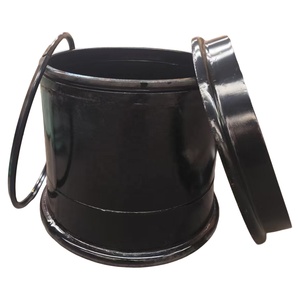
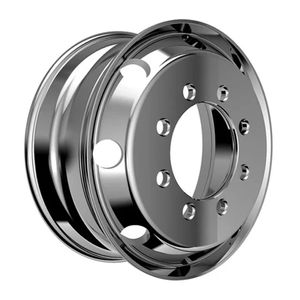
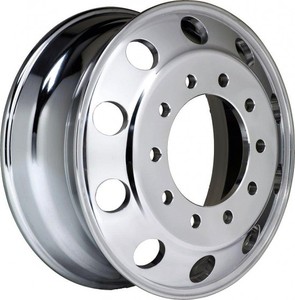
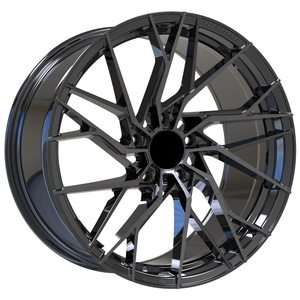
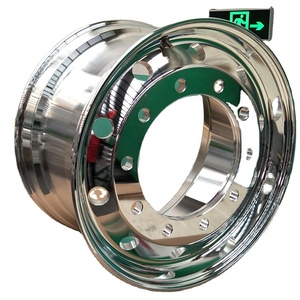
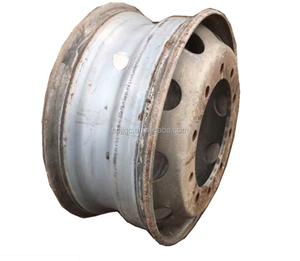
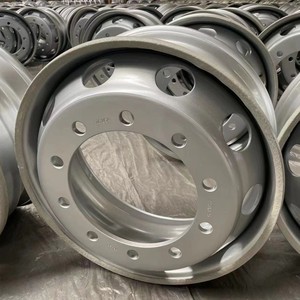
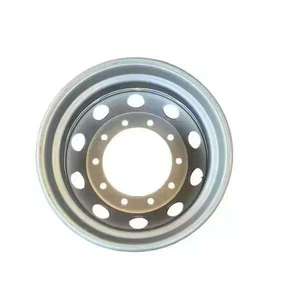
Wheel rims function as the primary structural interface between a heavy commercial vehicle's pneumatic dampening system and the road surface. In demanding European long-haul and regional distribution corridors, the mechanical properties of wheel assemblies directly dictate unsprung mass, rolling resistance, tire bead thermal longevity, and brake heat dissipation.
Our OEM and ODM wheel manufacturing ecosystem implements 10,000-metric-ton hydraulic forging presses to process monolithic aerospace-grade 6061-T6 aluminum ingots. Through precise multi-stage directional forging, the dendritic crystalline structure of raw cast aluminum is transformed into continuous, unbroken grain flow lines oriented along the wheel rim contour. This eliminates porosity, internal micro-voids, and stress concentration points common in cast wheels. The result is a tensile strength surpassing 310 MPa and a yield point beyond 275 MPa, yielding a commercial wheel that is up to 22 kg lighter per wheel end compared to traditional rolled-steel equivalents.
For extreme duty applications, quarry works, and heavy container transport across the Mediterranean basin, our heavy-duty steel wheel rims utilize cold-formed high-strength low-alloy (HSLA) structural steels such as S355MC and SPH440. Rims feature robotic multi-pass submerged arc welding along the disc-to-rim juncture, followed by full cathodic electrodeposition (e-coating) and a zinc-phosphate pretreatment layer exceeding 25 microns. This ensures structural resistance against radial fatigue under severe payload conditions exceeding 4,500 kg per assembly.
| Dimensional Size | Material Specification | PCD / Centering Hole | Offset (ET) | Payload Rating (kg) | Target Axle Position |
|---|---|---|---|---|---|
| 22.5 x 8.25 | Forged 6061-T6 Alloy | 10 × 335 mm / 281 mm | 148 mm | 3,750 kg | Steer / Drive Axles |
| 22.5 x 9.00 | Forged 6061-T6 Alloy | 10 × 335 mm / 281 mm | 161 mm / 175 mm | 4,125 kg | Heavy Drive / Semi-Trailer |
| 22.5 x 11.75 | Forged 6061-T6 Alloy | 10 × 335 mm / 281 mm | 0 mm / 120 mm | 5,000 kg | Super Single Trailer / Tanker |
| 22.5 x 8.25 | Formed Steel S355MC | 10 × 335 mm / 281 mm | 152 mm | 3,550 kg | Drive / Tag Axles |
| 19.5 x 7.50 | Formed Steel / Alloy | 8 × 275 mm / 221 mm | 136 mm | 3,000 kg | Low-Loader / Mega-Trailer |
| 24-26" OTR Multi-Piece | Cast / Welded HSLA Steel | Direct Hub Fit / Multi-Lug | Custom Negative | 8,500+ kg | Compactor / Port Crane / Loader |
The Metropolitan Area of Barcelona (AMB) and the broader Catalonia region represent one of Southern Europe’s most demanding commercial transport environments. Operating wheel equipment in this geographic corridor requires tailored mechanical and thermal attributes to accommodate specific operating constraints.
Drayage operators moving forty-foot equivalent units (TEUs) out of the Port de Barcelona (ZAL II and Prat dock terminals) face airborne marine chlorides and high cyclic braking at container depots. The constant exposure to salt air accelerates contact corrosion between the wheel rim flange and the tire bead seat. Our wheel assemblies utilize high-purity alloy formulations that naturally form a dense passivating aluminum oxide film, paired with proprietary ceramic clear-coating or 3-coat e-coat steel barriers. This design prevents bead seat pitting and eliminates air loss in tubeless radial tires.
Long-distance hauliers traversing the AP-7 freight corridor toward La Jonquera and into France experience sustained high-speed operations over undulating topography. During ambient Mediterranean summer temperatures exceeding 38°C, heavy retarding and disc friction can elevate brake rotor temperatures beyond 550°C. Forged alloy rims provide a thermal conductivity of roughly 205 W/(m·K)—over three times greater than steel’s 50 W/(m·K). This heat dissipation channel pulls heat away from the disc brake rotor, reducing brake fade, preventing premature vulcanization of tire beads, and doubling hub seal life.
With strict enforcement of the Zona de Baixes Emissions (ZBE) throughout central Barcelona and the Llobregat industrial basin, local distribution fleets face strict limits on operational vehicle weights and particulate emissions. Converting a 5-axle articulated tractor-trailer combination (12 wheel ends) from conventional heavy steel rims to forged aluminum saves approximately 240 to 280 kg of tare weight. This reduction can be directly converted into revenue-generating legal payload capacity while lowering diesel consumption and battery draw on electric commercial trucks.
Fleet operators in Barcelona, Granollers, Martorell, and Tarragona are adjusting operational metrics to meet the European Union's Greening Freight Transport package and ambitious national decarbonization goals. Wheel rim procurement has moved beyond basic unit cost to a lifecycle Total Cost of Ownership (TCO) evaluation framework:
1. Fleet Electrification & Unsprung Weight Compensation: As regional parcel couriers and grocery chains deploy heavy battery-electric vehicles (BEVs) like the Mercedes-Benz eActros and Volvo FH Electric into Barcelona distribution centers, massive battery packs add 1.5 to 3.0 metric tons of tare weight. Specifying lightweight forged 22.5" alloy wheel rims provides immediate weight reduction that offsets battery weight, helping preserve legal payload limits under Spanish traffic regulations.
2. Fuel Economy & Dynamic Rolling Drag: Laboratory and track evaluations demonstrate that reducing rotational inertia at the wheel ends decreases initial driveline energy requirements. Fleets running continuous loops along the A-2 and C-32 corridors typically see fuel savings between 1.5% and 2.8% on forged alloy configurations. Across a 140,000 km annual run, this yields hundreds of liters of diesel saved per tractor-trailer combination.
3. Tire Casing Integrity for Retreading: High operating temperatures are the primary cause of tire bead failure and carcass fatigue. Superior rim heat rejection keeps operating tire temperatures up to 22°C lower. For transport companies relying on premium Michelin, Continental, or Bridgestone casing retread programs, preserving the tire bead integrity allows two to three retread cycles, cutting annual tire expenses by up to 35%.
Sourcing commercial wheel components from international manufacturing hubs requires verified engineering consistency, rigorous cross-referencing, and streamlined customs execution. We bridge high-capacity manufacturing lines with local procurement needs across Spain and Southern Europe.
Every wheel configuration is mapped to vehicle and axle references including Mercedes-Benz, MAN, Scania, Volvo, DAF, Iveco, BPW, SAF-HOLLAND, and Schmitz Cargobull. Hub-pilot dimensions, spherical bolt seats, and offset profiles undergo multi-point quality checks to eliminate fitment mismatch risks.
Our export desks handle complete logistics paperwork for Spanish ports and bonded dry ports. We supply commercial invoices, packing lists, Mill Test Certificates (MTC), Certificates of Origin, and EUR.1 or A.TR customs documents where applicable, ensuring smooth clearance through Port de Barcelona customs.
Rims are subject to 100% radial runout and lateral deflection checks, 1,000,000-cycle cornering fatigue testing, dynamic radial fatigue testing under simulated high payload conditions, and helium leak testing for tubeless rim integrity, matching ETRTO and TÜV benchmarks.
Our sales and engineering teams converse in English, Spanish, Turkish, and French. We work directly with fleet mechanical directors, wholesale importers, and municipal transport bodies to quickly solve specific wheel-end technical requirements.
Common technical, operational, and commercial questions asked by fleet directors, workshop managers, and parts distributors throughout Spain:
Modern European heavy commercial trucks (such as Scania, Volvo, Mercedes-Benz, MAN, DAF, Iveco, and Renault) almost exclusively employ Hub-Pilot (ISO / DIN 74361-3) wheel systems. In this architecture, the center bore of the wheel rim fits precisely over machined tabs on the wheel hub itself, which bears the vehicle load. The lug holes are straight-drilled without ball seats, and flange nuts with integrated rotating washers clamp the disc against the hub face.
Stud-Pilot (ball-seat) systems, by contrast, use spherical or chamfered stud holes to center the wheel. Using the wrong mounting system can cause wheel detachment, disc cracking around the bolt circle, or stud shear. Our technical documentation details all bolt circle patterns (most commonly 10-hole 335 mm PCD with a 281 mm center bore) to guarantee safe, exact fitment.
Marine environments with high salinity can rapidly compromise painted steel rims if rock chips penetrate the topcoat, resulting in rust creep and tire bead air leaks. Forged aluminum alloy 6061-T6 does not contain free iron and cannot produce ferric rust. Upon exposure to oxygen, it naturally develops a tough microscopic aluminum oxide layer.
For operations regularly moving containers near marine terminals, we offer three surface finishes: diamond-turned machined, mirror polished, or proprietary clear polymer coated. Clear-coated surfaces withstand 1,000+ hours in ASTM B117 salt spray chambers without flaking, and only require standard pressure washing with mild neutral detergents.
All international consignments intended for entry via Port de Barcelona, Valencia, or Algeciras are accompanied by full commercial paperwork: detailed Commercial Invoices, Packing Lists with per-pallet tare and gross weights, Mill Test Certificates validating alloy chemistry and yield limits, and Certificates of Origin.
Depending on the sourcing route and production location, we supply the relevant preferential trade documentation (such as EUR.1 or A.TR for industrial goods traded under the EU–Turkey Customs Union) to help streamline tariff processing and customs inspections.
Yes. Our OEM/ODM capabilities encompass custom wheel offsets (ET 0, ET 120, ET 135, ET 148, ET 161, ET 175) for specialized trailer chassis and low-deck mega-trailers. We provide high-precision CNC laser engraving for your private label brand, part number, batch serialization, and mandatory compliance marks (ETRTO, DOT, KBA, TÜV) directly on the inner rim drop center or the outer flange edge.
Custom packaging solutions include protective foam-ring inserts, reinforced edge protectors, branded carton packaging, and export-grade heat-treated pallets suitable for rack storage systems.
Our heavy-duty steel and forged alloy commercial rims are designed for a 1,000,000+ cycle fatigue endurance life under nominal maximum design axle loads. During factory qualification testing, rims undergo bi-axial wheel fatigue simulations that replicate combined vertical and lateral g-forces from hard cornering and emergency avoidance maneuvers on loaded vehicles.
In standard road-haul usage, forged alloy rims frequently outlast the tractor or trailer chassis itself (routinely passing 1,500,000 km) provided specified lug nut torque limits (typically 650 to 700 Nm for M22 wheel studs) are observed and disc faces are kept clear of debris.
Converting a tri-axle semi-trailer from dual-mounted tires (6 wheels per side, 12 in total) to wide-base Super Singles (385/65R22.5 or 385/55R22.5 on 22.5x11.75 rims, 6 total) reduces wheel and tire count by half. This conversion cuts unsprung trailer weight by roughly 180 to 220 kg while streamlining maintenance checks: half the number of valve stems, simpler hub inspections, and no risk of road debris getting trapped between dual tires.
The reduced rolling resistance of wide-base tires on lightweight forged alloy wheels also helps lower highway fuel consumption by approximately 2% to 3% across long transit routes.
Connect with our technical engineering desk to request complete rim dimensional prints, verify vehicle cross-references, or get detailed container freight quotes for direct delivery to Barcelona and across Europe.