OEM/ODM Track Rod Ends Factories & Exporter for the Seattle Market

Precision-Engineered Heavy-Duty Commercial Vehicle & Trailer Steering Linkage Assemblies: Engineered for Pacific Northwest Multimodal Logistics Corridors and Severe Marine Salt-Fog Environments

Enterprise Product Portfolio

Precision Suspension, Steering & Commercial Vehicle Assemblies

Engineered to exceed OEM Class 7–8 commercial haulage and international trailer specifications, cross-referenced with global parts registers for complete drivetrain reliability.
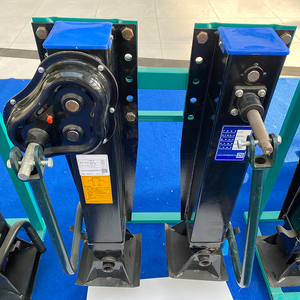
Fuwa Type Trailer Jacks Landing Gear

Trailer Jacks Landing Gear 9t / 28t Fuwa Type Commercial Chassis

Heavy Logistics Inspect Specs →
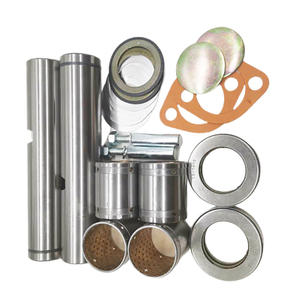
Steering Knuckle Kingpin Kit ISUZU NPR NKR

Factory Hot Sale Kingpin Steering Knuckle Kit KP231 for ISUZU NPR/NKR

Steering Knuckle Inspect Specs →
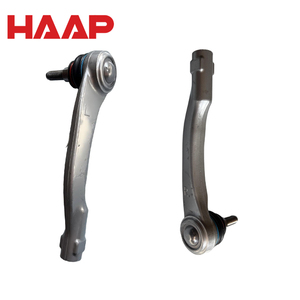
Porsche Panamera Tie Rod End Set

HAAP Tie Rod End Set Left Right 97034713101 Steering Ball Joint Assembly

Tie Rod End Inspect Specs →
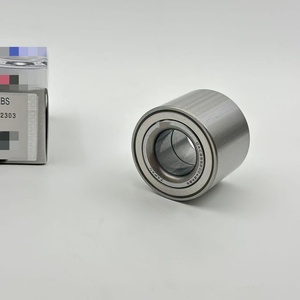
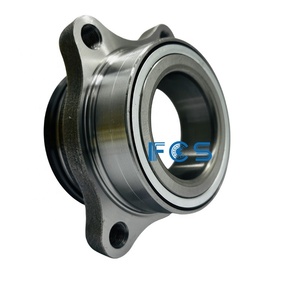
Wheel Hub Bearing DAC25520042ABS

High Speed Front/Rear Wheel Hub Bearing DAC25520042ABS / DAC25550048ABS

Wheel End Inspect Specs →
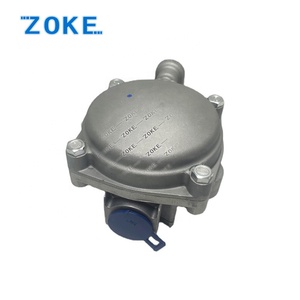
Truck Relay Emergency Valve for Scania

Commercial Heavy Truck Relay Emergency Valve 9710050020 for Scania Series

Air Brake Inspect Specs →
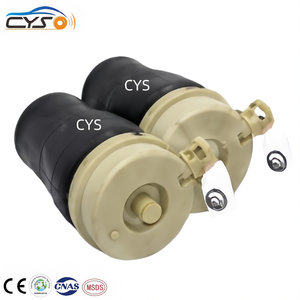
Ford F150 Rear Air Suspension Bag

Ford F150 Truck Pickup 2WD Rear Air Suspension Bag Assembly F75Z5A891AC

Air Spring Inspect Specs →
Hiace Front Axle Wheel Bearing Hub

ZA-54KWH02 54x120x60mm Front Axle Wheel Bearing Hub 43560-26010 Unit

Axle Assembly Inspect Specs →
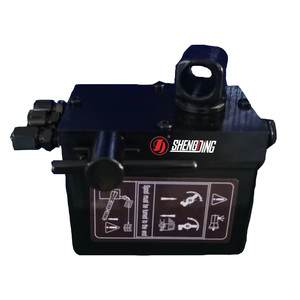
Renault Heavy Truck Cabin Tilt Pump

High-Pressure Cabin Tilt Hydraulic Pump 5010615920 for Heavy Fleet Cabins

Hydraulics Inspect Specs →
100%
OEM Cross-Reference Precision
>1,200h
ASTM B117 Marine Salt-Spray Endurance
40Cr / 4140
Forged High-Tensile Alloy Core
0.02 mm
CNC Ball Pin Spherical Tolerance
Regional Stress Dynamics

Local Application Scenarios in the Seattle Multimodal Corridor

Fleet steering linkage failure in Western Washington is accelerated by distinct geotechnical topography and marine climatic stressors. Our track rod ends and steering tie rods are engineered for the realities of the Pacific Northwest.

Port of Seattle & Tacoma Intermodal Drayage

Container drayage traversing Terminal 5, Terminal 18, and the Tacoma Tideflats undergoes frequent full-lock low-speed turning maneuvers under gross combined vehicle weights exceeding 80,000 lbs. Standard aftermarket ball studs suffer high-cycle micro-fretting and severe galling. Our CNC ball pins maintain induction-hardened surface integrity (58-62 HRC) to completely eliminate spherical deformation during yard tight-radius pivot cycles.

Drayage Chassis Dynamic Resilience

Snoqualmie Pass & Cascade Mountain Logistics

Freight haulers operating along Interstate 90 Eastbound face severe grade changes over Snoqualmie Pass and Stevens Pass (US-2). Sub-zero mountain ambient temperatures down to -25°F cause low-grade chloroprene rubber dust boots to crack, welcoming abrasive de-icing magnesium chloride. We equip our track rod ends with multi-lip Polychloroprene (CR) elastomeric boots with 302 stainless steel circlips that maintain elasticity through extreme cold plunges.

Thermal Shock & Chemical Shield

Olympic Peninsula Heavy Timber & Logging

Log haulers navigating unpaved forestry access roads throughout Grays Harbor and the Olympic logging zones encounter continuous torsional shock loads and sharp cyclic rock strikes. Standard cast bodies rupture under sudden shear impacts. Our OEM/ODM track rod assemblies utilize hot-forged 40Cr / SAE 4140 structural alloy bodies subjected to rigorous magnetic particle testing to ensure defect-free molecular cohesion.

Extreme Shock Fatigue Limits
Procurement Vector Analysis

Pacific Northwest Commercial Fleet Evolution & Steering Challenges

The maritime logistics gateway of Seattle and Tacoma is undergoing unprecedented supply chain transformation. Increased port dwell times, accelerated cross-border trade via the I-5 corridor into British Columbia, and heavy fleet decarbonization policies set by the Washington State Department of Transportation (WSDOT) are shifting the criteria by which commercial vehicle maintenance directors source critical steering systems.

  • Severe Axle Weight Shifts: Class 8 Battery-Electric Commercial Vehicles (BEVs) utilized for local drayage place 25% to 35% greater static load over the steer axle, exponentially escalating lateral ball stud shear stress.
  • Aggressive Winter De-Icing Formulations: Washington State DOT heavy reliance on liquid magnesium chloride and corrosion-inhibited calcium chloride accelerates thread seizure on standard zinc-plated tie rod adjustment sleeves.
  • Fleet Telematics Preemptive Standards: Seattle mega-fleet operations now track tie-rod play down to 0.5 mm via steer-by-wire sensor anomalies, requiring absolute zero-lash ball socket joints.

Technical Metallurgy Specification Standard

To combat PNW environmental degradation, our contract manufacturing incorporates multi-stage defensive coating and machining protocols:

Housing MetallographyHot Forged 40Cr Alloy Steel
Ball Stud Hardness58–62 HRC (Case Depth 1.8mm)
Bearing SeatSelf-Lubricating POM-Polyoxymethylene
Surface Anti-CorrosionGeomet 500 / E-Coat Zinc Nickel
Salt Spray Rating1,200+ Hours (ASTM B117)
Enterprise Sourcing Foundation

Why Global Fleet Distributorships Partner With Us

Direct OEM/ODM production capabilities backed by extensive logistics, cross-reference mapping, and international export documentation desks.

Industrial Manufacturing Hub

Operating from premier automotive export epicenters with high precision tooling, cold heading, and precision CNC forging plants with direct proximity to raw material producers.

Precision Cross-Reference Data

Robust enterprise digital catalogues matching exact OEM codes, KNB designations, and global aftermarket numbers (TRW, Lemförder, Moog, Peterbilt, Kenworth, Freightliner, Volvo).

Multilingual Export Operations

Specialized technical coordination in English, German, French, and Turkish. Instant engineering reviews without intermediate distributor friction or technical ambiguity.

Seamless US Port Logistics

Full handling of international shipping documentation including Commercial Invoices, Bills of Lading, Packing Lists, Certificates of Origin, and ISF filings for seamless clearance via Port of Seattle / Tacoma.

Procurement FAQ

Frequently Answered Queries for Washington Fleet Buyers

Technical, metallurgical, operational, and shipping criteria addressing high-volume import demands into Puget Sound and the wider United States market.

Can you cross-reference North American Class 7–8 OEM part numbers? ›
Yes. Our technical desk holds cross-referencing capabilities across North American platforms (Kenworth, Peterbilt, Freightliner, Mack, International/Navistar) as well as European applications (Volvo, Scania, Mercedes-Benz, MAN, DAF) and global trailer standards (Meritor, Dana, Hendrickson, BPW, SAF-Holland). Providing an OEM number, casting mark, or thread configuration (e.g., 1-1/8"-12 UNF LH/RH) allows instantaneous specification verification.
How do your track rod ends survive Seattle's Puget Sound marine salt mist? ›
Marine atmospheric exposure creates rapid galvanic and oxidation pitting on cheap finishes. We apply either multi-layer trivalent zinc-nickel (Zn-Ni) electroplating or specialized Geomet® 500 zinc-flake coatings, both verified under ASTM B117 salt fog chambers for 1,000 to 1,200 continuous hours without red rust development. In addition, dust boot retention springs are manufactured exclusively from 302/304 stainless steel.
What are the lead times and shipping routes for container delivery to Seattle? ›
Standard OEM/ODM production runs average 30 to 45 days depending on tooling requirements. Ocean freight from our industrial manufacturing hub into the Northwest Seaport Alliance (NWSA - Seattle & Tacoma terminals) generally moves via trans-Pacific or Suez/Atlantic corridors within 24 to 32 days port-to-port. We accommodate FOB, CIF, or DDP terms tailored to your warehouse unloading infrastructure.
Do you accommodate custom private-label branding and packaging? ›
Yes. We provide complete private-label manufacturing programs for independent warehouse distributors (IWDs) and aftermarket fleet brands throughout the United States. This includes laser-etched part numbers and batch codes on the rod housing, customized high-impact cardboard packaging, barcodes configured to your ERP system, and anti-tamper security seals.
What quality certification standards govern your ball stud production? ›
All manufacturing operations are audited and certified in accordance with IATF 16949:2016 and ISO 9001:2015. Every production batch undergoes comprehensive test protocols: magnetic particle crack detection, induction hardening depth verification, tensile pull-out strength testing (>120 kN for Class 8 steer configurations), and dynamic cyclical endurance life tests exceeding 1,000,000 oscillating cycles under simulated operational loads.
What is the minimum order quantity (MOQ) for custom steering forging runs? ›
For catalogue standards with existing tooling, our MOQ starts at 100 to 200 units per line item. For full custom ODM forgings requiring new tooling dies and CAD/CAM development, initial run thresholds typically begin at 500 units, with die manufacturing costs credited against subsequent high-volume production milestones.

Connect Directly With Our Export Engineering Desk

Whether you require verified cross-referencing for an entire fleet inventory, specialized marine-grade steering specifications, or consolidated container shipments to Seattle, our specialists deliver instant, accurate responses.

Contact Us