
Engineered for high duty-cycle commercial applications, rigorous pneumatic reliability, and extreme mechanical endurance across Latin American transport corridors.
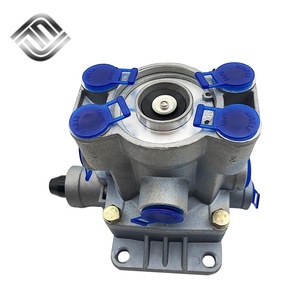
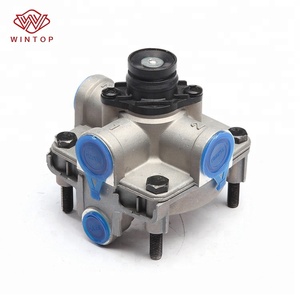
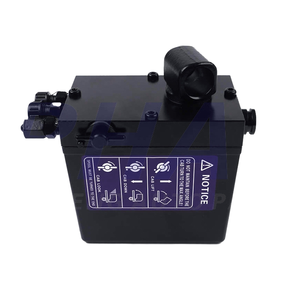
In modern commercial vehicle air brake systems, the Four Circuit Protection Valve (commonly designated in Portuguese as the Válvula de Proteção de Quatro Circuitos) serves as the primary pneumatic fail-safe manifold. Connected downstream from the air compressor and air processing unit (APU / desumidificador de ar), its thermodynamic and fluidic objective is to divide supply air from Port 1 into four isolated, self-governing pneumatic reservoirs, preventing total system pressure collapse in the event of localized line rupture.
Under international standard ECE R13 and Brazilian CONTRAN (Conselho Nacional de Trânsito) safety frameworks, maintaining brake reservoir pressure during sudden structural breaches is mandatory. When one service or auxiliary circuit suffers catastrophic depressurization (such as an severed airline caused by road debris or fatigue cracking), our valve's calibrated internal spring assemblies and valve discs seal off the leaking channel while retaining a regulated residual holding pressure across intact operational circuits.
Should Circuit 21 or 22 suffer complete open-air discharge, our valve's precision internal spring rate guarantees that the remaining operational circuits retain a minimum static closing pressure of 4.5 bar to 5.2 bar. This preserves full emergency stopping capacity, complying stringently with ABNT NBR and Mercosur heavy vehicle transit regulations.
Operating conditions across South America subject pneumatic control valves to severe stress. Our factory utilizes high-integrity high-pressure die-cast aluminum alloy (EN AC-46000 / Japanese ADC12 equivalent) instead of low-cost grey cast iron. This reduces component weight by over 45% while offering superior heat dissipation and natural passivation against interior moisture condensate.
The valve bodies undergo multi-axis CNC milling with tolerance constraints regulated to ±0.008 mm across all o-ring seating glands and internal valve disc guides. Internal sealing rings and diaphragms are vulcanized using hydrogenated nitrile butadiene rubber (HNBR) and fluorocarbon elastomer compounds (FKM), engineered to resist degraded synthetic compressor oil mist carryover, high ambient humidity, and extreme thermal cycling ranging from -40°C to +85°C.
From deep agricultural logistics routes to heavy coastal industrial corridors, our four circuit protection valves are custom-configured for Brazilian haulage realities.
Grain corridors along BR-163 (Mato Grosso to Miritituba/Santos) deploy 74-tonne 9-axle Rodotrem and Bitrem road trains. Extreme air volume demand across extended pneumatic lines requires our high-flow, low-restriction valve ports to avoid brake signal latency and unequal brake shoe friction wear.
Routes traversing the Serra do Mar down to the Port of Santos subject chassis valves to perpetual salt spray, tropical torrential downpours, and severe condensate formation. Our valve bodies feature an electro-deposited 12-micron zinc-nickel surface treatment exceeding 720 hours in neutral salt spray testing (ISO 9227).
Off-road harvest operations in São Paulo and Goiás expose undercarriages to abrasive red laterite clay (terra roxa) and continuous high-amplitude mechanical vibration. Our reinforced cast-bracket housings prevent flange fatigue failure and fastener loosening under extreme torsion.
The South American transport sector is undergoing critical technical transformations driven by Proconve P8 emissions standards, electronic braking systems, and fleet consolidation.
With Brazil's enforcement of Proconve P8 (equivalent to Euro VI), commercial powertrains require cleaner, drier, and strictly regulated pneumatic auxiliary actuation for complex SCR dosing systems, variable turbo actuators, and air-assisted DEF injection lines managed through Circuit 24.
Modern fleets operating Volkswagen Constellation, Mercedes-Benz Actros, and Scania Super models rely on Electronic Braking Systems (EBS). A balanced 4-circuit valve ensures pressure stability across pressure sensors, preventing false DTC error codes in the vehicle CAN bus network.
Brazilian transport operators battle high logistical overheads (Custo Brasil). Direct factory sourcing of Tier-1 quality four-circuit valves cuts replacement costs by 35% to 50% compared to local dealership markups without compromising valve life cycles or safety margins.
Auto-parts distributors in São Paulo, Curitiba, and Belo Horizonte are actively diversifying away from long dealership distribution monopolies, establishing direct B2B importing pipelines with global manufacturing specialists offering OEM cross-referencing.
Combining world-class automotive manufacturing infrastructure in Bursa, Turkey, with deep logistics expertise to deliver turnkey OEM-grade pneumatic components globally.
Operating in Bursa—the epicenter of automotive manufacturing connecting Europe and global sea lanes—our production facility is outfitted with multi-axis automated CNC transfer centers, automated pressure casting cells, and climate-controlled assembly cleanrooms.
Every valve manufactured in our factory features validated cross-referencing mapped directly to global OE codes (Wabco 934 702 series, Knorr-Bremse AE45/AE46 series, Haldex, Mercedes-Benz A001431 series, Scania 1333790, and Volvo 20424160), ensuring exact bolt-on compatibility.
Led by veteran international trade and logistics directors with a decade of specialized export execution, our commercial desk handles sea-freight booking, container consolidation, Certificate of Origin paperwork, and direct shipping lines directly to Brazilian ports.
Essential guidance on importing four-circuit protection valves, customs clearance through Siscomex, tax implications, and technical cross-referencing.
Four circuit protection valves for commercial vehicles are typically classified under Mercosur Common Nomenclature NCM 8481.20.90 (Válvulas para transmissões óleo-hidráulicas ou pneumáticas - Outras) or NCM 8481.80.99. We provide pre-shipment commercial invoices and packing lists with detailed descriptions and confirmed technical attributes to facilitate frictionless clearance via Siscomex / RADAR.
Yes. Our engineering catalogue contains comprehensive cross-referencing matching Wabco part families (such as 934 702 041 0, 934 702 042 0, 934 702 210 0), Knorr-Bremse configurations (AE45..., AE46...), and truck OEM references for Mercedes-Benz, Scania, Volvo, DAF, MAN, and Iveco. Share your current SKU list, and our engineering desk will return a verified cross-reference compatibility matrix within 24 hours.
While internal tax calculations (such as ICMS, ICMS-ST, PIS, COFINS, and IPI) depend on your company's fiscal domicile and whether you operate under Lucro Real or Simples Nacional, our export invoices provide transparent FOB or CIF breakdown valuations. We issue legalized Certificates of Origin and compliant documentation required by your despachante aduaneiro to minimize customs hold-ups.
We regularly book full-container-load (FCL) and consolidated less-than-container-load (LCL) shipments out of Turkish ports (Gemlik, Istanbul, Izmir) directly to major Brazilian maritime gateways: Port of Santos (SP), Paranaguá (PR), Itajaí/Navegantes (SC), and Suape (PE). Maritime ocean transit times generally average 26 to 34 days depending on shipping line routing.
For standard catalogue specifications in neutral industrial packaging, our MOQ is flexible (typically 50 to 100 units per reference). For Brazilian distribution groups seeking private-label laser etching (customer brand name, custom part numbers, barcode markings, and Portuguese-language retail boxes), our MOQ starts at 300 to 500 units per reference, or consolidated batch runs across complementary air brake valves.
We do not conduct statistical batch sampling; 100% of finished valves undergo end-of-line testing. Each unit is clamped into automated test benches to verify opening pressures on all four circuits, differential pressure retention, static closing pressure under simulated line rupture, and internal leakage via high-sensitivity helium/pressure-decay mass spectrometry. Test certificates can be furnished upon request.
Yes. We manufacture valves with metric threaded ports according to ISO 6149 / DIN 3852 (e.g., Supply Port 1: M22×1.5; Delivery Ports 21, 22, 23, 24: M16×1.5 or M22×1.5) as well as Voss-type quick-connect configurations common across contemporary Mercedes-Benz Actros, Scania, and Volvo platforms operating in Brazil.
Absolutely. Brazilian distributors frequently consolidate mixed-sku container orders combining Four Circuit Protection Valves with Air Dryer Valves, Relay Valves, Foot Brake Valves, Brake Chambers, Clutch Servos, and Air Suspension Springs to maximize container cube utilization and lower per-unit freight charges.
Connect directly with our Bursa pneumatic engineering and export desk. Send your OEM part numbers, technical drawings, or target commercial volumes to receive formal quotations, cross-reference reports, and container shipping estimates.
Send an Inquiry