
Engineered to withstand abrasive sandstorms, ambient heat up to 54°C, and heavy-payload transit across Kuwait's logistical corridors.
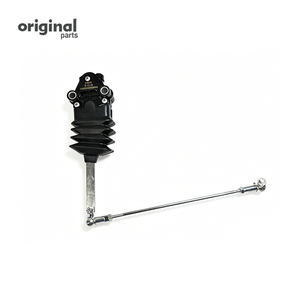
Electronically Controlled Air Suspension (ECAS) represents the critical interface between physical chassis dynamics and electronic stability systems across heavy tractor units, interlink trailers, and multi-axle tankers. In modern commercial logistics, chassis leveling is no longer governed by rudimentary mechanical linkage rods acting on direct air discharge ports. Instead, ECAS deploys non-contact, inductive or Hall-effect angular position sensors—commonly designated as Height Leveling Sensors or Ride Height Sensors—to translate chassis deflection into real-time millivolt signals transmitted directly to the Electronic Control Unit (ECU) via the vehicle’s high-speed CAN SAE J1939 network.
For fleet managers, parts distributors, and maintenance workshops operating within the State of Kuwait, the reliability of these sensory units dictates whether a 44-tonne gross combination weight (GCW) tractor-trailer maintains dynamic roll stability or experiences catastrophic suspension miscalibration. An ECAS height sensor continuously measures the angular position between the chassis frame and the axle suspension trailing arm. The sensor’s internal core utilizes rotating magnetic fields positioned adjacent to integrated Hall-effect circuits, outputting a highly linear voltage curve (typically between 0.5V and 4.5V) that corresponds exactly to axle travel distances spanning up to 140 millimeters.
Sensors are engineered to supply either proportional analog voltage signals or pulse-width modulated (PWM) frequencies resistant to electromagnetic interference from heavy engine retarders, alternating charging circuits, and industrial radar transmitters.
Features thermoset polymer housings filled with high-viscosity structural epoxy potting that prevents micro-particulate silica dust and vaporized saline water from reaching internal microcircuits during high-pressure underbody steam washes.
Reinforced linkages utilize glass-fiber reinforced polyphthalamide (PPA) connecting rods and stainless steel captive ball pins to absorb multi-axial angular misalignments without inducing binding, micro-chattering, or premature mechanical failure.
Kuwait's geopolitical and geographical standing as an energetic hub in the Northern Arabian Gulf exposes heavy road transport to operating stresses rarely encountered in European or temperate climates. Fleet operators serving Kuwait Oil Company (KOC) concessions in Wafra and Burgan, maritime logistics operators radiating from Shuwaikh Port and Shuaiba Industrial Port, and trans-desert hauliers traversing the Abdali highway to the northern frontiers subject ECAS height sensors to severe multi-vector degradation.
Tankers hauling sulfurous crude, drilling chemicals, and heavy oilfield plant across the Burgan basin frequently face ambient midday shade temperatures exceeding 53°C, with radiant asphalt surface temperatures hitting 75°C. At these extremes, substandard sensor plastics deform, resulting in axis displacement and inaccurate ride height calibration. Our heavy-duty sensors utilize high-grade engineering polymers capable of maintaining structural stability up to 135°C continuous thermal load.
The southern Arabian desert generates severe shamal sandstorms laden with fine quartz particles measuring sub-5 microns. In conventional potentiometric sensors, this fine abrasive dust penetrates unsealed rotary wiper shafts, scoring carbon resistance tracks and causing irregular signal spikes. This triggers false ECAS fault codes (e.g., DTC 00344 / 00345) that force the ECU into limp mode. Non-contact inductive sensors eliminate this physical wear entirely.
At Shuwaikh Port and Mina Al Ahmadi, continuous coastal humidity combined with petrochemical emissions creates a corrosive atmosphere that attacks electrical pins, mounting brackets, and brass fasteners. Our specialized sensor export series features gold-plated connection pins and passivated dichromate-treated steel linkages that resist 500-hour ASTM B117 salt spray exposure without surface rust or electrical resistance elevation.
When procurement officers in Shuwaikh Industrial Area or automotive parts importers in Al Rai evaluate replacement inventories, distinguishing between entry-level resistive sensors and heavy-duty contactless sensors is essential for calculating fleet total cost of ownership (TCO).
| Performance Parameter | Legacy Contact Potentiometer | Heavy-Duty Hall-Effect (Our Standard) | Direct Operational Benefit in Kuwait |
|---|---|---|---|
| Measuring Technology | Mechanical carbon wiper on resistive track | Contactless magnetic Hall-effect ASIC | Zero frictional wear; immune to high-frequency road vibrations. |
| Enclosure Protection | IP65 to IP67 elastomeric seals | Hermetic IP68 & IP69K ultrasonic weld | Withstands intense sandblasting during desert shamal storms. |
| Operating Temperature | -25°C to +85°C | -40°C to +125°C (continuous) | Prevents thermal drift during peak Kuwait summer months. |
| Rotational Durability | < 3,000,000 operating cycles | > 12,000,000 continuous cycles | Triples operational service life on rough, washboard desert tracks. |
| Signal Linearity Drift | ±3.5% over 18 months (wiper degradation) | < ±0.8% across full lifecycle | Eliminates false axle leveling codes and unnecessary tire wear. |
| Electrical Termination | Standard DIN round screw terminals | Integrated Bayonet / AMP Superseal 1.5mm | Prevents water/oil migration into wiring harnesses during washdowns. |
The state of commercial transport in Kuwait is undergoing systemic transformation, driven by large-scale infrastructural investments under the umbrella of Kuwait Vision 2035 (New Kuwait). The rapid development of the Mubarak Al-Kabeer Port on Boubyan Island, combined with new industrial supply zones near the Saudi Arabian border at Nuwaiseeb, is driving the transition from basic leaf-sprung running gear to intelligent pneumatic chassis systems.
Historically, heavy transport trailers in the GCC utilized mechanical leaf-spring suspensions to cope with heavy overloads. However, stringent axle-weight enforcement by Kuwait's Ministry of Public Works (MPW) and the General Directorate of Traffic has forced fleet owners to integrate multi-axle air suspensions with automated load-sensing capabilities. Modern ECAS height sensors are no longer mere leveling regulators—they serve as primary load calculation instruments. By measuring the precise deflection of pneumatic air bellows, the ECU calculates the vehicle’s gross axle mass, automatically actuating lift axles to minimize rolling friction and optimize diesel consumption.
Modern European prime movers dominant in Kuwait—including Mercedes-Benz Actros MP4/MP5, Scania Next Gen R/G Series, and Volvo FH Globetrotter—interlock Electronic Braking Systems (EBS) with ECAS sensors. If an ECAS sensor fails or emits noisy signal values during a high-speed maneuver on the Sheikh Jaber Al-Ahmad Al-Sabah Causeway, the Electronic Stability Program (ESP) is disabled, presenting significant rollover risks under heavy crosswinds.
Kuwaiti logistics consortiums are rapidly deploying fleet-wide IoT telematics. ECAS height sensors feed high-frequency angular data into onboard telematics gateways, tracking chassis oscillations to detect premature damper failure, broken air bellows, or uneven cargo stowage before roadside breakdowns occur in remote desert oil concessions.
Importation of electronic automotive spare parts into Kuwait requires strict conformity with the Kuwait Conformity Assurance Scheme (KUCAS) and Gulf Standardization Organization (GSO) rules. Importers are moving away from untraceable generic parts toward engineering-verified components that carry valid Technical Inspection Reports (TIR) and ISO/IATF certifications.
As a specialized exporter of heavy-duty truck, semi-trailer, and commercial vehicle components based in Bursa, Türkiye—the primary manufacturing capital of the Eurasian automotive corridor—we provide commercial vehicle parts distributors and fleet managers in Kuwait with direct manufacturer access, uncompromising quality inspection, and seamless logistics coordination.
Located at the center of world-class automotive manufacturing, our export desk sources directly from audited, IATF 16949-certified Tier-1 and aftermarket production lines. This ensures every ECAS sensor, leveling valve block, and chassis component matches original equipment specifications in form, fit, and performance.
Mismatched sensor lever angles or reversed polarity leads are common errors in the commercial parts trade. Our technical team conducts digital cross-reference checks against original OEM drawings (WABCO, Knorr-Bremse, Haldex, Mercedes-Benz, MAN, Scania, Volvo, BPW, SAF-HOLLAND), verifying electrical resistance curves, harness pinouts, and physical bracket offsets before dispatch.
International B2B transactions are backed by complete export documentation, including legalised Commercial Invoices, Packing Lists, Certificates of Origin issued by the Chamber of Commerce, and KUCAS/TIR conformity certificates for streamlined clearance through Kuwait Customs at Shuwaikh Port or Kuwait International Airport Cargo.
Our experienced foreign trade specialists communicate fluently in English, Arabic, Turkish, French, and German. We eliminate communication friction across engineering specifications, payment terms (L/C, T/T), and Incoterms (FOB, CFR, CIF Shuwaikh, DDP options).
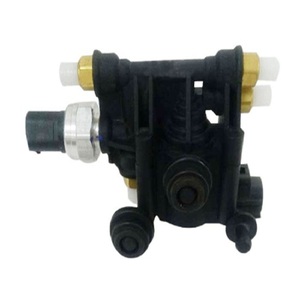
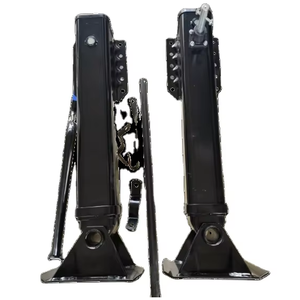
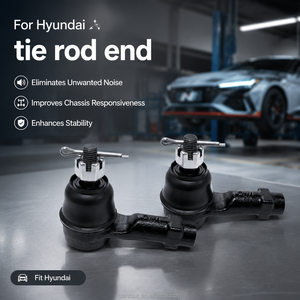
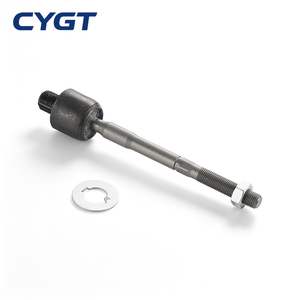
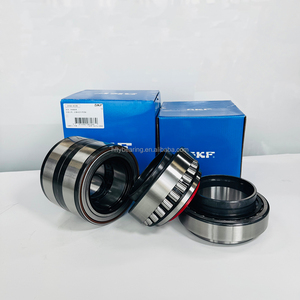
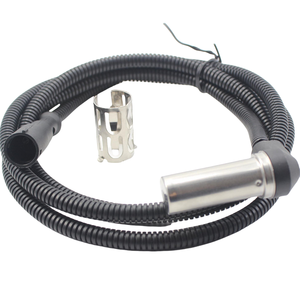
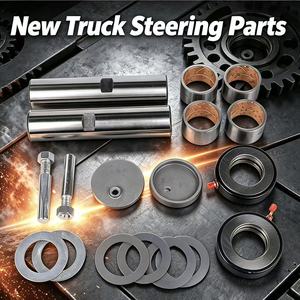
We combine multiple chassis part categories—such as air suspension height sensors, valve blocks, wheel hubs, ABS sensors, tie rod ends, and trailer kingpin kits—into single, consolidated LCL or FCL container shipments, helping Kuwaiti buyers lower freight costs and administrative overhead.
For established parts distributors across the Arabian Gulf, we provide private-label branding, laser-etched part numbers, barcoded packaging, and custom-branded boxes that adhere to rigorous international trade standards.
Direct technical and commercial answers designed for chief engineers, procurement executives, and aftermarket spare parts wholesalers based in Kuwait.
To guarantee 100% fitment accuracy, our engineering desk requires one of three data points: the original OEM/aftermarket stamped part number (e.g., WABCO 441 050 ... or Knorr-Bremse 0504 ...), the vehicle chassis identification number (VIN), or the specific brand and model of your air suspension axle assembly (such as BPW ECO Plus, SAF-HOLLAND INTRAAX, or Jost). We verify the technical lever arm length (typically 120mm to 180mm), linkage ball-joint thread dimensions (M8 vs M10), electrical connector style (DIN bayonet 4-pin vs AMP Superseal), and electrical output voltage gradient against original schematics prior to quotation.
Every export consignment to Kuwait is supported by a standardized GCC commercial document pack: a Commercial Invoice detailing HS codes, an itemized Packing List with net/gross weights and cubic volumes, and a Certificate of Origin certified by the Turkish Chamber of Commerce. For specialized industrial contracts, we coordinate Technical Inspection Reports (TIR) through accredited international testing agencies (such as SGS or Intertek) to ensure rapid clearance through the Kuwait Conformity Assurance Scheme (KUCAS) and Public Authority for Industry (PAI) checkpoints.
Generic aftermarket sensors typically employ lower-grade internal wiper potentiometers housed in non-stabilized polymers (e.g., low-grade ABS). When underbody temperatures rise to 70°C–80°C from hot road surfaces, these housings can warp, shifting the internal wiper contact and generating fluctuating voltage signals that trigger ECU errors. Additionally, non-hermetic elastomeric seals dry out and crack in intense dry heat, allowing fine desert silica to contaminate internal tracks. Our heavy-duty sensors utilize contactless Hall-effect technology encased in glass-fiber reinforced PBT/polyamide with ultrasonic hermetic welding rated to IP69K, keeping them completely immune to high heat and fine dust.
We maintain flexible MOQ policies tailored to commercial scale. For stocking distributors and major fleet operators, batch orders can start from 10 to 50 units across sensor product groups. For consolidated orders combining height sensors with leveling valve assemblies, ABS sensors, or wheel hubs, we accommodate mixed product assortments. Air freight consignments via Turkish Cargo directly into Kuwait International Airport (KWI) typically take 3 to 5 business days from order sign-off, while ocean freight shipments via Mediterranean/Gulf maritime routes into Shuwaikh Port take between 18 to 26 days.
Yes. Our engineering desk provides technical installation bulletins and wiring schematics for common ECAS systems, including WABCO ECAS 1, 2, and 4, and Knorr-Bremse iLevel systems. We outline precise zero-point mechanical linkage alignment procedures, voltage calibration thresholds, and diagnostic scan tool steps to ensure that your workshop technicians can calibrate replacement ride heights quickly, without costly trial-and-error.
Whether you manage an oilfield tanker fleet in Burgan, run cross-border logistics out of Sulaibiya, or wholesale heavy commercial spare parts across Kuwait's retail markets, our Bursa export desk is ready to provide precise cross-referencing, transparent pricing, and fast international delivery.
Inquire Now