
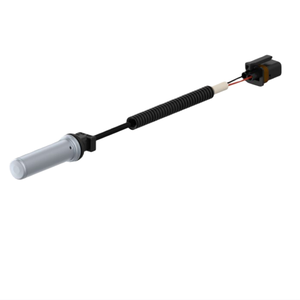
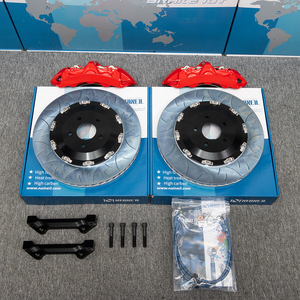
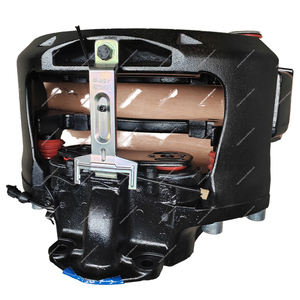
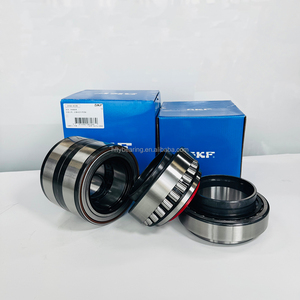
Beyond heavy-duty forward lighting, our Tier-1 engineering architecture integrates precision wheel-end electronics, heat-dissipating friction systems, and load-bearing chassis components tested under extreme Mexican transport corridor duty cycles.

The commercial transport ecosystem across the United Mexican States operates under some of the most mechanically grueling operating conditions in North America. The transit network, anchored by critical freight arteries such as Carretera Federal 57 (NAFTA Corridor) and coastal bypass routes connecting Veracruz, Altamira, and Manzanillo, subjects Class 7 and Class 8 heavy-duty commercial tractors to severe operational stresses. Traditional halogen and first-generation HID lighting units suffer from chronic filament failure caused by uninterrupted multi-frequency road vibrations, poor heat dissipation in desert zones exceeding 48°C, and water ingress during tropical storms.
As a specialized custom OEM truck LED headlights manufacturer, our engineering matrix focuses strictly on high-reliability forward lighting built for international Tier-1 procurement directors, bodybuilders (carroceros), and enterprise fleet operators in Mexico. By replacing fragile filaments with multi-die high-output automotive CSP (Chip Scale Package) LED arrays bonded to direct-plated copper (DPC) aluminum substrates, our headlamp assemblies eliminate mechanical vibration failure points. The result is an optical beam profile calibrated specifically for dual-trailer (doble articulado / "fulles") tractors, maximizing long-range lux while adhering strictly to statutory cut-off thresholds.
Our manufacturing facility operates under strict IATF 16949:2016 quality management systems. From precision tooling and optical reflector metallization to automated vacuum chamber sealing, every headlamp unit is tested against accelerated salt spray corrosion, thermal shock (-40°C to +105°C), and continuous 10G harmonic vibration, providing the Mexican fleet industry with uncompromised uptime and reduced Total Cost of Operation (TCO).
From the high-altitude Valley of Mexico to the corrosive coastal ports of the Gulf and the extreme ambient thermal cycles of Sonora, localized field applications demand custom-tailored lighting architectures.
Heavy overnight freight between Mexico City, Querétaro, San Luis Potosí, and Nuevo Laredo demands an asymmetric low-beam pattern that maximizes ditch-side illumination without causing blinding glare to oncoming traffic. Our custom collimator optics project over 180,000 candela downfield, cutting through diesel particulate haze and unlit rural highway stretches.
Winding elevations through Cumbres de Maltrata or La Rumorosa frequently trap trucks in sub-zero fog banks and sudden torrential downpours. We integrate integrated dual-color selective amber (3000K) fog penetration modules alongside standard 5700K crisp white driving beams, dramatically improving visual contrast without optical bounce-back.
In northern states like Sonora, Sinaloa, and Chihuahua, road surface temperatures regularly exceed 60°C. Conventional LEDs degrade rapidly when junction temperatures spike above 125°C. Our assemblies utilize ADC12 high-pressure die-cast aluminum heat-sinks paired with active Pulse Width Modulation (PWM) thermal throttling to maintain peak luminescent output without thermal degradation.
We supply Kenworth Mexicana (T680/T800/W900 platform compatible), Freightliner Cascadia, International ProStar/LT, and Volvo VNL aftermarket and OEM replacements. Direct export packaging, HS code optimization, and technical cross-referencing guarantee frictionless Mexican customs clearance.
The confluence of the nearshoring boom (relocalización), tightening vehicle safety mandates by SICT, and total cost of ownership models is accelerating the rapid phase-out of halogen lighting.
Cross-border manufacturing expansion in Monterrey, Saltillo, and Guadalajara has spurred a 35% growth in heavy tractor demand. Fleets require lighting fixtures that withstand non-stop round-trip runs between Mexican production plants and US border ports.
Mexican transport authorities (SICT) are stepping up strict vehicle inspections under NOM-068-SCT-2-2014. Fleets with sub-standard or flickering headlamps face immediate operational grounding (fuera de servicio), driving demand for certified solid-state LED systems.
Modern dual-trailer combinations run high electrical loads with telematics, auxiliary refrigeration, and ABS modules. Switching from 130W halogen setups to our high-efficiency 38W low-beam / 55W high-beam systems reduces alternator draw by up to 60%, lowering parasitic fuel consumption.
Mexican fleet specifications are moving towards unified modular aesthetics, incorporating high-visibility Daytime Running Lights (DRL) and dynamic sequential amber turn indicators directly into the primary headlight housing, cutting field wiring complexity.
B2B buyers operating cross-border logistics networks under the USMCA (T-MEC) agreement cannot risk non-compliance at customs points or roadside inspections. Commercial trucks crossing from Mexico into the United States must comply with US Department of Transportation (DOT) FMVSS 108 and equivalent Canadian CMVSS regulations, while domestic Mexican operations are governed by the Secretaría de Infraestructura, Comunicaciones y Transportes (SICT) standards:
1. NOM-068-SCT-2-2014: Governs physical-mechanical safety specifications for federal freight and passenger transport. Our custom truck headlights are engineered with precision optical cut-off angles, ensuring that low beams illuminate the roadway adequately without exceeding glare limitations at oncoming driver eye height (Zone III/IV lux limits).
2. Hermetic Enclosure Testing (IP68 & IP69K): Unlike passenger car headlights, heavy truck forward lighting in Mexico faces pressurized wash bays equipped with high-temperature steam guns designed to remove heavy road oil and mud. Our assemblies feature double-injected silicone gaskets and hydrophobic Gore-Tex pressure equalization vents that allow internal air expansion while barring water ingress up to 100 bar pressure at 80°C.
3. Electromagnetic Compatibility (EMC CISPR 25 Class 3/5): Modern truck cabins are equipped with sophisticated engine control units (ECUs), ELD tracking devices, CB radios, and collision-avoidance radar. Inferior aftermarket LED drivers generate electromagnetic noise that disrupts these frequencies. Our proprietary isolated constant-current drive circuits incorporate internal ferrite chokes and shielded PCB ground planes to guarantee zero radio interference.
Clear, direct commercial and technical answers for Mexican fleet procurement departments, wholesalers in Monterrey, Mexico City, and Guadalajara, and OEM bodybuilder engineering desks.
Yes. All custom truck forward-lighting systems are manufactured to comply with SAE J583, SAE J584, and US DOT FMVSS 108 photometrics, which are fully accepted by Mexican authorities under NOM-068-SCT-2-2014. Markings are embossed directly onto the polycarbonate outer lens for instant customs and road-inspection verification.
Shipments are accompanied by structured commercial invoices, packing lists with detailed net/gross weights, Certificates of Origin, and technical spec sheets detailing HS code classification (typically 8512.20). Where needed, we provide test reports from accredited laboratories to satisfy your Mexican customs agent (Agente Aduanal) and Pedimento de Importación requirements.
Yes. Our lighting modules are engineered with integrated CANbus load decoders and polarity-free internal drivers. They interface seamlessly with the central multiplexing systems of Kenworth T680/T880, Freightliner Cascadia, International LT, and Volvo FH/VNL models without triggering dashboard bulb-out fault codes or high-beam flickering.
Absolutely. As a dedicated OEM factory, we offer mold engineering, custom housing tooling, laser engraving of customer brand logos, customized packaging with Spanish labelling, and bespoke DRL signature light guide designs for order volumes starting at realistic Tier-1 MOQ thresholds.
Our lenses are molded from optical-grade Bayer Makrolon polycarbonate treated with a specialized 5-micron hard-coat silicone lacquer. This provides UV protection against intense Mexican solar radiation and achieves a 4H pencil hardness rating, preventing sandblasting hazing along dry, gravel-heavy highway shoulders.
We accommodate FOB, CIF, and DDP Incoterms. Maritime container freight typically arrives at the Port of Manzanillo (Pacific) or Port of Veracruz / Altamira (Gulf) within 25–35 days from departure. For urgent pre-series production runs or replacement parts, express air cargo directly to MEX (Mexico City) or NLU (AIFA) is available.
Whether you are modernizing a line-haul fleet of 500 tractors across Mexico, developing specialized lighting for a bus bodybuilder plant in Nuevo León, or seeking a resilient OEM manufacturing partner to bypass middleman markups, our engineering and export desks provide instant CAD verification, photometric data files (.IES), and commercial quotations.