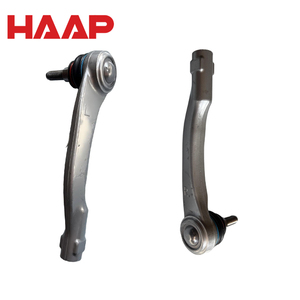

Engineered to withstand Arctic conditions up to 76 metric tons gross combination weight (GCW). Cross-matched with automated warehouse tracking, verified heat dissipation indices, and rigorous dyno bench validation.
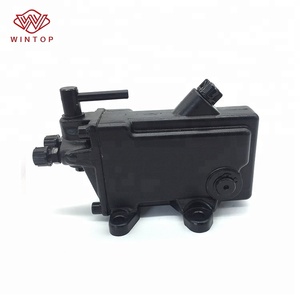
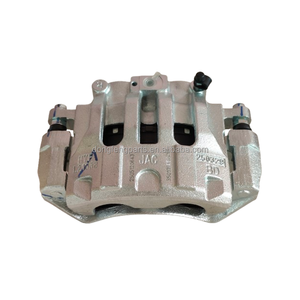
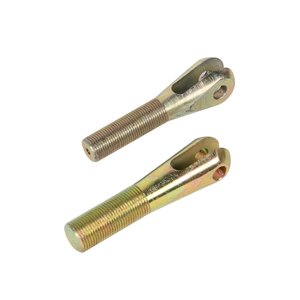
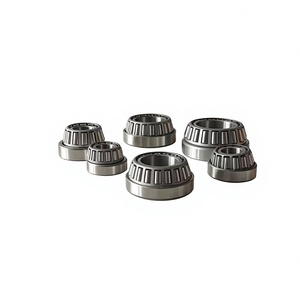
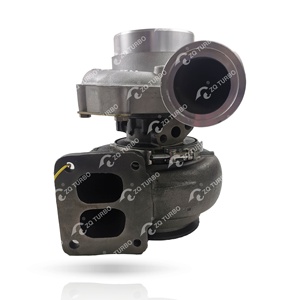
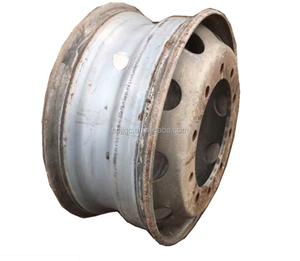
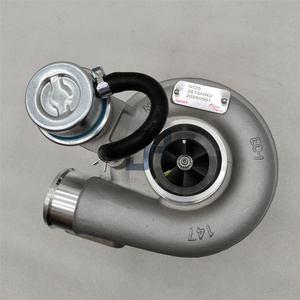
Covering single and twin-plate push/pull setups for Sisu, Scania, Volvo, and Mercedes-Benz.
Engineered for HCT (High Capacity Transport) combinations up to 76 metric tons.
Ductile nodular cast iron (EN-GJS-600) prevents brittle fractures in winter operating conditions.
Dynamic laser balancing below 15 g·mm minimizes crank vibration and drivetrain backlash.
Finland’s logistics infrastructure operates under distinct physical and regulatory demands. Understanding regional axle limits, forestry operations, and winter road profiles is essential for high-mileage clutch systems.
Finland permits High Capacity Transport (HCT) rigs grossing up to 76 metric tons across major forest-to-mill arterial corridors. Hauling unpeeled timber out of unpaved forest tracts requires continuous, low-speed clutch feathering under peak torsional load.
Our pressure plates integrate reinforced nodular cast iron friction faces (EN-GJS-600-3), preventing thermal crazing and heat-check microcracks when dragging triple-axle log trailers up steep gradients.
In northern territories such as Lapland, winter temperatures drop below -40°C, while friction plate surfaces can reach 380°C within seconds of uphill clutch modulation.
Standard gray iron plates often suffer brittle fracture under this severe thermal gradient. We manufacture our diaphragms using 51CrV4 chrome-vanadium alloy steel, treated with austempering processes that retain structural elasticity and prevent clamping load degradation in arctic conditions.
Nordic long-haul commercial vehicles overwhelmingly utilize automated manual transmissions (AMTs) such as Scania Opticruise, Volvo I-Shift, and Mercedes-Benz PowerShift 3.
These automated systems depend on precise clutch disengagement lift geometry and predictable release load curves. Our clutch pressure assemblies maintain strict ±0.15 mm lift planarity tolerances, eliminating transmission clutch-calibration faults and gear hunt when ascending snow-packed gradients.
| Drivetrain Parameter | Standard European Specification | Nordic Arctic-Grade (Our Manufacturing Spec) | Operational Impact in Finland |
|---|---|---|---|
| Casting Base Metal | Grey Cast Iron (EN-GJL-250) | Ductile Nodular Iron (EN-GJS-600-3) | Eliminates brittle cleavage cracking at -40°C under severe shock loads. |
| Diaphragm Spring Alloy | Standard High Carbon Spring Steel | 51CrV4 Chrome-Vanadium Austempered | Zero thermal fatigue or clamp force degradation during prolonged off-road slipping. |
| Dynamic Balancing Limit | < 40 g·mm ISO Grade G6.3 | < 15 g·mm ISO Grade G2.5 (Precision) | Prevents crankshaft harmonics and transmission input shaft seal failure. |
| Lift Finger Planarity | ± 0.40 mm | ± 0.12 mm | Enables seamless automated shifting on Volvo I-Shift and Scania Opticruise AMTs. |
Finland is transitioning toward electrified commercial transport, renewable bio-diesel powerplants, and connected fleet telematics, reshaping aftermarket component requirements.
Finnish logistics companies are rapidly adopting HVO100 renewable synthetic diesel to meet strict corporate carbon reduction mandates. HVO combustion generates higher cylinder exhaust pressure profiles and produces altered torque delivery characteristics from low RPMs.
Consequently, clutch pressure plates face increased low-end torsional stress. Our multi-stage damping systems are engineered to absorb sudden torque transitions without transmitting resonance into the transmission gear cluster.
Heavy timber and mining carriers are deploying auxiliary electric drive axles (e-axles) alongside conventional internal combustion main engines. When the electric axle engages or recovers kinetic braking energy, the primary mechanical clutch assembly experiences rapid bidirectional torque reversals.
Our pressure plates feature reinforced drive straps made from heat-treated alloy spring steels to absorb torque reversals without fatiguing rivets or shearing drive lugs.
Fleet operators in Helsinki, Tampere, and Oulu monitor drivetrain health via real-time telematics platforms that track clutch disc wear indicators, actuation cycles, and thermal spikes.
Our pressure plate assemblies include precision-calibrated self-adjusting mechanisms (SAC-type). These assemblies automatically compensate for friction facing wear, maintaining stable pedal feel and consistent release travel throughout the extended service life of the unit.
From metallurgical casting to export documentation under EU trade protocols, our operations provide full traceability and rapid fulfillment for Nordic and European commercial distributors.
Headquartered in Bursa—the core of automotive component manufacturing—we maintain direct supply links with certified foundry lines, CNC machine shops, and heat-treatment facilities for responsive lead times.
We process A.TR movement certificates, EUR.1 forms, and certificates of origin for all eligible product groups, ensuring seamless customs clearance and zero-duty industrial entry into Finland and EU ports.
Every SKU is cross-indexed against original equipment references (Scania, Volvo, Mercedes-Benz, Sisu, DAF, MAN) to ensure dimensional accuracy, correct spline engagement, and matching clamping curves before dispatch.
Our sales and engineering desk provides support in English, German, Turkish, and French. We work directly from technical drawings, sample parts, or OEM schematics to resolve sourcing challenges efficiently.
Technical and logistical answers for purchasing managers, repair depot directors, and commercial spare parts distributors.
Sisu Polar configurations utilize Mercedes-Benz OM502LA / OM471 / OM473 engines coupled with PowerShift or Allison transmissions, paired with proprietary heavy-duty tandem axles. We cross-reference the chassis VIN alongside original equipment drawing numbers, verifying flywheel bolt patterns, step recess depths, diaphragm finger contact positions, and minimum clamping force (typically requiring 24,000 N to 26,000 N for heavy timber haulage).
Shipments destined for Helsinki, Turku, Kotka, or other EU ports are accompanied by a Commercial Invoice, Detailed Packing List, Certificate of Origin, and, where applicable, an A.TR Movement Certificate under the EU-Turkey Customs Union agreement. This documentation enables eligible industrial automotive components to enter Finland with zero customs duty tariffs, leaving only standard local VAT to be managed.
We use nodular graphite ductile cast iron (EN-GJS-600-3) rather than standard flake grey iron. Spheroidal graphite inclusions prevent crack propagation along grain boundaries when mechanical shock loads occur at temperatures below -40°C. Diaphragm springs are made from vacuum-degassed 51CrV4 alloy steel and austempered to provide stable elasticity and resistance to cyclic fatigue.
Yes. For severe-duty operations such as forestry, aggregate hauling, and heavy equipment transport, we produce reinforced 430 mm push- and pull-type clutch assemblies. These units feature thicker friction rings for greater thermal capacity and upgraded diaphragm springs that deliver a 15% to 20% increase in static clamping force over standard specifications, preventing slippage during high-load low-speed maneuvers.
For standard stocked cross-references, palletized consolidation takes 3 to 5 business days. Road freight to Southern Finland (via Ro-Ro ferry routes) typically takes 8 to 11 days. Full container load (FCL) sea freight via Baltic ports takes approximately 14 to 18 days. Urgent replacement components can be dispatched via air freight directly to Helsinki-Vantaa Airport within 48 to 72 hours.
Yes. Distributors regularly consolidate clutch pressure plates, flywheels, release servos, air brake calipers, slack adjusters, and wheel bearings into a single sea or truck container. This single-shipment arrangement simplifies customs clearance and reduces freight costs across diverse replacement parts categories.