
Every heavy commercial vehicle running across Japanese expressway corridors relies on micron-level dimensional stability and high fatigue-cycle metallurgical integrity. Explore our eight high-demand chassis, steering, and pneumatic control assemblies certified for international export.
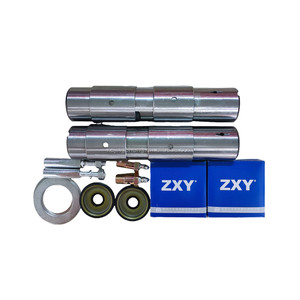
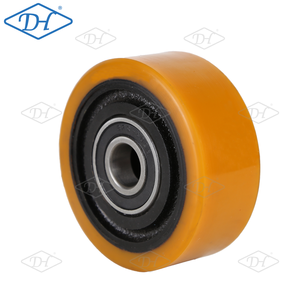
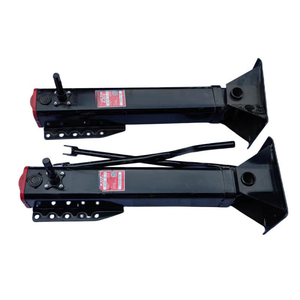
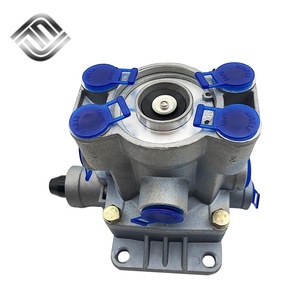
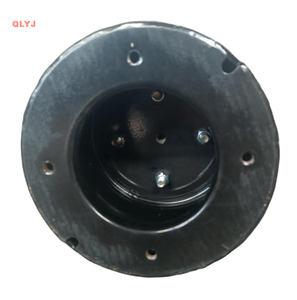
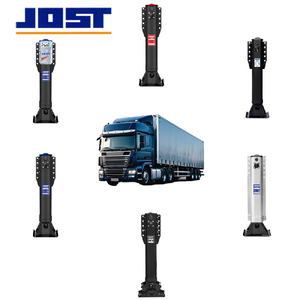
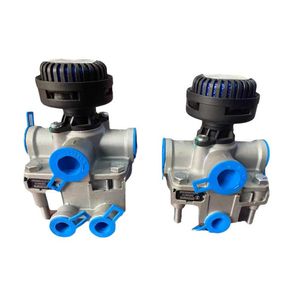
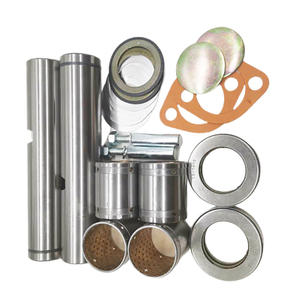
In Japanese heavy-duty commercial vehicles, the steering linkage system—principally composed of the transverse tie rod assembly (cross rod), drag link, and steering knuckle repair kits—serves as the primary mechanical conduit translating driver steering wheel input into synchronous wheel-end angle deflection. Operating under high dynamic cyclic stress, mechanical steering components must fulfill rigorous safety and fatigue life thresholds.
Unlike low-cost mild carbon rods prone to plastic deformation during severe curb scrubbing, our heavy commercial truck tie rod bodies utilize seamless precision steel tubes cold-drawn from 40Cr or 42CrMo chromium-molybdenum alloy steel. Through controlled quenching and tempering heat treatment, our tie rod bodies achieve a core tensile strength in excess of 980 MPa and a yield threshold exceeding 835 MPa, resisting severe buckling under maximum axle load braking forces.
The ball pin stud endures millions of high-frequency oscillatory cycles across pavement undulations. We machine ball pins from forged 20CrMnTi / 40Cr alloy, followed by multi-axis CNC spherical grinding to a micro-mirror finish of Ra ≤ 0.2 μm. High-frequency induction surface hardening establishes a case depth of 1.5–2.5 mm at 58–63 HRC, paired with a ductile, impact-absorbing core that prevents brittle snapping under shock pothole impacts.
Premature ball joint failure in Japan is primarily initiated by dust boot laceration and moisture intrusion from anti-freeze road brine. Our tie rod end boots are formulated from high-grade chloroprene rubber (CR) and thermoplastic polyurethane (TPU), maintaining flexibility from -40°C to +120°C without micro-cracking. Sealed with high-pressure synthetic lithium-complex grease, our assemblies prevent hydrodynamic dry-rub friction over 300,000 km fleet operation.
| Component Segment | Material Specification | Heat Treatment & Surface Standard | Mechanical Performance Target | Japanese Market Equivalence |
|---|---|---|---|---|
| Tie Rod Body (Seamless Tube) | 40Cr / 42CrMo High Alloy | Overall Quenched & Tempered (QT) | Tensile Strength ≥ 980 MPa; Yield ≥ 835 MPa | JIS G4053 SCM440 / SCr440 |
| Ball Stud / Pivot Pin | 20CrMnTi / 40Cr Precision Forged | Induction Hardened, Ra ≤ 0.2 μm Micro-Finish | Surface Hardness 58–63 HRC; Core 28–35 HRC | JASO C406 Heavy Steering Spec |
| Internal Ball Seat Bushing | POM / High-Wear Sintered Alloy | High Lubricity Self-Aligning Geometry | Oscillation Angle ≥ ±18°; Torque 3.0–6.5 N·m | JIS D4211 Commercial Vehicle Spec |
| Flexible Dust Boot Collar | Chloroprene (CR) / Polyurethane (TPU) | Dual Stainless Spring Clamp Rings (SUS304) | Elongation at Break ≥ 450%; -40°C to +120°C | JIS K6251 Tensile Elastic Compliance |
| Exterior Corrosion Barrier | Cathodic Electrophoretic E-Coat | Zinc Phosphate Primer + 25 μm E-Coating | Neutral Salt Spray (ASTM B117) ≥ 720 Hours | Japan MLIT Snow-Belt De-icing Salt Spec |
Japan's commercial road transportation framework imposes operating dynamics distinct from North American long-hauls or Continental European motorways. Steering linkages exported to Japan must endure extreme duty-cycles shaped by unique geographical and regulatory parameters.
Connecting the industrial heartland of Tokyo, Nagoya, and Osaka, the Tokaido corridor demands sustained high-speed cruising under maximum GVW. Tie rods on heavy tractors (such as the Hino Profia FW/FR and Isuzu Giga CYZ/EXD) absorb persistent micro-vibrations generated by expansion joints on elevated viaducts. Our low internal clearance tolerances eliminate steering wander and high-speed yaw instability, reducing driver fatigue.
During winter logistics operations, heavy snowfall across prefectures such as Niigata, Nagano, and Hokkaido prompts heavy dispersion of granular calcium chloride (CaCl&sub2;) and sodium chloride de-icing brine. Inferior aftermarket tie rods suffer swift crevice corrosion around thread adjusters and ball stud boots. Our dual-sealed boot lips and cathodic electrophoretic coating prevent chloride pitting, passing Japanese periodic motor vehicle inspections without premature overhaul.
Handling 40-foot shipping containers around Tokyo Port and Osaka Bay requires constant high-angle steering sweeps in cramped container yards. City distribution with Isuzu Elf (N-Series) and Mitsubishi Fuso Canter induces intense angular shear on drag link ends. Our ball pins offer wide articulation angles (±22°) with zero binding, mitigating edge-loading gouging on ball cups during extreme lock-to-lock maneuvering.
Procurement heads and fleet maintenance supervisors across Japanese logistics enterprises operate under stringent cost-control pressures and evolving administrative regulations. Sourcing steering linkages from verified Chinese manufacturers provides essential resilience against market headwinds.
With the strict enforcement of statutory overtime caps for commercial drivers under Japan's revised Labor Standards Act, truck fleet availability has become critical. Unexpected downtime due to steering slack or failed ball joints disrupts tightly calculated scheduled relays. Japanese fleet directors now prioritize Chinese Tier-1 replacement linkages offering OE-level longevity to avoid unscheduled fleet roadside standstills.
Under the Ministry of Land, Infrastructure, Transport and Tourism (MLIT) statutory inspection system, steering linkages undergo rigorous visual, play, and acoustic backlash checks every 12 months. Any torn dust boot, excessive axial play (>0.5 mm), or threaded clamp distortion results in immediate failure. Our steering components are calibrated to tight tolerances to guarantee effortless passage through Shaken testing stations.
The commercial deployment of battery-electric light and medium trucks (e.g., Isuzu Elf EV, Mitsubishi Fuso eCanter) increases front-axle tare weight by 15% to 25% due to battery pack placement. This added payload elevates dynamic steering stress during stationary wheel turning. Chinese precision forgers have upgraded ball stud cross-sections and ball socket metallurgy to handle these increased electric commercial vehicle axle loads.
Direct answers to technical, commercial, metallurgical, and customs documentation questions encountered when sourcing commercial steering linkages and chassis components from China for the Japanese domestic market.
Leveraging modern forged manufacturing infrastructure in China alongside international foreign trade and export management, we provide Japanese buyers with quality assurance, supply chain predictability, and direct engineering access.
Equipped with 1,600-ton and 2,500-ton automated closed-die forging presses, multi-axis Brother and Haas CNC turning centers, and induction quenching lines for tight manufacturing repeatability.
Shipments include Commercial Invoices, Packing Lists, Certificates of Origin (RCEP / CO), Mill Test Metallurgical Certificates, and IATF 16949 compliance documentation for swift Japan Customs clearance.
Consolidate diverse commercial vehicle part groups—steering tie rods, kingpin repair kits, air brake relay valves, landing gears, and air suspension bellows—into unified container shipments to lower ocean freight overhead.
Discuss technical specs directly with bilingual automotive engineers. Rapid turnarounds for OEM dimensional drawing validation, 2D/3D CAD blueprint cross-checking, and physical prototype evaluations.
Send your OEM part numbers, technical drawings, or target fleet applications. Our export desk will review your specifications, verify interchange numbers, and provide competitive FOB/CIF quotation terms.