
Explore our heavy-duty commercial vehicle components cataloged with cross-reference accuracy, strict dimensional tolerances, and multi-market OE compliance.
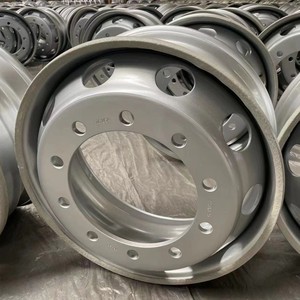
Forged alloy and cold-rolled steel heavy-duty rims engineered for long-haul durability and heat dissipation.
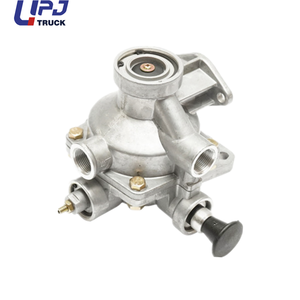
Fast-release pneumatic synchronization valve protecting interlink b-double air brake lines.
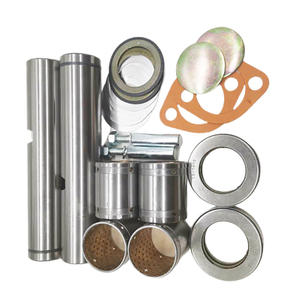
Case-hardened steel pins with precision needle bushings for rough corridor terrain stability.
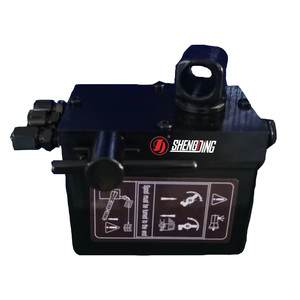
High-pressure hydraulic manual tilt assembly built to withstand high cycle maintenance schedules.
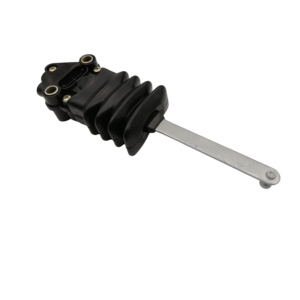
Instantaneous chassis height calibration valve for air suspension systems under dynamic cargo loads.
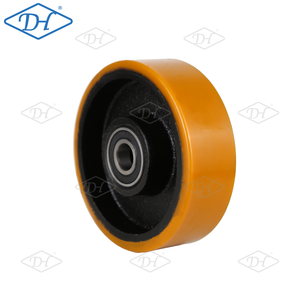
Cast iron hub encased in high-abrasion polyurethane for rugged cross-dock logistics operations.
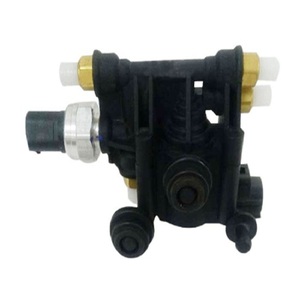
Solenoid-governed multi-chamber distribution manifold ensuring pneumatic circuit air tightness.
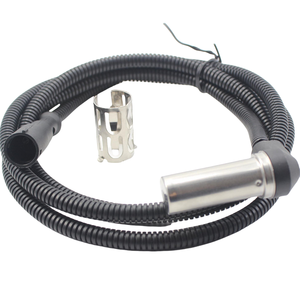
High-temperature inductive electromagnetic pickup sensor ensuring real-time modulation data for EBS.
In the heavy-duty haulage landscape of South Africa and neighboring SADC territories, air brake actuators—commonly termed truck spring brake chambers—are not merely consumable maintenance parts; they represent the frontline fail-safe system governing vehicle safety under severe Gross Combination Mass (GCM) limits up to 56 tonnes on Performance-Based Standards (PBS) interlink configurations.
A dual-diaphragm spring brake chamber combines two distinct pneumatic functional sections: the service brake chamber (front actuator) and the spring parking/emergency brake chamber (rear actuator). When air pressure fails or drops below the critical threshold (typically below 4.5 to 5.2 bar), the high-energy power spring uncoils mechanically, driving the pushrod outward against the slack adjuster to halt the axle assembly. China's premier manufacturing ecosystem has overhauled spring brake chamber fabrication through automated cold-coiling, advanced zinc-nickel electro-coating, and deep-drawn steel housings, specifically aligning with the arduous demands of Southern Africa's transport sectors.
Technical Insight for Mechanical Buyers: South African road networks feature rapid transitions between extreme high-speed braking corridors and heavy-dust unpaved gravel arteries. The primary failure point in non-specialized actuators is internal power spring embrittlement coupled with seal degradation caused by abrasive airborne particulates entering the secondary breather holes. Our manufacturing execution integrates an internal breathing valve (IBV) system that draws clean, dehumidified air directly from the vehicle's dry service air reservoir, insulating the internal power spring chamber from ambient red clay dust and chemical salts.
The core mechanical heart of our emergency chamber utilizes high-tensile chrome-silicon spring steel, shot-peened under computer control and finished with a thermoset anti-friction powder polymer. This prevents coil clashing friction, stress fracturing, and premature spring decay across 1,000,000 full-compression cycles.
Fabricated using heat-resistant, high-elasticity reinforced synthetic elastomers capable of retaining elastic memory and flexibility across thermal extremes from -40°C up to +80°C. Fabric reinforcement eliminates localized stretching and pressure bypass under maximum system working pressures of 10.2 bar (148 psi).
Pressure housings are stamped from 3.0mm structural-grade high-yield steel (SPHC). Actuator exteriors undergo automated cathodic electro-deposition (E-coating) exceeding 960 hours of neutral salt spray resistance (ASTM B117), outperforming the baseline corrosive requirements along coastal Durban and Port Elizabeth freight routes.
Commercial vehicle uptime across South Africa depends directly on choosing brake components built for local topography, axle weights, and environmental thermal extremes.
The primary artery of South African trade involves constant steep-gradient ascents and descents through Van Reenen's Pass. Fully laden 56-tonne side-tippers and curtain-siders subject brake actuators to cyclic heat soak from drum and disc assemblies. Our chambers employ thermal-shielded mounting flanges that arrest heat conduction into the rubber diaphragm, preventing thermal hardening and premature stroke leakage.
Long-distance haulage through the Karoo on the N1 route subjects undercarriage pneumatic assemblies to ambient dry ambient air exceeding 45°C, compounded by asphalt radiant temperatures above 65°C. Our EPDM rubber compound incorporates specialized anti-ozonant waxes that migrate continuously to the surface, preventing micro-fissuring and atmospheric ozone degradation.
Mining haulage links in Witbank, Middelburg, and Steelpoort subject vehicles to abrasive silica dust, coal fines, and aggressive wash bay acidic chemicals. Standard vent ports swallow abrasive sludge, jamming the internal return spring. Our specialized South African mining specification chambers integrate secondary labyrinth particulate splash caps over all exhaust breathing ports.
Review physical sizes, port tapers, stroke parameters, and axle pairing matrices recommended for Henred Fruehauf, BPW, SAF-HOLLAND, and Afrit trailer suspensions popular throughout SADC fleets.
| Actuator Type | Brake Interface | Standard Stroke | Port Threads | Application Profile in South Africa | Cross-Reference Class |
|---|---|---|---|---|---|
| Type 24/24 DP | Pneumatic Disc (Knorr/Wabco) | 57 mm / 64 mm | M16 × 1.5 Voss / NPTF | Mercedes-Benz Actros, Scania R-Series, Volvo FH front & drive axles | OEM 925 321 1620 |
| Type 30/30 DP | S-Cam Drum (420 × 180 mm) | 64 mm / 75 mm (Long Stroke) | M16 × 1.5 / 3/8" NPT | Henred Fruehauf, Afrit, SA Truck Bodies, BPW Eco Plus axles | OEM 925 376 1000 |
| Type 24/30 DP | S-Cam Drum / Steer Rear | 64 mm / 64 mm | M16 × 1.5 Metric | MAN TGS, Iveco Stralis, DAF CF tri-axle chassis combinations | OEM 925 322 0010 |
| Type 20/24 Disc | Disc Caliper Caliper Axles | 57 mm | M16 × 1.5 Voss Standard | SAF Intradisc, BPW Airlight II disc brake interlink configurations | OEM K015632 |
| Type 30/36 Severe | Mining S-Cam Heavy Drum | 75 mm (Extended Stroke) | M16 × 1.5 / M22 × 1.5 | Extreme heavy haulage 60T+ off-road side-tipper road trains | Heavy Haul Custom |
Importing replacement air braking equipment into South Africa demands stringent legal adherence to the National Regulator for Compulsory Specifications (NRCS) and South African Bureau of Standards (SABS) directives.
Under SANS 20013 (ECE R13 Equivalent), braking system components fitted to Category N3 commercial vehicles (exceeding 12 tonnes GVM) and Category O4 semi-trailers (exceeding 10 tonnes axle mass) must exhibit certified chamber output force characteristics and instantaneous release response times. Sub-standard imported actuators with irregular pushrod run-out or poor spring return forces cause fatal pneumatic lag, resulting in brake shoe drag, disc overheating, and roadside impoundment during Road Transport Management System (RTMS) corporate audits.
Our manufacturing and export facility provides South African wholesale importers, fleet supply chains, and spare parts distributors with comprehensive batch documentation: material test certificates (MTC), computerized tensile graph profiles, dimensional CMM inspection sheets, and SANS 20013 test protocol matching. Every brake chamber housing carries stamped identification—batch number, manufacturing date, and thread size—ensuring absolute traceability and effortless clearance at Durban and Cape Town ports of entry.
The Southern African road transport landscape is witnessing a structural shift in mechanical preference. Traditional bolted-clamp spring brake chambers are systematically being replaced by permanently rolled-sealed (crimped) units.
Traditional clamp-band spring brake chambers pose severe personal injury risks to workshop mechanics if accidentally opened under residual spring tension. Our chambers use automated 360° hydraulic crimping, permanently sealing the high-energy spring capsule to guarantee zero workshop disassembly accidents.
Pushrod angular deflection creates severe lateral side-load against the front chamber neck during maximum slack adjuster stroke. We install aerospace-grade self-lubricating PTFE composite bushings, eliminating pushrod scoring and maintaining frictionless linear stroke transfer.
Every dual-chamber unit includes a dedicated zinc-plated steel manual release caging bolt secured in a side-mounted chassis holder. In vehicle breakdown recovery or air line rupture on rural South African routes, technicians can quickly cage the power spring manually without requiring hydraulic lifting tools.
Combining state-of-the-art Chinese manufacturing scale with deep knowledge of cross-border African logistics and aftermarket distribution channels.
We maintain an exhaustive digital cross-index correlating European and American OEM part numbers (WABCO, Knorr-Bremse, Haldex, Anchorlok, MGM) directly to local South African axle codes for Hendred, BPW Africa, SAF, and Afrit. Send an OEM number or physical dimension, and our technical desk verifies clevis pin hole size, pushrod length, and thread pitch within hours.
For independent commercial vehicle parts distributors across Johannesburg, Durban, Cape Town, and Bloemfontein, ordering full container loads (FCL) of single items ties up working capital. We provide consolidated container loading, packing spring brake chambers alongside our aluminum rims, relay emergency valves, kingpin sets, and air leveling valves under a single bill of lading.
South African transport corridors demand durable packaging. Our brake chambers are packed in individual reinforced 5-ply corrugated carton boxes with moisture-absorbing desiccant pouches, then palletized on fumigated export wooden pallets with heavy-gauge poly-wrap film. Private branding, customized box art, and laser-etched customer logos are available on volume orders.
Clear, practical, and technically verifiable answers to the questions asked by fleet technical directors, spares wholesalers, and logistics maintenance managers.
Standard stroke chambers typically provide 64 mm of pushrod travel, which is common on older European-spec drum axles. However, many modern South African interlink trailers (such as Henred Fruehauf and Afrit equipped with automatic slack adjusters) require Long Stroke (LS) chambers providing 75 mm of stroke.
Long stroke units feature trapezoidal port boss identifiers or distinctive cut-outs on the mounting collar. Installing standard stroke units where long stroke is required can lead to incomplete brake application when linings wear, causing brake certification failures during roadworthiness testing.
Most commercial vehicles operating in South Africa—including Mercedes Actros, Volvo, Scania, MAN, and European-style semi-trailers—use Metric M16 × 1.5 pneumatic ports compatible with Voss 230/232 fittings.
However, for older American-platform fleets or specific trailer systems utilizing brass push-in fittings, we also supply 3/8"-18 NPTF port configurations. Please specify your required port profile during RFQ submission to ensure 100% plug-and-play installation.
Yes. Pushrods are available in pre-cut factory specifications (e.g., standard 120 mm or 210 mm) or with full-length threading (custom cut-to-length) with rolled 5/8"-18 UNF or M16 threads.
We supply matching forged clevis assemblies with 12 mm, 14 mm, or 1/2-inch hardened pin holes, complete with cotter pins or quick-release spring clips tailored to your slack adjuster hole dimensions.
Our dual-chamber bodies undergo a multi-stage automated pre-treatment and electro-deposition coating (E-coat) followed by thermoset polyester powder coating. This dual-barrier system achieves over 960 hours of ASTM B117 salt spray endurance.
Crucially, the emergency power spring inside the sealed chamber is treated with a specialized zinc-flake and polymer micro-coating that insulates individual coils from moisture condensation caused by coastal humidity fluctuations.
Standard manufacturing lead time for regular production orders (500 to 2,000 units) is typically 20 to 28 business days. Common standard configurations (such as Type 24/24 Disc and Type 30/30 Drum) are frequently held in semi-finished stock for rapid assembly within 10 days.
Ocean freight transit from Ningbo or Shanghai port direct to Durban Port averages 20 to 24 days, and 24 to 28 days to Cape Town. We provide end-to-end bill of lading tracking and export packing declarations for rapid customs clearance.
Our manufacturing plants operate under strict IATF 16949:2016 and ISO 9001:2015 automotive quality management systems. Every individual chamber undergoes automatic pneumatic leak testing at 0.5 bar low-pressure and 10 bar high-pressure stages before packaging.
Lot samples undergo destructive burst-pressure verification (holding over 25 bar before deformation) and dynamometer cycle-fatigue verification exceeding 1,000,000 continuous strokes.
Yes, this is one of our primary competitive advantages for South African B2B buyers. You can consolidate your order of spring brake chambers with trailer rims, emergency relay valves, automatic slack adjusters, brake drums, and air springs in a single 20ft or 40ft HQ container.
We provide unified export invoices, single-point origin documentation, and harmonized HS code classification to streamline your local clearance process with SARS (South African Revenue Service).
Every chamber is equipped with an external release caging tool. To release a locked emergency brake, the technician removes the bolt from its exterior bracket, inserts it into the rear chamber aperture, engages the internal T-flange with a quarter turn, and tightens the exterior nut with a standard 19 mm or 24 mm spanner.
This action mechanically pulls the heavy power spring back into its compressed position, retracting the pushrod and freeing the brake drum or disc assembly so the vehicle can be safely towed or repositioned without damaging wheel-end assemblies.