6-Piston Big Brake
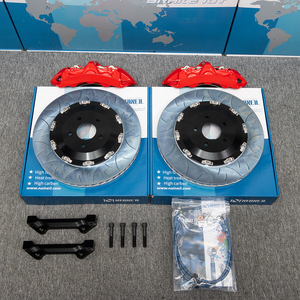

Manufactured under strict ISO 9001 and IATF 16949 quality protocols. Designed for immediate cross-referencing against global OEM part numbers with verified interchangeability for Norwegian commercial transport, heavy haulage, and performance platforms.
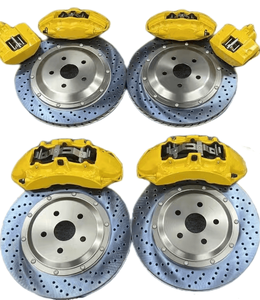
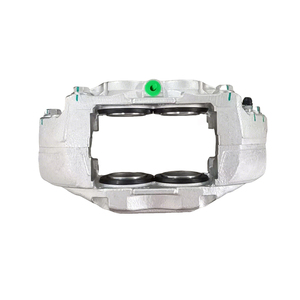
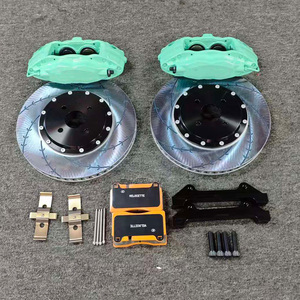


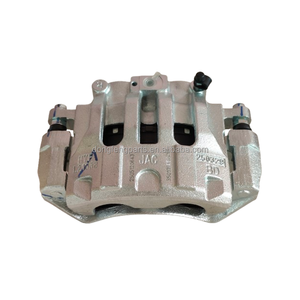
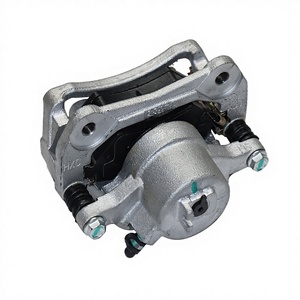
Operating commercial road transport and fleet networks in Norway presents mechanical challenges found almost nowhere else in Europe. From coastal maritime salt fogs to mountain descent thermal spiking, our calipers are customized for extreme Nordic operating conditions.
The Norwegian Public Roads Administration (Statens vegvesen) aggressively treats arterial highways like the E6, E18, and E39 with saturated magnesium chloride (MgCl2) and rock salt solutions. Ordinary zinc plating rapidly yields to white rust and caliper slide pin seizure within single winter cycles.
Long 6% to 10% mountain descents heading into Western Norway’s fjord valleys demand high thermal capacity. Commercial vehicles and fully loaded EV haulers cause caliper core temperatures to quickly exceed 600°C, followed by abrupt immersion in freezing slush and snow melt.
In Finnmark, Troms, and inland regions like Røros, ambient temperatures regularly drop below -30°C. Standard rubber seals stiffen, causing piston drag, accelerated asymmetrical pad taper wear, high rolling resistance, and increased diesel or battery consumption.
Our brake caliper manufacturing line utilizes automated CNC machining centers with precision repeatability within ±0.005 mm across piston bores. For heavy commercial disc applications (compatible with Knorr-Bremse, Meritor, and Wabco axle architectures common in Scania and Volvo fleets across Oslo, Bergen, and Trondheim), calipers undergo 100% automated high-pressure hydraulic and pneumatic testing to confirm zero seal blow-by and correct adjuster mechanism stroke.
To eliminate internal piston binding—the primary reason for failure during mandatory Norwegian periodic motor vehicle safety inspections (EU-kontroll)—every piston surface is micro-polished to an arithmetic average roughness of Ra ≤ 0.2 µm before chrome or ceramic protective deposition. This drastically lowers hysteresis loss and preserves instantaneous emergency brake response times on black ice conditions.
Norway is widely recognized as the world's most progressive electrified automotive ecosystem. As fleets, logistics operators, and municipal haulers modernize, brake caliper specifications are evolving rapidly.
Because battery electric vehicles (BEVs) utilize regenerative braking, friction calipers are deployed less frequently. However, when called upon during emergency braking or low-friction intervention, they must immediately arrest vehicle masses that are 25-35% heavier than ICE counterparts. Calipers left idle are prone to pad adhesion and slide pin corrosion.
Under impending Euro 7 regulations, vehicle emissions enforcement is extending beyond tailpipes to encompass brake wear dust. Low-drag caliper mechanisms that eliminate residual braking torque are essential to minimize non-exhaust particulate emissions (PM2.5 and PM10), aligning directly with Norway's zero-emission transport strategies.
Norwegian fleet procurement managers increasingly favor parts suppliers with robust remanufacturing readiness and circular design principles. Providing core-exchangeable, heavy-duty caliper architectures where cast iron bodies can be safely refurbished and resealed saves up to 80% embedded energy and reduces lifecycle costs.
Combining the robust automotive manufacturing ecosystem of Bursa, Türkiye, with deep cross-reference data, customized export documentation, and rigorous European quality protocols.
Located in the heart of Turkey's automotive powerhouse. Immediate direct access to Tier-1 foundry casting facilities, tooling specialists, and rapid testing infrastructure.
Full support for international customs clearances, including EUR.1, A.TR, and tailored commercial documentation ensuring streamlined, preferential import processing into Norway.
Over 15,000 structured cross-reference codes linked directly to Knorr-Bremse, Meritor, Wabco, BPW, SAF-Holland, Volvo, Scania, and major passenger car platforms.
Founder-led B2B communication team handling inquiries fluently in English, German, French, and Turkish, ensuring zero ambiguity in technical drawings or tolerances.
Clear, direct answers regarding customs clearance, test certifications, minimum order quantities, and compatibility for Norwegian market procurement.
Submit your OEM part references, technical drawings, or target fleet volume. Our Bursa-based engineering and export desk will provide detailed cross-reference matches, quotation schedules, and Nordic-specification data sheets within 24 hours.