
From heavy commercial haulage to municipal passenger transport, our OE-compliant active and passive wheel speed sensors feature cross-reference interchangeability, hermetic potting, and fortified shielding for cold-weather reliability.
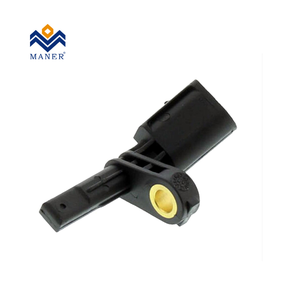
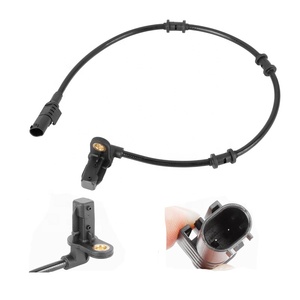
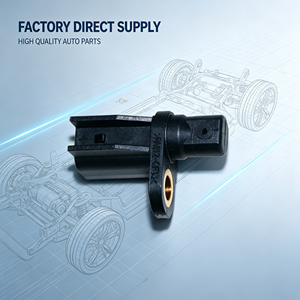
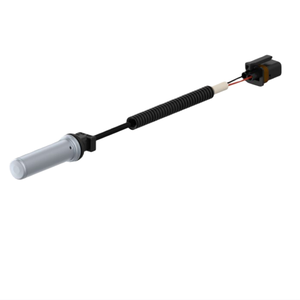
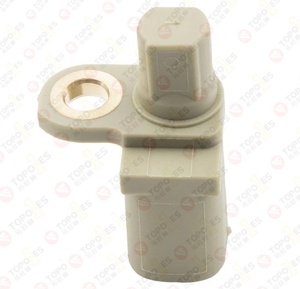
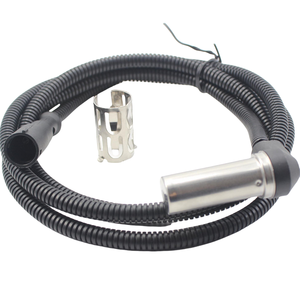
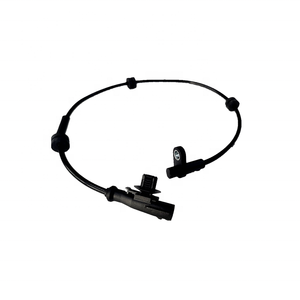
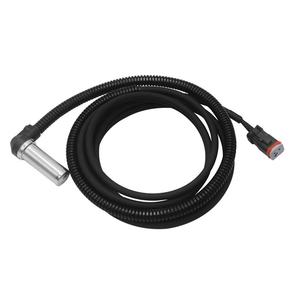
Modern Electronic Braking Systems (EBS), Anti-lock Braking Systems (ABS), and Electronic Stability Control (ESC) rely decisively on deterministic, jitter-free signal transmission from the wheel-end tone ring to the control ECU.
While passive variable reluctance (VR) sensors rely strictly on inductive voltage generated by magnetic flux changes across rotating teeth, modern commercial vehicles require Active Hall-effect and Anisotropic Magneto-Resistive (AMR) architectures. Active sensors operate accurately down to true 0 km/h, which is critical for anti-slip regulation on ice.
The primary root cause of field failure in cold coastal climates is capillary ingress of liquid salt brine into the sensor head. Our manufacturing methodology employs high-pressure polyurethane potting coupled with polyamide 66 (PA66) housings with 30% glass-fiber reinforcement, achieving IP69K liquid immersion resistance.
Wheel-end environments present extreme electromagnetic interference (EMI) originating from high-voltage commercial EV inverters and inductive retarders. Our sensor harnesses incorporate twisted-pair oxygen-free copper wiring covered by tin-plated copper braid and cross-linked polyethylene (XLPE) jacketing.
Deploying brake telemetry components in eastern Massachusetts demands specialized product performance. Boston combines sub-zero Nor'easters, coastal salt air, and dense stop-and-go arterial corridors.
Public transit buses operating across the MBTA Silver Line, Express routes, and inner-city service face high brake-rotor operating temperatures followed by slush quenching. Our high-temperature fluoropolymer lead wires prevent embrittlement around the hub assembly.
Logistics corridors connecting Conley Terminal and Interstate 90/93 depend on Class 8 drayage trucks and chassis trailers. Marine humidity mixed with heavy magnesium chloride de-icing causes galvanic corrosion; our sensors use stainless steel bush sleeves to prevent sensor seizure.
Package delivery carriers serving Cambridge, Back Bay, and Route 128 endure millions of cyclical micro-braking stops annually. Low-speed ABS signal precision guarantees anti-skid modulation during sudden stops over wet brick or icy asphalt.
Commercial fleet managers, Tier-1 rebuilders, and municipal procurement directors in New England are actively recalibrating their spare parts sourcing strategy toward these focal developments:
Distributors across Massachusetts are transitioning away from high-markup tier-3 intermediaries, forging factory-direct partnerships with established automotive sensor manufacturers to control landed costs and safeguard critical inventory stockpiles.
With Boston committing to clean municipal vehicle transitions, ABS sensors must integrate with dual-rate regenerative braking controllers. Active sensors capable of detecting zero-speed forward and reverse rotation ensure seamless transition between friction and motor braking.
The Massachusetts Department of Transportation (MassDOT) relies heavily on liquid brine anti-icing mixtures. Standard PVC-sheathed sensor cables degrade within one winter cycle. Boston buyers now explicitly require cross-linked polyolefin (XLPO) or PUR abrasion-resistant outer shielding.
Combining precision automotive manufacturing with specialized logistics and structured OE cross-reference documentation.
Located in premier automotive manufacturing hubs with immediate access to raw component tooling and rapid prototyping lines.
Structured cross-mapping against major European and American OE numbers (WABCO, Knorr-Bremse, Haldex, Bendix, Meritor).
Direct communication in English, German, Turkish, and French, providing technical clarification without communication bottlenecks.
Complete regulatory compliance with commercial invoices, packing lists, EUR.1 / A.TR documentation, and door-to-door freight routing.
Clear technical, operational, and commercial answers for fleet supply directors and parts distribution managers.