Precision chassis leveling valves, pneumatic assemblies, steering gear, and mechanical suspension components engineered to exact OEM tolerances.
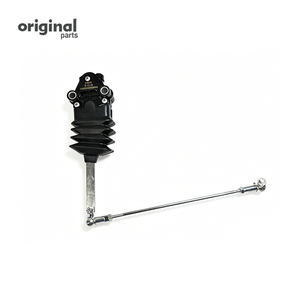
Modern commercial automotive engineering relies heavily on Electronically Controlled Air Suspension (ECAS) systems to preserve vehicle stability, optimize aerodynamics, maintain constant chassis height under dynamic payload shifts, and protect highway infrastructure. The cornerstone of this closed-loop electronic architecture is the ECAS Height Sensor (Chassis Level Sensor). Positioned between the vehicle chassis frame and the suspension axle linkage, this electromechanical transducer continuously converts mechanical displacement into high-frequency electrical signals routed directly to the Electronic Control Unit (ECU).
In legacy mechanical leveling designs, pneumatic leveling valves physically ported air into or out of air springs using mechanical linkages. While functional, mechanical valves suffer from hysteresis, constant air consumption during transit, and inability to integrate with intelligent Electronic Braking Systems (EBS). Modern ECAS Height Sensors eliminate unnecessary air replenishment during high-speed roadway oscillations, cutting compressor cycle times and reducing commercial fleet fuel consumption by up to 1.5%.
When selecting tier-one manufacturers and verified suppliers for commercial vehicle height sensors, international buyers must discern between two core sensing topologies:
1. Non-Contact Rotary Hall-Effect Sensors: These transducers utilize integrated permanent magnetic arrays rotating around a static Hall ASIC. Because no mechanical friction exists across electrical contacts, rotational endurance frequently exceeds 12 million full articulating cycles. The output curve can be configured for linear analog voltage (0.5V to 4.5V) or Pulse-Width Modulation (PWM), delivering resilient immunity to electrical noise over CAN bus infrastructures.
2. Contactless Inductive Sensors: Operating via electromagnetic coupling between a printed circuit trace and an oscillating target coil, inductive designs provide total immunity to stray external magnetic fields—a crucial advantage in electrified commercial vehicles (e-trucks) with severe electromagnetic interference (EMI) emanating from high-voltage traction inverters.
Suspension-mounted components encounter the harshest operating conditions on commercial vehicles. Tier-1 ECAS height sensor manufacturing mandates rigorous environmental and durability qualifications, including:
• Hermetic Sealing & Chemical Resistance: Sensors require multi-stage elastomer gaskets, laser-welded polyamide housings (typically PA66-GF30), and potted circuit assemblies achieving ingress ratings of IP67 and IP69K against high-pressure steam cleaning, de-icing salt sprays, and petrochemical splash.
• Thermal Range and Mechanical Durability: Continuous baseline operation between -40°C and +125°C, coupled with broad-spectrum vibration endurance exceeding 30g across 10 Hz to 2,000 Hz, preventing micro-fractures in internal PCB solder joints.
Procurement directors and commercial fleet managers are navigating an evolving supply chain landscape. The height sensor has transitioned from a straightforward replacement item to an intelligent node within commercial vehicle telematics and active safety architectures.
Analog 0.5–4.5V outputs are rapidly yielding to SAE J2716 SENT (Single Edge Nibble Transmission) and direct CAN bus micro-nodes. Digital communication reduces harness wiring mass, delivers higher baud rate data pipelines, and enables real-time diagnostic reporting including sensor wear status and linkage dislocation alerts.
Fleet operators increasingly employ dual-purpose ECAS height signals to calculate precise dynamic payload distribution in real-time. By analyzing continuous suspension deflection curves alongside pneumatic spring pressures, the vehicle prevents over-axle regulatory violations and feeds stability data directly into Electronic Stability Control (ESC) systems.
As Level 3 and Level 4 autonomous heavy-duty tractors enter real-world logistics corridors, suspension height measurement demands safety redundancy (ISO 26262 ASIL-C/D). Modern production trends feature dual-die Hall sensors inside a single compact housing, outputting independent galvanic signals to backup control units.
Global supply disruptions have compelled procurement directors to diversify away from single-source OEM channels. Leading distributors now benchmark independent Tier-1 manufacturers capable of delivering equivalent build fidelity to Knorr-Bremse, Wabco, Haldex, and Continental systems. The critical purchasing benchmark has shifted toward verified OEM cross-referencing capabilities, structured product dimensions, and rapid regional delivery hubs like Bursa, Türkiye, which offer direct transport corridors to European and Middle Eastern logistics channels.
Delivering engineering integrity, documented export provenance, and dependable lead times to commercial vehicle distributors and fleets worldwide.
Operating directly in Bursa, Türkiye's primary automotive manufacturing epicenter, our facility maintains direct access to specialized tier-supplier clusters and streamlined export routing.
Extensive catalog mapping cross-references every proprietary code against major commercial OEM part numbers (Mercedes-Benz, MAN, Scania, Volvo, DAF, Iveco, BPW, SAF), preventing incorrect fitment.
Full support for international customs compliance, providing commercial documentation, Certificates of Origin, and ATR movement certificates for tariff-preferential trade into the EU.
Commercial and engineering consultations are conducted directly in English, Turkish, German, and French by export logistics professionals with extensive field experience.
Key technical specifications, compatibility guidelines, and procurement terms for fleet managers and commercial component distributors.
Cross-referencing requires validating four essential attributes: rotational angular range (typically ±40° to ±60°), electrical pinout configuration (standard 3-pin or 4-pin DIN bayonet connectors), electrical output curve (analog linear voltage vs. PWM duty cycle frequency), and linkage arm geometry (ball joint thread diameter and offset angle). Supplying the chassis VIN or the embossed OEM component number ensures accurate interchangeability matching.
The primary root causes include mechanical linkage seizure from road debris impact, elastomer seal degradation caused by chemical exposure during chassis washdowns, and high-pressure fluid ingress past substandard connector seals. Additionally, excessive chassis deflection that forces the sensor beyond its physical angular mechanical stops will shear internal indexing pins or break the internal Hall magnet carrier.
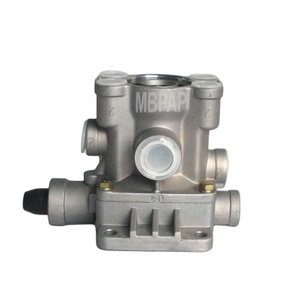
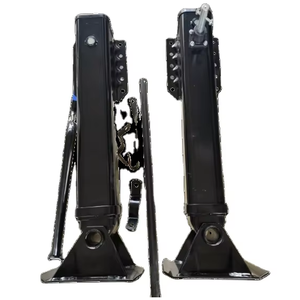
Yes. Many B2B buyers consolidate height sensors alongside compatible pneumatic components, such as relay emergency valves, EBS axle modulators, air springs, wheel hubs, and mechanical landing gear. Consolidating orders into unified export shipments maximizes container fill rates and cuts international freight and clearance costs.
Because ECAS systems rely on millimeter-accurate ride heights to calculate braking force distribution and headlamp leveling, installing a replacement sensor requires an electronic recalibration routine via diagnostic tools (such as WABCO, Knorr-Bremse, or multi-brand commercial vehicle scan systems). The technician sets standard ride height, upper mechanical travel limit, and lower bump stop references to store zero-offset baselines in the ECU.
Whether you require standard OEM replacement ECAS height sensors, customized linkage geometries, or consolidated trailer brake valves, our Bursa export desk is ready to assist with full cross-referencing and prompt logistics coordination.
Inquire Now