OEM Standard
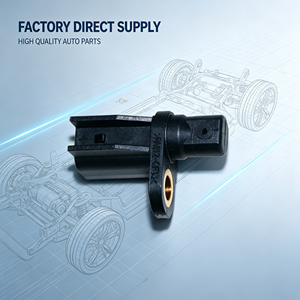
Electronic Braking Systems

Direct factory-matched universal joint components, precision wheel hub bearings, air suspension assemblies, and mechanical linkages certified for high-torque commercial transport.
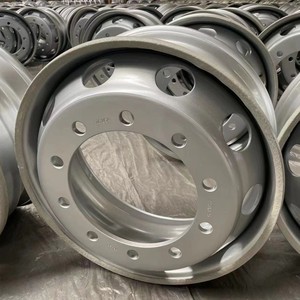
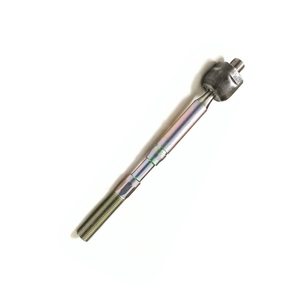
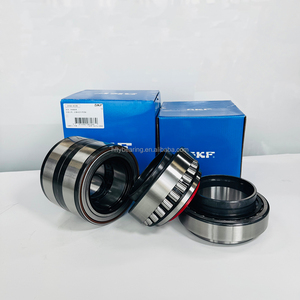
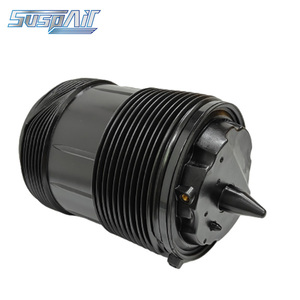
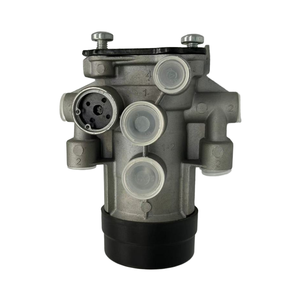
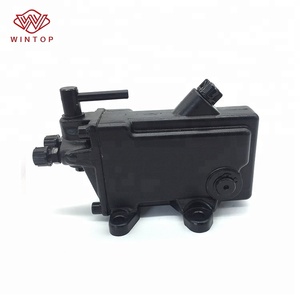
Operating directly across certified machining facilities with advanced metallurgical tracking, computerized dynamic balancing, and structural life-cycle simulation.
Fabricated using ultra-clean vacuum-degassed 20CrMnTi or 8620 structural alloy steel. High-frequency carburization produces an abrasion-resistant outer boundary combined with a resilient, shock-absorbing ductile core for high-stress shaft rotations.
Equipped with dual and triple-lip NBR or fluoroelastomer (FKM) synthetic seals encased in corrosion-resistant steel armoring. Designed to retain synthetic extreme-pressure (EP) lithium-complex grease while blocking abrasive road debris and salt brine.
Bearing cups utilize precision crowned-end needle rollers to eliminate edge-stress loading under angular deflection. Precision sorting ensures uniform needle diameters within 2 microns, balancing heavy dynamic load distribution across all four trunnions.
A comprehensive technical examination of shifting market dynamics, metallurgical standards, and lifecycle costs for international wholesale purchasers.
In modern commercial haulage and industrial machinery, drivetrain assemblies operate under escalating operational pressures. Fleet operators and original equipment manufacturers (OEMs) demand longer maintenance intervals, higher torque handling, and lighter chassis weight. Traditional forging workflows that relied on carbon steel grades such as 45# have been systematically retired across top Chinese production plants. In their place, state-of-the-art multi-station hot die forging lines utilize 20Cr, 20CrMnTi, and GCr15 bearing steel.
The microstructural integrity of universal joint cross spiders governs fatigue endurance. Induction hardening and carburizing heat treatments achieve a surface hardness of 58 to 63 HRC, while controlling the core carbon content to maintain tensile shock resistance. If a universal joint cross lacks sufficient core elasticity, shock loads encountered during sudden transmission engagement or harsh downshifting result in trunnion fractures. Our factory verification procedures utilize microhardness profiling across the cross-sectional geometry to ensure precise transition from the hardened case to the ductile matrix.
Procuring universal joints without rigorous cross-referencing of trunnion geometry, bearing cap configurations, and seal styles leads to high field failure rates. The following technical specifications represent standard verification parameters across our OEM-compatible export ranges:
| Component Dimension | Commercial Light-Duty (LCV) | Heavy-Duty Commercial (HCV) | Off-Highway & Industrial |
|---|---|---|---|
| Cap Diameter (D) | 25.00 mm – 35.00 mm | 48.00 mm – 65.00 mm | 68.00 mm – 130.00 mm |
| Overall Length (L) | 64.00 mm – 106.00 mm | 126.00 mm – 195.00 mm | 200.00 mm – 350.00 mm |
| Retention Style | Internal / External Snap Rings | Wing Bearing / Mechanics / Half Round | Full Round Cross Bolt / Heavy Wing |
| Case Depth | 0.8 mm – 1.2 mm | 1.4 mm – 1.8 mm | 2.0 mm – 3.0 mm |
| Lube Configuration | Sealed For Life / Center Fitting | Trunnion Dual Fitting / Center Tap | External Manifold / Central Tap |
Accurate identification requires buyers to measure cap-to-cap dimensions with digital calipers along with the cup diameter. In heavy commercial vehicles such as Volvo, Scania, Mercedes-Benz Actros, MAN, and FAW, wing-bearing configurations require bolt hole spacing and face-key alignment checks.
Commercial vehicle maintenance departments are shifting from open-lubrication maintenance programs toward permanently sealed, maintenance-free universal joint designs. Traditionally, fleets scheduled grease injections every 10,000 to 15,000 kilometers. Failure to flush contaminated grease or uneven lubrication caused premature needle bearing pitting (brinelling) and trunnion grooving.
Current procurement initiatives favor "Lube-for-Life" systems. These incorporate multi-lip synthetic rubber seals with internal PTFE backup rings, paired with high-performance polyurea or synthetic lithium-complex greases. These formulations resist oxidation at continuous operating temperatures exceeding 140°C. While unit costs for factory-sealed kits run 8% to 12% higher, the elimination of manual fleet greasing reduces total cost of ownership by up to 25% over a typical 500,000-kilometer lifecycle.
Global procurement teams occasionally encounter substandard universal joint kits characterized by rapid needle roller collapse, shaft vibration, or snap ring dislocation. When evaluating universal joint manufacturers in China, QA audit checklists should prioritize:
Trunnion Roundness & Taper: Bearing cap trunnions must maintain roundness within 0.003 mm. Ovality creates uneven needle loading, resulting in localized heat buildup and spalling.
Needle Roller Tolerances: Within a single cup assembly, roller diameter variance must not exceed 0.002 mm. Mixing needle lots causes individual rollers to carry the entire driving load, accelerating trunnion wear.
Magnetic Particle Inspection (MPI): Cold cracks and forging seams within the central cross junctions can cause complete component failure under torque. Reputable exporters enforce 100% electromagnetic flaw detection across critical drive-line series.
Bridging domestic precision manufacturing capabilities with transparent, logistics-backed export coordination across global freight lanes.
Every SKU is tied to precise OEM, KNB, and leading aftermarket cross-references (such as Spicer, Meritor, GWB, Contitech, SKF, and Wabco). This ensures fit-for-purpose compatibility and eliminates misordered parts for commercial trucks, semi-trailers, and agricultural machinery.
International shipments are backed by accurate commercial invoices, detailed packing lists, Certificates of Origin, and export documentation including A.TR and EUR.1 movement certificates for eligible partner territories, facilitating efficient customs clearance.
We accommodate customized packaging, bespoke laser engraving, and consolidated container loading across varied product categories—including brake valves, wheel hubs, air springs, and universal joints—lowering landed freight overheads.
Key operational answers covering dimensional checks, minimum order thresholds, surface treatment options, and lead-time guarantees.