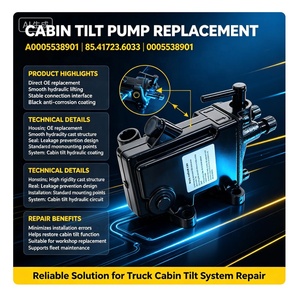
Cabin Hydraulic System

Engineered for extreme torsional resistance, dynamic articulation, and severe service life across global truck, trailer, passenger, and construction platforms.
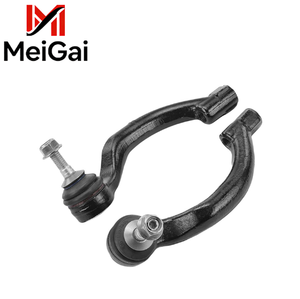
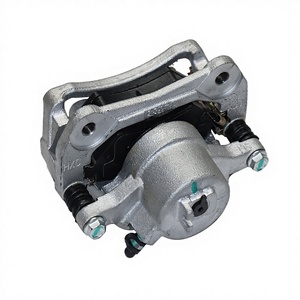
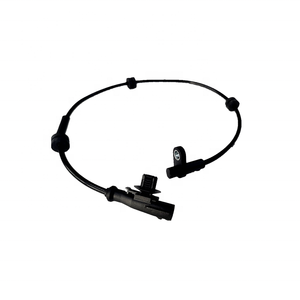
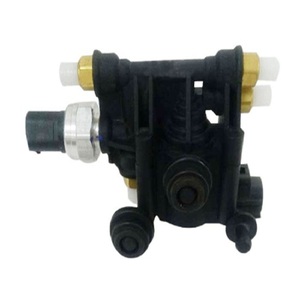
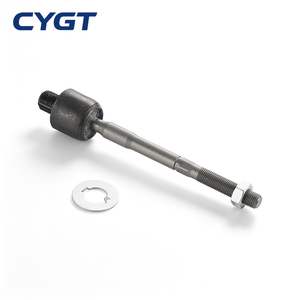
In modern heavy commercial transportation, the steering drag link serves as the primary structural bridge translating output forces from the steering gear pitman arm directly to the steering knuckle assembly. Operating under severe cyclic push-pull loads, high torsional oscillation, and direct exposure to environmental road salts and gravel impingement, drag links cannot tolerate compromise. A failure in drag link metallurgy or joint integrity results in immediate loss of directional control.
For international tier-1 fleet operators, independent aftermarket distributors, and heavy vehicle rebuilders, evaluating manufacturing capabilities requires an authoritative technical perspective. Below is a rigorous analysis of the world’s leading manufacturers and export desks dominating the OEM and replacement market for European, American, and Asian commercial vehicle platforms.
| Manufacturer / Exporter | Origin Hub | Primary Production Focus | Alloy Grade & Method | OEM Equivalent Reach | Customs / Trade Docs |
|---|---|---|---|---|---|
| ZF Friedrichshafen (Lemförder) | Germany | Heavy-Duty Commercial OE | 42CrMo4 Drop Forged Solid | Mercedes, MAN, DAF, Scania | EUR.1 / Standard EU |
| KNB Automotive (Bursa Export Desk) | Türkiye | OEM Cross-Ref Replacement & B2B Export | Induction Heat-Treated Seamless / 40Cr | Actros, FH16, DAF XF, Scania R | A.TR, EUR.1, COO (Zero Duty) |
| TRW Commercial Steering (ZF Div.) | USA / Poland | Axle & Linkage Assemblies | Precision Seamless Tubular | Volvo Truck, Mack, Freightliner | USMCA / EUR.1 |
| Federal-Mogul (Tenneco / MOOG) | USA / Belgium | Fleet Replacement & OE Upgrades | Forged Carbon Steel + Hard Chrome | International, Kenworth, Iveco | Standard Global Manifest |
| Sampa Automotive | Türkiye | Heavy Commercial Chassis Parts | High-Grade Alloy Hot Forging | Mercedes Axor, Renault, BPW | A.TR Movement Certificate |
| Febi Bilstein (Ferdinand Bilstein) | Germany | Full Line Aftermarket Distribution | Structural Cast & Extruded Tubing | Broad Multi-Brand Coverage | EU Movement Certs |
| Mevotech Commercial Solutions | Canada | Severe-Duty Fleet Redesigns | Sintered Metal Bearing Technology | North American Class 6-8 | Export Customs B3 |
| DITAS Dogan | Türkiye | Steering & Suspension OE Tier-1 | Induction Hardened Ball Pins | Ford Otosan, BMC, Temsa | A.TR / EUR.1 Certs |
| Rane (Madras) Limited | India | Tier-1 Linkage & Ball Joint Export | Cold Formed & Induction Welded | Tata, Ashok Leyland, Mahindra | Form AI / India FTA |
| JTEKT Corporation | Japan | Precision Steering Systems OE | Micro-Alloyed High Tensile Steel | Hino, Isuzu, UD Trucks | EPA / RCEP Formalities |
The operational lifecycle of a commercial vehicle steering drag link is governed by three fundamental engineering factors: parent material fatigue resistance, ball pin surface case depth, and dynamic seal resilience against environmental degradation.
Modern commercial steering linkages utilize two primary manufacturing topologies depending on total vehicle weight (GVWR) and axle positioning:
Hot Drop-Forged 40Cr / 42CrMo4 Alloy Steel: Employed predominantly on extreme-duty steer axles (>9.0-ton rating) and off-highway construction machinery. The continuous grain flow achieved through multi-cavity closed-die forging delivers superior resistance to transverse shear and cyclic bending stresses. Drop-forged rods undergo normalization and isothermal annealing to achieve a tensile strength ($\mathrm{R_m}$) exceeding 950–1100 MPa.
Cold-Drawn Seamless High-Strength Carbon Steel Tubing (DIN EN 10305): For standard highway haulage (4x2 and 6x2 tractor units), tubular designs offer substantial unsprung mass reduction. The ball socket ends are friction-welded or flash-butt welded under automated robotic inert gas protection. High-frequency ultrasonic testing (UT) confirms 100% root penetration, ensuring identical shear resistance to parent metal.
The ball stud is the single focal point of dynamic articulation, handling simultaneous rotational oscillation (up to ±30°) and angular deflection (up to 40°). Premature drag link failures typically initiate from micro-fretting or surface galling on the ball head due to inadequate core toughness or erratic induction heat treatment.
Tier-1 manufacturing mandates intermediate-frequency induction hardening of the ball stud surface. The engineered standard demands:
Water intrusion or lubricant displacement leads to rapid socket destruction within less than 50,000 km. Standard commercial linkages are equipped with chloroprene rubber (CR) or thermoplastic polyurethane (TPU) dust covers reinforced with stainless steel retaining rings. The socket interior is vacuum-packed with high-pressure, water-resistant lithium complex synthetic grease containing molybdenum disulfide ($\mathrm{MoS_2}$), operating continuously in temperatures ranging from -45°C to +120°C.
Anticipate systemic shifts in commercial vehicle steering linkage procurement: electric chassis weight distribution, digital twin tracing, and regionalized supply chains.
Battery-electric Class 8 tractors (BEVs) increase front-axle loads by 15% to 25% due to forward battery placement. Sourcing specifications are rapidly pivoting from standard 45 mm diameter rods to heavy-wall 52 mm structural links with reinforced 32 mm taper ball pins capable of withstanding instant electric torque deflection.
Next-generation steer-by-wire and redundant autonomous steering layouts are driving the introduction of passive RFID tags and integrated angular strain sensors within the drag link socket housing. Fleet operators gain real-time telemetry indicating socket joint wear, play, and excess lash before mechanical safety thresholds are breached.
Geopolitical maritime disruptions across standard Far-East shipping lanes have triggered massive nearshoring toward Turkish automotive epicenters such as Bursa. Utilizing intermodal Ro-Ro shipping and direct freight links to Central and Western Europe, buyers achieve short 4- to 7-day transit times with zero exposure to high ocean spot rates.
Sourcing commercial replacement parts requires operational discipline, verified cross-referencing accuracy, and transparent international trade documentation. KNB Automotive, operating from Bursa, Türkiye, functions as a direct B2B export desk bridging world-class component manufacturing with heavy fleet operators, parts distributors, and commercial vehicle workshops worldwide.
Located in the heart of Türkiye's premier automotive cluster. Direct supply lines with ISO/TS 16949 compliant facilities producing OEM-grade suspension, chassis, and brake systems for major global vehicle brands.
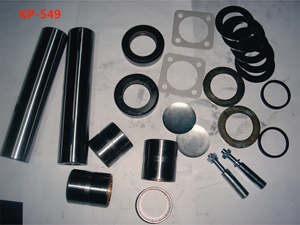
Every linkage, king pin kit, and hydraulic actuator is indexed against proprietary KNB codes and complete OEM numbers (Mercedes-Benz, Volvo, Scania, DAF, MAN, Iveco). Guaranteed zero mis-order rates.
Full support for international trade documentation including Commercial Invoices, detailed Packing Lists, Certificates of Origin (COO), and official A.TR movement certificates for duty-free European Union transit.
When issuing RFQs or executing supplier audits for commercial drag links, procurement engineers must enforce strict compliance with international mechanical testing regimes. Substandard aftermarket manufacturers often cut costs by skipping heat treatment stages or substituting inferior steel alloys.
Drag links must withstand static axial push-pull test loads exceeding 120 kN without permanent plastic elongation, fracture at friction-welded joints, or ball pin pop-out from the steel socket.
New ball joints must conform to exact breakaway torque thresholds (typically 2.0 to 6.5 Nm). Excessive stiffness accelerates steering box wear, while insufficient torque signifies loose tolerances and early play.
Cataphoretic dip coating (KTL) or high-grade electro-zinc plating must withstand at least 720 hours of continuous neutral salt spray without substrate red corrosion blistering.
Actionable answers to technical, logistics, and quality assurance questions faced by international procurement managers and parts importers.