100% High-Pressure Leak Tested
ISO/TS 16949 & ECE R90 Certified
12,000+ Global OEM Cross-References
< 0.02% Field Failure Rate
Precision Verified Units

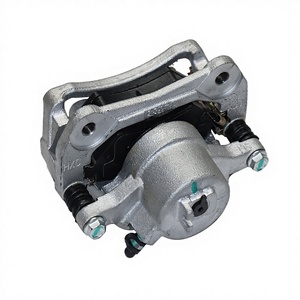
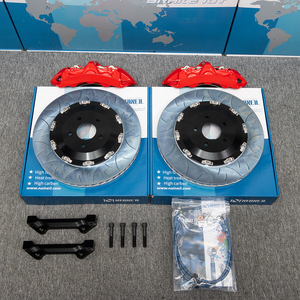
Explore eight specialized caliper configurations engineered to resolve hydraulic deflection, eliminate thermal clamping decay, and comply with rigorous vehicle fitment protocols across global platforms.
Engineering Whitepaper & Benchmarks

Evaluation Architecture for Critical Brake Caliper Assemblies

A comprehensive examination of hydraulic line pressures, dynamic thermal clamping dissipation, mechanical piston synchronization, and the global manufacturing standards required for fleet reliability.

Hydraulic Clamping Dynamics & Structural Deflection

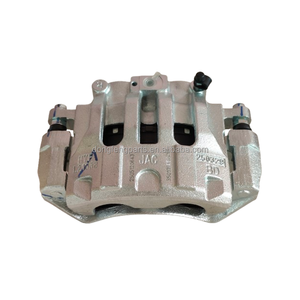
Under severe braking decelerations exceeding 0.8g, internal caliper fluid pressures routinely hit 12 to 18 MPa. Standard cast units often suffer from bridge deflection, leading to sponge-like pedal feel and uneven pad taper wear. Modern monobloc designs eliminate bridge joint flex entirely through finite element topology optimization.

  • Elastic Strain Prevention: Advanced bridge web reinforcement prevents body spreading under peak pressures.
  • Differential Bore Diameters: Leading-edge pistons utilize smaller diameters to counteract rotational friction taper wear.
  • Seal Retraction Memory: High-grade EPDM square-cut seals guarantee immediate caliper piston return, eliminating micro-drag.

Thermal Dispersion & Metallurgical Integrity

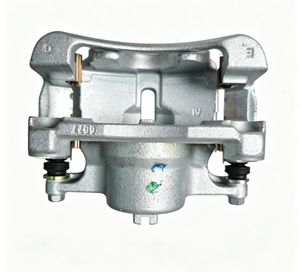
Continuous thermal cycles running from ambient cold to 650°C induce severe structural fatigue. High-specification commercial and performance assemblies deploy ductile nodular iron (QT450-10) or forged aluminum matrices (6061-T6 and 7075-T6) combined with ventilated stainless steel piston caps to block fluid boiling.

  • Zero Boiling-Point Penetration: Low thermal conductivity piston inserts isolate DOT 4 and DOT 5.1 fluids.
  • Anodized Anti-Oxidation Layers: Hard-anodized internal bores resist hygroscopic fluid water corrosion indefinitely.
  • Thermal Expansion Tolerances: Bore-to-piston clearances are machined to ±0.005 mm to prevent thermal binding.

Pneumatic Commercial Disc Caliper Mechanics

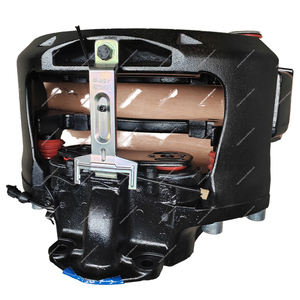
Unlike light-vehicle hydraulics, heavy-duty truck disc brake calipers rely on pneumatic booster actuator pins via eccentric internal camshaft mechanisms. Sourcing requirements demand rigorous torque balance across dual synchronizing slide pins to support 22.5-inch commercial wheel assemblies.

  • Self-Adjusting Mechanism: Internal wear compensator maintains pad clearance continuously within 0.7 to 1.0 mm.
  • Hermetic Boot Sealing: Viton rubber guide sleeves protect floating slide pins against de-icing salt crystallization.
  • Cross-Compatibility: Exact dimensional parity matching Knorr-Bremse SB/SN series, Meritor Elsa, and Wabco PAN systems.
Strategic Sourcing Insights

How the accelerated electrification of commercial powertrains, regulatory particulate rules, and nearshore supply chain corridors are reshaping how procurement officers evaluate caliper contracts.

1. Integration of Electro-Mechanical EMB Systems

The elimination of pneumatic and hydraulic lines in favor of distributed Brake-by-Wire (EMB) setups requires calipers equipped with high-speed brushless electric stepper motors. This shift shortens system actuation reaction times from 300 ms down to 90 ms, integrating seamlessly with autonomous radar braking arrays.

2. Zero-Residual Drag Compliance (Euro 7 Mandates)

Impending Euro 7 standards directly target non-exhaust vehicular emissions, prioritizing micro-dust particulate generation. Caliper procurement mandates active pad separation spring mechanisms that keep residual drag torque strictly below 0.3 Nm per wheel hub, lowering rolling resistance and parasitic energy consumption.

3. Eurasian Supply Chain Consolidation & Nearshoring

Global fleet distributors are progressively shifting volume contracts away from single-source hubs toward the Bursa automotive corridor in Türkiye. Benefiting from the EU-Türkiye Customs Union (A.TR movement certificates), buyers achieve sub-7-day European logistics turnarounds and reduced transit inventory capital lockup.

The Partner Advantage

Industrial Manufacturing Caliber & Supply Chain Certainty

Backed by extensive foreign trade infrastructure, rigorous metallurgical certification, and centralized export hubs in Bursa, Türkiye, we bridge global OEM standards with direct distributor economics.

Bursa Automotive Cluster

Direct proximity to global automotive stamping, foundry, and machining powerhouses provides lean assembly line cycles, low transit overheads, and high scalability.

A.TR & EUR.1 Trade Facility

Seamless zero-tariff trade processing across European Union borders via established customs documentation, removing customs delays and import taxes.

Strict Cross-Reference Audit

Every unit is cataloged under a unified data framework cross-referencing OEM, KNB, Knorr, Wabco, and aftermarket codes to guarantee zero install discrepancies.

Multilingual Engineering Desk

Direct commercial and technical support led by engineering experts in English, German, Turkish, and French, eliminating costly intermediary miscommunications.

Procurement Clarifications

Frequently Asked Questions on Global Caliper Sourcing

Essential guidance on minimum order quantities, cross-referencing, metallurgical validation, and export compliance.

How are OEM cross-references verified prior to shipment? +
Every assembly is cross-referenced using 3D coordinate point checks across mounting center distances, bracket thread pitches (metric/imperial), port Voss connectors, and piston displacement volumes. We match factory part labels against comprehensive digital exploded diagrams to guarantee drop-in compatibility.
What quality test certifications accompany commercial caliper orders? +
Shipments comply with ISO 9001 and IATF 16949 production controls. Individual batches can be supplied with 100% pneumatic high/low pressure decay test certificates, salt spray resistance reports (ASTM B117 minimum 480 hours), and CMM coordinate precision machining audits.
Can customized multi-piston kits be private-labeled? +
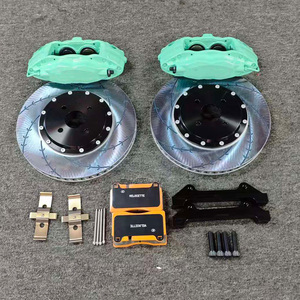
Yes. We provide complete OEM private-label integration, including custom body laser engraving, branded anodized exterior coatings, specialized retail packaging, and tailored rotor disc/caliper bracket kit consolidation for fleet or performance programs.
What are the standard Minimum Order Quantities (MOQ)? +
We provide flexible MOQs according to vehicle segments: high-turnover commercial truck calipers can be consolidated with mixed-axle pallets starting at 20 units, while specialized multi-piston forged performance kits can be ordered in batches as small as 10 sets.
What export documentation is prepared for international sea/air freight? +
Standard documentation includes the Commercial Invoice, Packing List, Certificate of Origin, and Bill of Lading. For European destinations, an A.TR movement certificate or EUR.1 document is prepared directly from Bursa to grant tariff-exempt customs release.
How do cast iron and forged aluminum caliper bodies compare in service? +
Ductile cast iron (QT450-10) is the proven standard for high-mileage commercial trailers and heavy tractors, providing maximum fatigue life and thermal mass. Forged 6061-T6 aluminum cuts unsprung weight by up to 40% and accelerates thermal dissipation, making it ideal for performance applications.

Request a Validated Factory Quotation or Technical Blueprint

Need immediate pricing on large fleet volumes, custom bracket adaptation, or cross-referencing an obsolete OEM caliper number? Speak directly with our export logistics desk.

Send an Inquiry