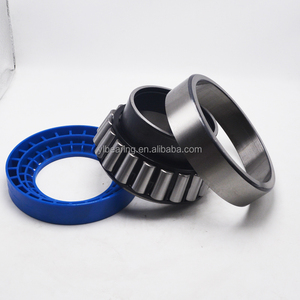
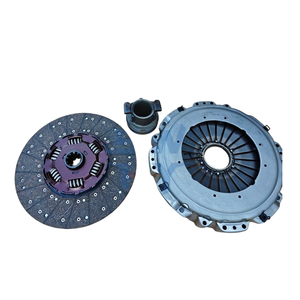
Precision-machined master cylinders, emergency valves, multi-piston calipers, and heavy-duty suspension modules configured for extreme axle loadings and long-haul commercial fleet dependability.
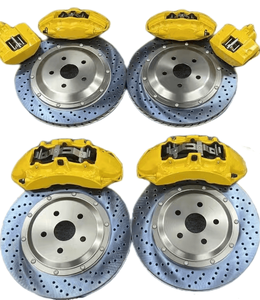
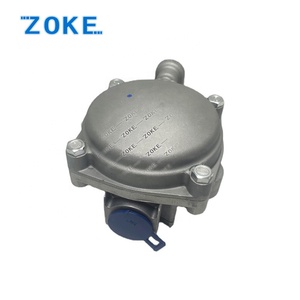
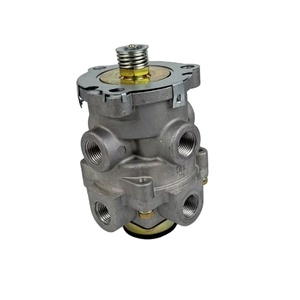
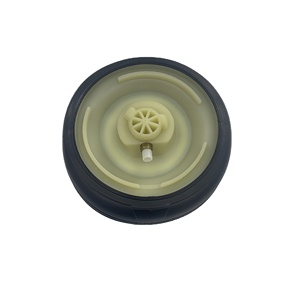
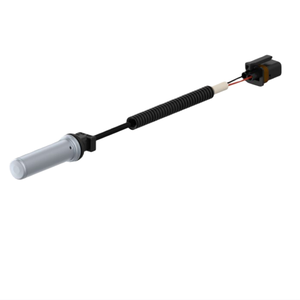
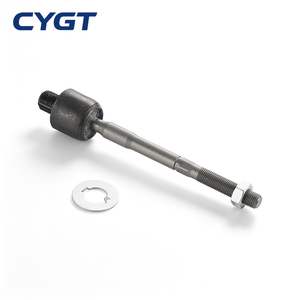
Commercial vehicle braking systems represent the most non-negotiable safety subsystem in line-haul, vocational, and off-highway logistics. As an authoritative OEM/ODM truck master cylinders factory and global exporter, our precision manufacturing footprint encompasses tandem hydraulic master cylinders, electro-hydraulic brake-by-wire cylinders, and heavy-duty dual-circuit pneumatic brake control valves. Operating under severe environmental stresses, heavy truck master cylinders must translate mechanical driver pedal force or electronic commands into unyielding hydraulic or pneumatic pressure with zero tolerance for pressure decay, fluid vaporization, or internal piston leakage.
The manufacturing threshold for heavy-duty truck master cylinders requires profound expertise in core metallurgy. Traditional commercial transport infrastructure relies heavily on nodular ductile iron (Grades QT450-10 and QT500-7) due to its high tensile strength (>450 MPa), exceptional dampening capability, and structural modulus under sustained working pressures exceeding 250 bar. For long-haul prime movers and extreme vocational dump trucks, cast iron cylinders guarantee structural elongation resistance without barrel ballooning.
Conversely, the modern trend toward chassis lightweighting and electric commercial vehicle (e-Truck) platforms has accelerated the demand for gravity die-cast or cold-forged aluminum alloy master cylinders (predominantly A380 or high-purity 6061-T6). To match the wear resistance of cast iron, our factories deploy a proprietary electrolytic hard-coat anodization (MIL-A-8625 Type III) process. This creates an internal barrel oxide layer measuring 45–60 micrometers with a surface hardness exceeding 65 Rockwell C. Internal cylinder bores undergo CNC diamond burnishing and roller burnishing to attain a mirror micro-finish roughness parameter of Ra ≤ 0.15 μm, eliminating micro-abrasions against primary and secondary elastomeric piston cups.
| Performance Dimension | Ductile Cast Iron (QT500-7) | Hard-Anodized Forged Al (6061-T6) | Pneumatic Foot Valve Composite |
|---|---|---|---|
| Nominal Yield Strength | ≥ 320 MPa | ≥ 276 MPa | ≥ 190 MPa (Hybrid Aluminum/Polymer) |
| Working Pressure Range | Up to 280 bar (Hydraulic) | Up to 210 bar (Hydraulic) | 8.5 bar to 13.5 bar (Pneumatic) |
| Bore Surface Roughness (Ra) | 0.20 – 0.25 μm (Honed) | 0.12 – 0.18 μm (Roller Burnished) | 0.25 – 0.35 μm |
| Corrosion Resistance (Salt Spray) | 500 Hours (Zinc-Nickel Plated) | 1,000+ Hours (Hard Anodized) | 720 Hours (E-Coated) |
| Thermal Endurance Threshold | -40°C to +150°C | -40°C to +135°C | -40°C to +100°C |
The operational lifespan of a truck master cylinder is strictly defined by the integrity of its hydraulic seal geometry. In dual-circuit tandem configurations, primary and secondary chambers isolate front and rear axle braking lines to ensure failsafe deceleration under FMVSS 121 and ECE R13 legislative mandates. Should one hydraulic circuit suffer catastrophic line rupture, the floating secondary piston mechanically engages the stroke limit to preserve half-system braking capability.
Our OEM/ODM manufacturing protocols specify specialized Ethylene Propylene Diene Monomer (EPDM) formulated specifically for prolonged compatibility with glycol-ether based brake fluids (DOT 3, DOT 4, and high-boiling DOT 5.1). When operating in mineral oil or synthetic hydraulic fluid systems (common in central hydraulic assist systems), our tooling shifts seamlessly to high-fluorine Fluorocarbon elastomers (FKM / Viton). Every elastomeric compounding batch undergoes continuous rheometer cure curve testing, tensile modulus verification, and 70-hour thermal immersion swelling tests (ΔV restricted to <+4% to +8%).
True OEM-tier manufacturing leaves no room for batch-sample testing. Each individual master cylinder produced across our export assembly lines passes through a fully automated, robotic 4-stage End-of-Line test bench before barcoding and export packing:
• Low-Pressure Pneumatic Vacuum Test: Verifies initial seal seating under a gentle -0.8 bar pull to detect microscopic porosity or flashing on seal lip geometries.
• Low-Pressure Fluid Check (0.5 to 2.0 bar): Confirms immediate compensation port cut-off and prevents pedal sponge-effect during initial brake engagement.
• High-Pressure Hydrostatic Integrity Test (150 to 220 bar): Sustained dwell testing measuring pressure decay (ΔP ≤ 0.05 bar over 10 seconds), verifying internal body cast density and cross-circuit bypass seals.
• Dynamic Piston Stroke Displacement Profile: Laser linear encoders map the exact relationship between input rod force, stroke millimeters, and output fluid volume displacement, archiving data for digital traceability.
Strategic procurement directors are repositioning their commercial vehicle spare parts supply lines to survive macroeconomic instability, emissions mandates, and technological electrification.
Distributors are moving away from multi-tiered trading brokers, securing contractual alliances with manufacturing exporters offering integrated cross-reference registries (matching OEM, KNB, and aftermarket part numbers). Regional manufacturing hubs like Bursa, Türkiye, and select Asian export zones offer short lead-time routes directly to European, MENA, and American trade lanes under favorable customs tariffs.
Fleet operators are shifting purchasing formulas from lowest upfront unit cost to Lifecycle Cost Optimization. Master cylinders certified for >1,000,000 operational actuation cycles eliminate premature truck downtime and roadside DOT inspection failures. Procurement contracts increasingly specify strict IATF 16949 production traces and documented raw material metallurgical certifications.
Global warehouse distributors (WHDs) are aggressively expanding proprietary aftermarket brands. OEM/ODM exporters must provide comprehensive end-to-end customization: laser etched batch tracking, bespoke packaging, branded anti-counterfeiting seals, and pre-sorted consolidated container packing covering brake cylinders, air dryers, slack adjusters, and wheel bearings.
The convergence of commercial vehicle autonomy, regenerative braking systems, and digital telemetry is redefining traditional master cylinder architectures.
Modern electric and hybrid trucks require master cylinders capable of decoupling direct pedal linkage to facilitate friction-regenerative blending. Future master cylinder units feature integrated linear stroke travel sensors, redundant Hall-effect potentiometers, and electronic solenoid valves that synthesize pedal feel while modulating hydraulic line pressure via an electro-hydraulic actuator.
To support heavy battery weight allocations without compromising payload limits, master cylinder fluid reservoirs and outer mounting brackets are transitioning to high-strength, glass-fiber reinforced Polyamide (PA66-GF30). Body housings are adopting high-pressure structural die casting that eliminates internal porosity while reducing structural mass by up to 38% compared to nodular cast iron.
Advanced OEM platforms are piloting master cylinders embedded with micro-pressure transducers and fluid condition monitors. These integrated sensors transmit real-time line pressure curves and fluid moisture saturation readings directly to the truck CAN-bus (J1939), enabling predictive maintenance alerts long before seal degradation causes pedal fade or pressure loss.
Combining deep automotive manufacturing heritage with structured technical cross-referencing, multi-language commercial engineering, and international export logistics.
Rooted in premier automotive manufacturing centers with direct proximity to specialized metallurgy, precision CNC tooling, and seamless container port access for fast global departures.
Proprietary engineering database linking tens of thousands of OEM codes to aftermarket equivalents across Mercedes-Benz, MAN, Scania, Volvo, DAF, Iveco, Renault, Ford, BPW, and SAF.
Founder-led operations backed by a decade of foreign trade and logistics expertise. Multilingual technical support in English, German, French, and Turkish ensures zero communication errors.
Complete export documentation readiness including Commercial Invoices, Packing Lists, Certificates of Origin, and EUR.1 / A.TR movement certificates for preferential duty-free EU entry.
Clear, unvarnished technical answers regarding tolerances, private labeling, order quantities, and international logistics execution.