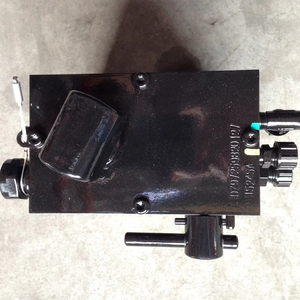
OEM DZ97259820127
Electric Cabin Tilt Pump for Shacman X3000
High-tensile black alloy housing, cold-rated electro-hydraulic valve core, designed for extreme load cab lifting duty.

From optical emergency signaling fixtures to critical hydraulic, engine, and drivetrain chassis elements, each production batch complies strictly with ISO/TS 16949 standards for commercial uptime.
High-tensile black alloy housing, cold-rated electro-hydraulic valve core, designed for extreme load cab lifting duty.
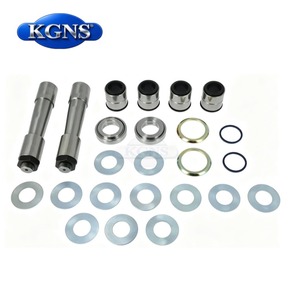
Hardened case-depth alloy steel, precision ground shims and needle bearings resisting micro-wear in severe road conditions.
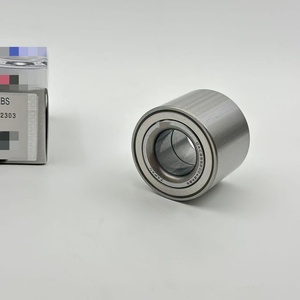
Dual angular contact internal structure, high-frequency ABS integrated sensor ring, calibrated for European platforms.
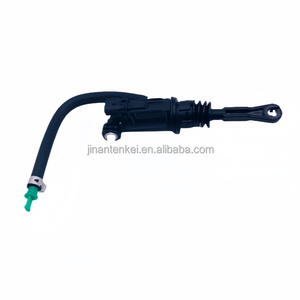
Corrosion-resistant bore treatment with EPDM synthetic rubber seals to eliminate hydraulic pressure drop under high thermal cycling.
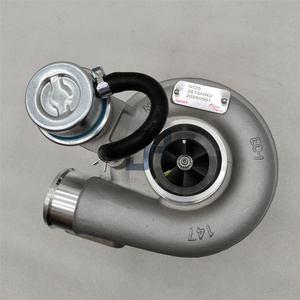
Dynamic balanced Inconel turbine wheel with heat-resistant ductile iron casting engineered for high boost efficiency.
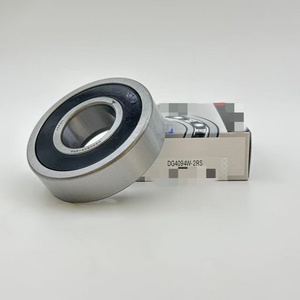
Low-torque nitrile rubber dual seals (2RS), super-finished raceway geometry providing extended B10 life expectancy.
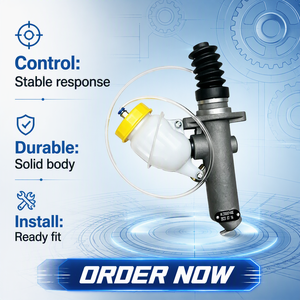
Reinforced structural oil-can body, engineered to endure the aggressive vibration and dust environments of quarry hauling.
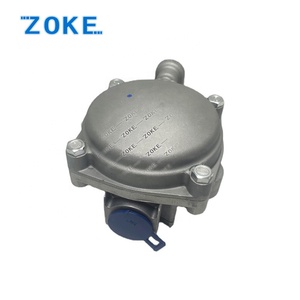
Instantaneous air brake line depressurization safety response, precision machined ports matching Scania & European trailers.
Modern emergency signaling has advanced far beyond incandescent xenon discharge lamps. The current B2B manufacturing landscape centers on solid-state LED arrays, thermal boundary control, and strict optical collimation.
Commercial-grade emergency strobe fixtures utilize high-output SMD LED emitters coupled with TIR (Total Internal Reflection) PMMA lenses. This architecture guarantees a minimum horizontal dispersion of 360 degrees and vertical compliance within ±10 degrees, exceeding SAE J845 Class 1 and ECE R65 Category T/HT requirements without lumen drop-off.
Continuous flash cycles generate intense junction heat at the die level. High-tier Chinese manufacturers utilize 6063-T5 extruded aluminum heatsinks directly bonded via thermal interface material (TIM) rated above 3.0 W/m-K. Coupled with vacuum-molded polyurethane potting, housings achieve IP68/IP69K ratings against high-pressure steam jet cleaning.
Uncontrolled electromagnetic emissions from strobe switching circuits frequently disrupt heavy truck telematics, tachographs, and EBS modulators. Modern strobe systems integrate multiphase filtering choke coils, transient voltage suppressors (TVS), and compliant internal power supplies certified under CISPR 25 Class 3/4 and ECE R10 Rev. 5.
| Evaluation Parameter | Consumer / Utility Grade | Commercial Fleet / Industrial Grade | Direct Chinese Export Benchmark |
|---|---|---|---|
| Luminous Output (Candela) | 150 – 400 Cd (Uncalibrated) | 800 – 1,800+ Cd (Certified Peak) | SAE Class 1 & ECE R65 Certified Emitter Packages |
| Operating Input Voltage | 12V DC Narrow Band (±10%) | 10–33V DC Multi-Voltage Automated | 9–36V Extended Transient Protection (ISO 7637-2) |
| EMC / RFI Shielding | Basic or Unshielded | CISPR 25 Class 2 Compliant | CISPR 25 Class 4 / ECE R10 Zero Interference Core |
| Thermal Dissipation Core | FR-4 PCB to Plastic Cavity | Cast Aluminum Alloy Sub-Plate | 6063 Aluminum CNC Heatsink + Multi-Stage Thermal Throttling |
| Ingress Protection Rating | IP65 (Gasketed Seal) | IP67 (Sealed Perimeter) | IP68 & IP69K (Full Nitrogen / Hermetic Epoxy Potting) |
As automated commercial transport, heavy haulage mining rigs, and cross-border logistics modernize, procurement strategies are pivoting from price-per-unit metrics to total cost of ownership and intelligent vehicle integration.
Over-illumination during night operations causes dangerous retinal glare for passing motorists. Forward-looking emergency strobe lights integrate integrated photodiode circuits that dynamically step down luminance to 50% during dusk or darkness, fully complying with nighttime ECE R65 Dual-Intensity legislation automatically.
Traditional multi-strobe synchronization requires dedicated physical harness routing across truck tractors and semi-trailers, introducing failure points at articulation joints. Emerging commercial lights adopt encrypted 2.4GHz RF sub-gigahertz mesh protocols, auto-pairing perimeter strobe modules for synchronized or alternating flash rhythms.
Global wholesale buyers are moving away from fractured supply models. Importers increasingly combine electrical warning equipment with structural truck spares—such as clutch hydraulics, turbochargers, steering king pins, and brake relay valves—into single consolidated 40-foot containers to optimize freight density, custom tariffs, and handling overhead.
Sourcing industrial goods from overseas requires direct manufacturing proximity, verified cross-reference validation, and rigorous export documentation. We bridge high-capacity Chinese production with European and American operational compliance.
Our engineering audit teams maintain granular cross-reference databases linking OEM codes, WABCO part numbers, and European heavy-duty specs. Whether evaluating an air brake relay valve or an ECE R65 amber beacon light, fitment dimensions, port thread tolerances (VOSS, Metric, NPT), and electrical parameters are confirmed prior to mold fabrication or container stuffing.
Avoid managing dozens of disjointed factory lines. We coordinate mixed-pallet consignments across commercial vehicle subsystems. Pack electrical warning flashers alongside cabin tilt hydraulics and heavy-duty hub bearings under unified export manifests, with comprehensive pre-shipment quality inspection reports and sample retention for every lot.
Serving distributors across North America, the European Union, the Middle East, and Latin America, our team provides full trade documentation: Certificates of Origin, commercial invoices matched to HS code customs tariffs, Form E, SASO, and A.TR/EUR.1 assistance where applicable, ensuring smooth port clearance with zero penalty delays.
We work directly in English, Turkish, German, and French, providing clear B2B communication from technical brief to shipment delivery. We support private-label tooling, custom laser-etched markings, retail packaging, and customized optical flash patterns engineered to meet exact regional fleet procurement tenders.
Answers to the most critical technical, commercial, and operational questions asked by purchasing directors and import managers.
For European Union vehicle applications, emergency lighting must carry ECE R65 approval (Category T for beacons, Category X for directional strobes) covering color chromaticity, optical intensity, and flash frequency. Electromagnetic compatibility under ECE R10 is mandatory. For North America, units must comply with SAE J845 Class 1 (high output for emergency response), Class 2, or Class 3, alongside SAE J595.
Commercial-grade warning lights use dual-barrier protection: hermetic sonic welding or stainless perimeter clamping around silicone O-rings, complemented by complete circuit board encapsulation with automotive-grade epoxy or polyurethane resins. High-spec models also integrate ePTFE hydrophobic breather membranes to equalize internal barometric pressure without drawing in moisture.
Yes. Many global fleet suppliers combine optical beacons, lightbars, and grille strobes with chassis components like wheel hub bearings, clutch master cylinders, turbochargers, and pneumatic valves into a single unified container. This consolidated shipment lowers individual shipping costs and streamlines import customs clearance.
Standard production units carry flexible MOQs, often starting from 50 to 100 units per model. For bespoke private-label packaging, custom housing powder-coat colors, or firmware-coded flash sequences, typical project MOQs range between 300 and 500 units, depending on optical tooling requirements.
All driver circuits undergo comprehensive laboratory testing under CISPR 25 standards inside anechoic chambers. This confirms conducted and radiated electrical noise does not leak through the vehicle DC harness, protecting two-way radios, GPS trackers, CAN-bus control units, and EBS braking systems from interference.
To confirm compatibility, please provide the original OEM part number, target vehicle make and chassis series, electrical operating voltage (12V/24V or universal 10-30V), and mechanical mounting style (single-bolt, three-bolt flange, DIN pole mount, or magnetic base). For mechanical spares, port thread dimensions and clear label photographs ensure precise matching.
Request comprehensive product specifications, volume price tiers, photometric test certificates, and complete cross-reference catalogs. Our technical team is ready to evaluate your requirements.