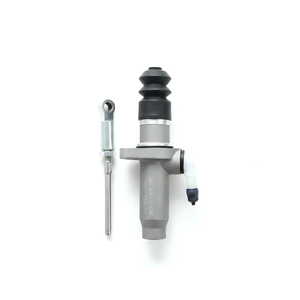
Zhongtong Bus Parts Clutch Master Slave Cylinder for LCK6131D LCK6132D
Bore Size: Ø 25.4 mm (1.00")
Application: Zhongtong Coach / Intercity
Fluid: DOT 3 / DOT 4 Synthetic
Contact Us

Precision-bored, anodized, and cycle-tested clutch master cylinders, slave cylinders, and heavy-duty release systems engineered to ISO/TS 16949 and IATF 16949 standards.
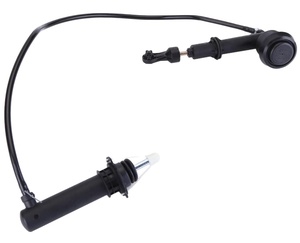
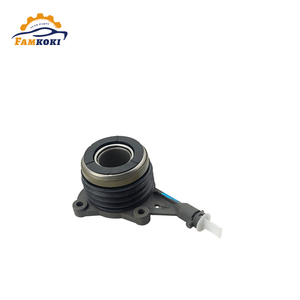
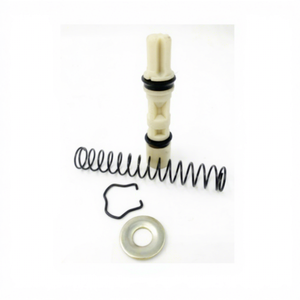
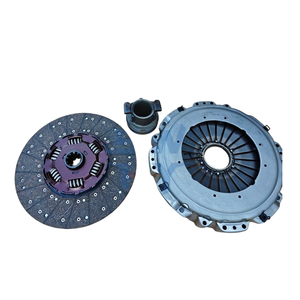
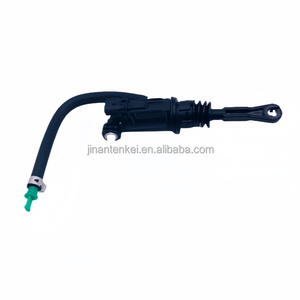
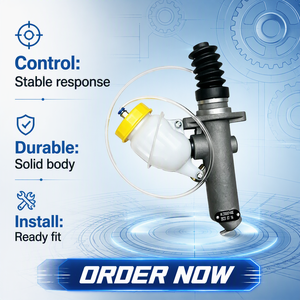
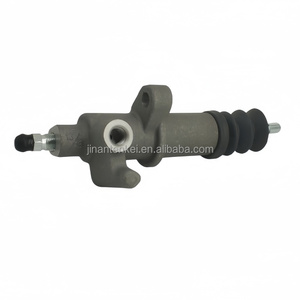
The clutch master cylinder (CMC) serves as the primary hydraulic control transducer within manual and automated-manual drivetrain systems. Translating mechanical pedal force into linear fluid pressure, the CMC operates under severe mechanical, thermal, and chemical stress. For international tier-1 buyers, fleet procurement directors, and commercial automotive distributors, selecting a dependable China wholesale clutch master cylinder manufacturer requires a deep audit of manufacturing tolerances, casting metallurgies, and micro-finishing procedures.
Hydraulic fluid bypass and premature loss of pedal pressure are directly correlated with bore concentricity and roughness. Leading Chinese manufacturing operations utilize multi-axis CNC drilling followed by diamond-roller burnishing to achieve bore roughness tolerances down to Ra < 0.2 µm. This ultra-smooth micro-finish minimizes friction coefficients against EPDM and FKM primary seals, dramatically extending service life beyond one million full actuation cycles.
| Material Class | Tensile Strength (MPa) | Weight Impact | Primary Commercial Application | Corrosion & Wear Profile |
|---|---|---|---|---|
| Nodular Ductile Iron (QT450-10) | 450 - 550 | Standard Heavy | Heavy-Duty Mining Dumpers, Long-Haul Freight Trucks | Extreme fatigue resistance; phosphate anti-rust coated |
| Die-Cast Aluminum Alloy (ADC12 / A380) | 310 - 380 | -45% vs. Iron | Light Commercial Vehicles (LCV), Buses, Utility Pickups | Hard anodized surface; superior thermal dissipation |
| Glass-Fiber Reinforced PA66 (GF30/GF50) | 175 - 220 | -65% vs. Iron | Passenger Cars, Modern Lightweight Commercial Platforms | Inherent chemical immunity to glycol-ether brake fluids |
As modern vehicle architectures prioritize deadweight minimization without compromising safety envelopes, specialized manufacturers in China maintain dual foundries capable of high-precision gravity die casting for aluminum, alongside induction furnaces for ductile casting.
Procurement strategies within the global automotive aftermarket and commercial OEM sectors are undergoing structural shifts. In an era dominated by supply-chain realignments, digital inventory management, and aggressive decarbonization roadmaps, international procurement heads must assess manufacturers through multi-dimensional criteria.
Increasing migration to Contactless Hall-Effect Travel Sensors embedded inside the cylinder housing to communicate clutch disengagement directly with vehicle ECUs and ADAS systems.
Global distributors are moving away from piecemeal buying. Consolidated procurement of complete hydraulic circuits—combining master cylinders, slave cylinders, servo units, and fluid reservoirs—drives down shipping overheads and reduces assembly mismatches.
Zero-discharge anodizing lines and hexavalent chromium-free anti-corrosion plating (compliant with EU REACH and RoHS protocols) represent mandatory baseline capabilities for top-tier Chinese manufacturers.
Modern Chinese manufacturing facilities leverage 3D laser-scanning CMM and rapid CNC mold EDM to slash new part tooling development lead times from 120 days down to under 28 days for complex discontinued commercial applications.
Operating out of premier automotive industrial clusters in China, our integrated manufacturing footprint delivers unmatched reliability for bulk wholesale and specialized contract manufacturing. With over a decade of direct export experience, our technical team bridges the gap between precision engineering and frictionless international logistics.
Every single manufactured unit undergoes automated low-pressure pneumatic testing (0.05 MPa for seal seating verification) and high-pressure hydraulic testing (up to 20 MPa) to ensure zero fluid bypass.
Our database links thousands of OEM and major aftermarket part numbers (Wabco, Knorr-Bremse, FTE, LuK, Sachs, TRW) to streamline inventory conversion, bidding accuracy, and catalog cross-mapping.
From complete commercial invoices, packing lists, and certified mill test reports to Certificates of Origin and compliant palletized cargo packaging, we simplify global trade handling across all major continents.
Custom laser part etching, customized barcode branding, tailored packaging box designs, and consolidation of related drivetrain components into a single containerized ocean shipment.
Essential technical and commercial considerations for international buyers and supply chain executives.
The primary root causes of premature failure include internal bore micro-scratches caused by poor finishing, substandard elastomeric cups that swell or degrade when exposed to synthetic glycol fluids, and weak return springs that lose elastic memory under thermal cycling. Our production lines use premium EPDM compounds and high-grade spring steels to prevent these catastrophic failures.
Yes. Our engineering department operates coordinate measuring machines (CMM) and 3D optical scanning equipment to reverse-engineer physical samples. We accept 2D CAD prints and 3D STEP/IGES models, verifying bore diameters, port threading, mounting flange pitches, and stroke lengths before cutting prototype tooling.
For standard catalog part numbers with active tooling, our typical MOQ starts at 50 to 100 units per reference. For newly developed custom castings or proprietary private-label assemblies, initial MOQs generally start at 300 to 500 units depending on raw casting batch economics.
We execute strict APQP, FMEA, and SPC procedures under our IATF 16949 quality framework. Raw materials receive spectrographic chemical analysis, while automated CMM check bore roundness. Final assembly lines incorporate 100% automated pressure decay testing, and batch life-cycle durability testers validate endurance under load.
Our tooling libraries cover extensive European, Asian, and American commercial vehicle applications, including Mercedes-Benz Actros/Axor, Volvo FH/FM, Scania R-Series, MAN TGA/TGX, DAF, Iveco, Ford Ranger, Isuzu, Mitsubishi Fuso, Hino, and heavy mining brands such as LGMG, Sinotruk HOWO, and Shacman.
Cast iron units undergo manganese phosphating or trivalent zinc electroplating capable of surviving over 240 hours of neutral salt spray (NSS) testing. Aluminum bodies are treated with sulfuric acid hard anodizing, creating a non-conductive, wear-resistant, anti-corrosive aluminum oxide barrier.
Whether you require scheduled container shipments, custom OEM development, or high-volume aftermarket distribution, our technical sales engineers provide rapid quotes and comprehensive cross-reference validation.
Contact Us