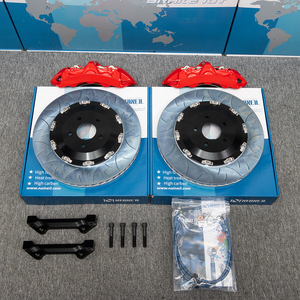

From high-pressure cabin hydraulic tilt systems to heavy-haul landing gears, brake caliper units, and forged chassis hardware, explore our precision-manufactured replacement and OEM line designed for Mercedes-Benz, Volvo, Scania, Fuwa, and specialty platforms.
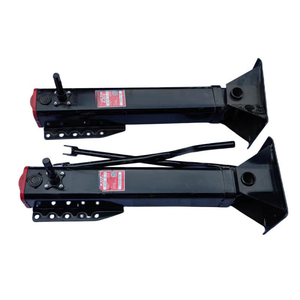
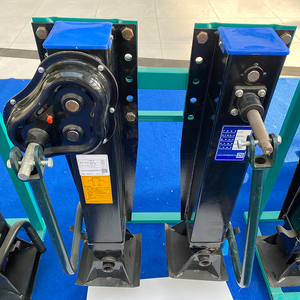
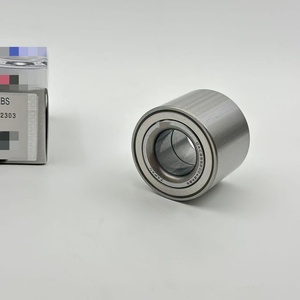
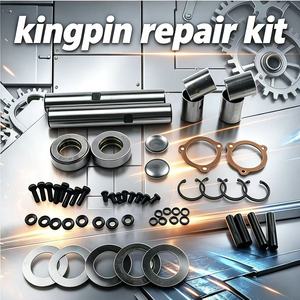
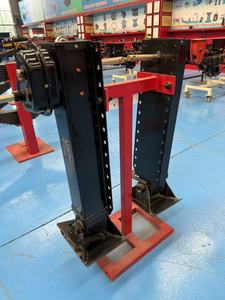
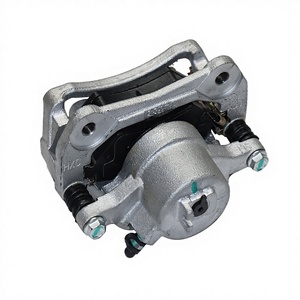
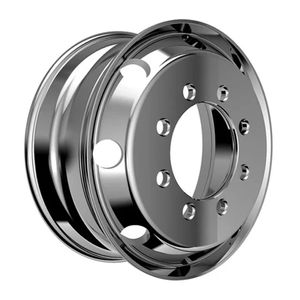
A granular breakdown of hydraulic displacement thresholds, material surface micro-hardness, and seal dynamics for heavy commercial transport fleet procurement.
Cabin tilt cylinders operate under extreme intermittent dynamic loads, handling static cabin curb weights spanning 800 kg to over 2,200 kg. Our manufacturing standards mandate precision cold-drawn seamless carbon steel tubing (grade St52-3 / E355) with inside diameter micro-finishing honings under Ra 0.2 μm. This surface grade eliminates internal bypass, mitigating seal rupture during abrupt high-angle cab stops beyond 45 degrees.
Exposed underbody linkages endure caustic salt spray, gravel impacts, and extreme moisture fluctuations. Piston rods utilize structural 40Cr / 42CrMo high-tensile alloy induction-quenched to an external hardness of 55–62 HRC, followed by hard chrome electroplating (minimum 25–30 μm). Rigorous salt spray endurance benchmarks exceed NSS 500 hours without surface pitting, preventing particulate intrusion into dynamic polyurethane rod seals.
Failure within a tilt circuit introduces critical safety risks during powertrain maintenance. Modern OE configurations incorporate integrated pilot-operated check valves and velocity fuses machined directly into the cylinder base. These mechanical safeguards arrest uncontrolled descent instantaneously should hydraulic delivery tubing experience sudden depressurization or mechanical laceration under field conditions.
Analyzing structural shifts across global supply chains: electrification impacts, digital fleet connectivity, and localized Tier-1 export standards.
The global transition toward battery-electric commercial platforms (BEV) and hydrogen fuel cell trucks has rendered traditional mechanical, engine-driven hydraulic pumps obsolete for cabin servicing. Modern procurement manifests a decisive shift toward standalone, sealed electro-hydraulic cabin tilting assemblies. These units operate on integrated 24V DC auxiliary electrical grids, requiring cylinders optimized with internal electronic position sensors, reed stroke switches, and lower fluid displacement metrics to preserve onboard power margins while maintaining nominal tilt durations below 45 seconds.
Fleet operators face stringent carbon-neutral fleet taxation benchmarks in the European Union, North America, and APAC. Consequently, fleet engineers prioritize structural weight reduction without compromising static burst-pressure ratings. Cylinder barrel manufacturing is transitioning toward high-strength, thin-walled micro-alloyed steels alongside precision forged aluminum trunnion mountings. Procuring enterprises increasingly demand Material Test Reports (EN 10204 Type 3.1) and Lifecycle Carbon Transparency from Chinese manufacturing foundries to comply with regional corporate sustainability directives.
Commercial haulage routes span arctic sub-zero crossings (-45°C) to high-humidity equatorial territories (+50°C). Historical nitrile rubber formulations exhibit micro-cracking and loss of elastomeric recovery under cyclic cold stresses. Modern wholesale procurement contracts now stipulate specialty low-temperature hydrogenated nitrile butadiene (HNBR) or advanced fluorocarbon (FKM) compound sealing lips paired with PTFE dual-glide rings to prevent low-pressure leakage, fluid vaporization, and environmental contamination over million-kilometer chassis duty lifecycles.
Wholesale distributors are streamlining SKUs by adopting modular cylinder body geometries compatible with widespread European, Asian, and American heavy truck cab architectures. Supply chain directors avoid regional brokers in favor of direct engagement with fully integrated Chinese export facilities that provide end-to-end trace documentation, CMM dimensional verification, third-party SGS/TUV testing certifications, and custom private-label laser etching directly on cylinder bodies.
Leveraging extensive industrial integration, multi-language trade coordination, and rigorous metallurgical quality control systems.
Total manufacturing compliance with automotive quality standards, covering incoming raw steel analysis to automated ultrasonic testing.
Every hydraulic cylinder undergoes individual double-stroke pressure validation at 1.5x nominal operating pressure prior to crating.
Extensive foreign trade coordination, full bill of lading processing, customs clearance documentation, and containerized dispatch.
Dedicated technical and commercial account handling in English, German, French, and Turkish for frictionless international partnerships.
Every commercial vehicle component leaving our assembly line is backed by structured traceability data. Our quality testing infrastructure encompasses optical coordinate measuring machines (CMM), surface roughness stylus profilometry, Rockwell/Vickers micro-hardness testers, and cyclic impulse fatigue test benches capable of simulating 100,000 continuous full-load articulation cycles. Whether manufacturing cabin tilt cylinders, 80-ton heavy-haul trailer landing gears, or high-speed automotive hub bearings, zero tolerance for metallurgical inconsistency is our baseline.
We eliminate friction for international procurement managers by supporting private-label manufacturing, custom protective surface treatments (zinc nickel plating, marine powder coating, cataphoretic dip priming), and complete export compliance documentation including Certificates of Origin, Form E, A.TR, and EUR.1 certifications. Buyers benefit from centralized container loading consolidation across diverse commercial vehicle categories—drastically reducing unit shipping costs and administrative turnaround.
Crucial answers regarding dimensional cross-referencing, manufacturing tolerances, custom configurations, and global logistical parameters.
Our production engineering team maintains an exhaustive dimensional reference database covering major commercial brands (including Mercedes-Benz Actros/Axor, Volvo FH/FM, Scania R/G/P series, DAF XF, MAN TGX, and Renault Trucks). To confirm direct drop-in interchangeability, we cross-evaluate: (1) fully collapsed and fully extended center-to-center pin lengths, (2) upper and lower trunnion pin diameters, (3) fluid port thread pitches (standard metric DIN 3852-1 vs. Voss quick-connect couplings), and (4) integrated bypass or relief pressure settings. Providing an original equipment manufacturer (OEM) stamping or technical drawing allows us to guarantee 100% mechanical compatibility.
Standard cabin tilt cylinders are engineered for continuous operational pressures ranging between 180 bar and 320 bar (2,600 to 4,640 PSI), depending on specific cab mass distribution and articulation geometry. Our structural components undergo static safety testing to withstand burst pressures exceeding 650 bar without barrel deformation or thread failure. Integral relief valves and lock valves are calibrated to open within ±5% of specified limit pressures, ensuring rapid bypass protection under anomalous shock-loading conditions.
Yes. As a direct manufacturing facility, we offer comprehensive OEM and ODM support. We routinely engineer bespoke stroke extensions, custom spherical bearing eyelets, clevis mounts, welded cross-tubes, and integrated electrical stroke feedback sensors for specialized defense, municipal fire apparatus, and vocational off-highway haulers. Custom prototyping cycles typically conclude within 15 to 25 business days, supported by complete 3D CAD modeling and finite element analysis (FEA) reports.
All piston rods undergo multi-stage micro-crack hard chrome plating, maintaining a layer thickness of 25–35 microns with an average surface hardness of HV 850–1050. External cylinder barrel exteriors are prepared via grit blasting to Sa 2.5 cleanliness, followed by an electro-deposited cataphoretic primer (e-coating) and a high-durability polyurethane topcoat. This coating system provides robust protection against gravel chipping, acidic wash soaps, calcium chloride winter deicers, and maritime transit environments, readily withstanding 500+ hours of continuous neutral salt spray testing under ASTM B117 standards.
For standard catalog configurations with active tooling, our minimum order quantity is typically 50 to 100 units per line item. For full mixed-container shipments (including combinations of landing gears, brake calipers, wheel bearings, and hydraulic assemblies), flexible consolidation MOQs apply. Standard batch production timelines span 30 to 45 calendar days following formal technical drawing sign-off and deposit receipt. Expedited air-freight samples for testing and homologation are dispatched within 7 to 10 working days.
Our dedicated foreign trade division provides comprehensive, error-free documentation tailored to regional regulatory requirements. Standard shipment portfolios include Clean on Board Ocean Bills of Lading (B/L), Commercial Invoices, Packing Lists with verified gross mass (VGM), Mill Test Certificates (MTC), Certificates of Origin (CO), Form E / Form F for preferential duty areas, and third-party inspection reports (SGS/BV) upon request. We handle logistics under Incoterms 2020 including FOB, CIF, CFR, and DDP agreements.
Direct factory pricing, verified metallurgical integrity, and dedicated engineering consultation for fleet distributors, chassis fabricators, and global aftermarket distributors. Discuss your exact technical parameters with our team today.