
Engineered to exact OEM cross-reference tolerances for long-haul tractors, intercity coaches, and severe-duty vocational platforms.
In modern commercial vehicle fleets, hydraulic shock absorbers operate far beyond simple vibration reduction. They represent the central kinematic component governing dynamic axle load equilibrium, tire footprint retention, electronic stability control (ESC) intervention frequency, and overall lifecycle operating expenditure (OpEx). As global freight corridors expand under varying gross vehicle weight ratings (GVWR), procurement executives and Tier-1 replacement parts distributors face intense challenges: premature fluid cavitation under continuous low-frequency high-amplitude oscillation, seal degradation caused by extreme thermal excursions (-40°C to +135°C), and micro-fretting corrosion on chrome-plated piston shafts.
As an established Chinese manufacturing and export authority, our production facilities fuse advanced hydraulic engineering with rigorous cross-referencing capabilities across European, American, and Asian commercial platforms (Mercedes-Benz Actros, MAN TGX, Scania R-Series, Volvo FH, Sinotruk HOWO, Shacman, and Freightliner Cascadia). This technical treatise evaluates the metallurgical parameters, dyno-tested damping valve technologies, and multi-tier quality assurance architectures required to supply resilient shock absorbers to global distribution channels.
Standard aftermarket dampers frequently utilize single-stage or generic orifice plates that induce excessive chassis roll under dynamic lane-change maneuvers or transmit destructive high-frequency impact energy straight into the air spring pedestals. Our heavy-duty truck shock absorbers leverage 3-stage progressive velocity-sensitive valving disc stacks calibrated for distinctive linear and non-linear rebound/compression stages:
To prevent oil cavitation—the generation and collapse of vapor bubbles at high cyclic frequencies that cause catastrophic loss of damping force—our twin-tube and mono-tube units incorporate low-pressure nitrogen buffering (5 to 15 bar) and specialized high-viscosity-index synthetic damper fluid (VI > 220). This maintains kinetic shear stability across operational oil temperatures exceeding 120°C, ensuring consistent damping curves over transcontinental haul cycles.
Every chassis position subjects the damper to radically distinct vector forces and stroke frequencies. Below is the comparative specification matrix utilized by our engineering and production departments:
| Suspension Classification | Cylinder Bore (ID) | Piston Rod Diameter | Plating Spec & Hardness | Seal Configuration | Target Damping (Rebound/Comp @ 0.52m/s) |
|---|---|---|---|---|---|
| Steer Axle (Heavy Haul) | 45 mm – 50 mm | 20 mm (42CrMo) | Hard Chrome >25µm, 850–1000 HV | Multi-lip NOK fluoroelastomer + double wiper | 7,800 N / 2,400 N |
| Drive Axle (Air Suspended) | 50 mm – 55 mm | 22 mm – 25 mm | Micro-crack Chrome, Ra < 0.08 µm | High-temp FKM secondary barrier seal | 11,500 N / 3,800 N |
| Semi-Trailer Tri-Axle | 42 mm – 45 mm | 18 mm – 20 mm | Micro-crack Chrome >30µm (Salt-resistant) | Integrated mud-shield scraper pack | 8,500 N / 2,900 N |
| Cabin Air Mount / Strut | 30 mm – 35 mm | 14 mm – 16 mm | Superfinished induction hardened C45 | Low-friction PTFE wear band composite | 2,100 N / 850 N |
In the current geopolitical and macroeconomic climate, international procurement heads for mega-fleets and aftermarket wholesalers are shifting away from localized brand markups toward direct manufacturing partnerships in China. Key procurement drivers include:
1. Shift to Total Cost of Operation (TCO) Metrics: Purchasing managers no longer evaluate shock absorbers solely on per-unit FOB cost. The defining KPI is now Cost-Per-Kilometer (CPK). In commercial operation, replacing an axle damper involves road-call risks, tire feathering wear, driver fatigue fines, and mechanic bay labor. By delivering dampers with verified service lives surpassing 500,000 km, Chinese tier exporters lower fleet CPK by 34% compared to European secondary brands.
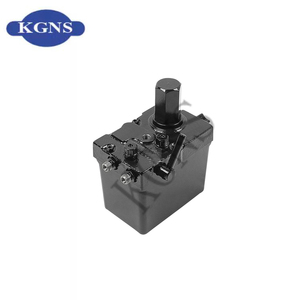
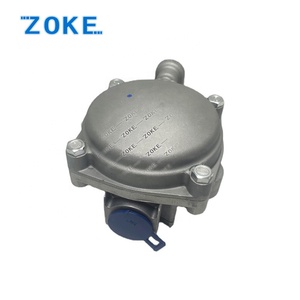
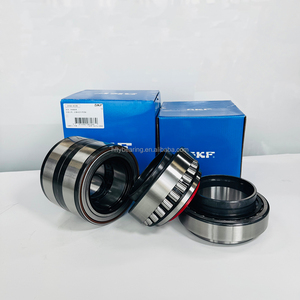
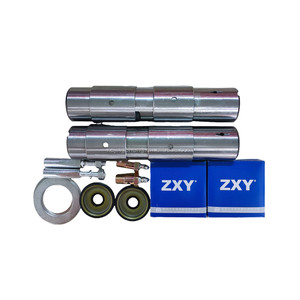
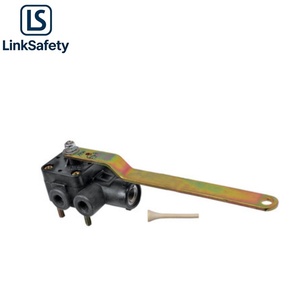
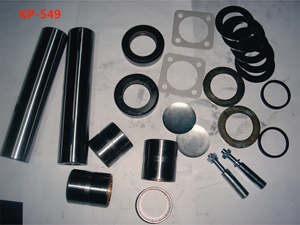
2. Cross-Category Bill of Lading Consolidation: Distributing commercial parts requires handling high volumetric weights against dense mechanical assemblies. Leading exporters offer multi-component shipping synergies—packing shock absorbers alongside complementary suspension valves, kingpin repair kits, wheel bearings, and emergency brake valves. This optimizes container cubing and dramatically shrinks landed freight overhead.
3. Algorithmic OEM Cross-Referencing: Fleets maintain diverse equipment running European prime-movers alongside domestic Chinese dumpers or North American vocational chassis. Exporters must possess deep cross-catalog mapping: linking WABCO, KNORR, SACHS, MONROE, and OEM part numbers (e.g., Mercedes 942-series, MAN 81-series, Scania 209-series) directly into precise production SKU databases without engineering ambiguity.
The commercial transport landscape is accelerating into electric mobility (BEV Class 8 trucks) and automated driving systems. This technological inflection is directly reshaping damper engineering:
Integration of Electronically Controlled Semi-Active Dampers: Standard passive hydraulic dampers are gradually giving way to Continuous Damping Control (CDC) valves. By employing fast-acting proportional solenoid valves that modulate hydraulic resistance within 10 milliseconds, smart dampers read CAN-bus signals (wheel acceleration, steering angle, braking pressure) to instantly stiffen damping during cornering and soften it during empty-load unladen cruising. Our R&D pipeline already prototypes CDC-compatible valve manifolds to support next-generation fleet automation.
Trivalent Chromium & Nickel-Composite Surface Treatments: Stricter environmental policies across European and North American markets are phasing out hexavalent hard chromium plating. Chinese manufacturing leaders are pioneering high-velocity oxygen-fuel (HVOF) coatings and eco-compliant micro-crack trivalent chromium chemistries. These innovations increase ASTM B117 salt spray endurance past 1,000 hours without toxic effluent footprints, matching the highest global ESG procurement charters.
Why do leading global fleet consortia and parts wholesale distributors choose us as their strategic export partner? Our operational ecosystem is built upon rigorous foundations: