
Original Equipment Standards
High-Efficiency Commercial Vehicle Heat Dissipation & Drivetrain Systems
Engineered to withstand prolonged operational pressure, high thermal cyclings, and dynamic torsional stress across class 6–8 commercial vehicle platforms.
Technical Whitepaper
Optimizing Heavy-Duty Oil Cooling: The Thermodynamics of Fleet Longevity
In heavy-duty line-haul trucks, vocational off-highway dumpers, and long-range logistics coaches, the internal combustion engine and multi-stage transmission function at critical limits. Lubricant thermal breakdown represents the single most prevalent root cause of premature rod bearing galling, piston crown scoring, and catastrophic turbocharger bearing failures. Operating as a leading China truck oil coolers manufacturer & exporter, our technical focus centers on the fluid-dynamic boundary layer of oil-to-water heat exchangers, delivering sustained viscosity retention under uninterrupted 40-ton gross vehicle weight demands.
2.8MPa
Burst Pressure Validation
Helium-leak checked under pulsating cyclic pressures exceeding DIN 54187 cold-sludge requirements.
99.4%
Brazing Joint Continuity
Controlled Atmosphere Brazing (CAB) flux density prevents internal bypassing between oil passages and coolant jacket.
ΔT 42°C
Peak Dissipation Differential
High-density internal turbulator geometry maximizing convective surface area with ultra-low delta-P fluid drag.
Procurement Trends 2026–2030
How Strategic Fleet Buyers Are Restructuring Thermal Component Supply Chains
The modern Tier-1 distributor and OEM aftermarket consolidator no longer procures purely on unit pricing; the focus has rotated toward Total Cost of Operation (TCO), digital validation, and regional risk decentralization.
SKU Multiplicity & Consolidated Tooling
Global fleet distributors are abandoning multi-vendor fragmented models. Sourcing suites are demanding unified suppliers capable of cross-referencing European (Mercedes Actros, MAN TGA, Volvo FH, Scania R), American (Freightliner, Cummins, Detroit), and Asian (Isuzu, Sinotruk, Foton) platforms simultaneously under uniform quality assurance protocols.
Digital OEM Cross-Referencing Strictness
Zero tolerance for fitment misalignments has elevated CAD-to-Coordinate Measuring Machine (CMM) inspections into a prerequisite. Procurement teams require direct digital verification matching OE port threads (DIN 7604, SAE J1926, Voss 246), bolt pitching, and core plate depths prior to container stuffing.
Total Cost of Degradation (TCD) Modeling
Freight companies factor oil cooler micro-leaking into warranty risk calculations. Procurement managers calculate the direct financial liabilities of glycol-in-oil contamination—where a sub-$100 cooler failure ruins a $25,000 diesel power plant—making full metallurgical certifications non-negotiable.
Engineering Evolution
Next-Generation Heat Dissipation: Plate-Fin, Vacuum Brazing & Lightweighting
Controlled Atmosphere Brazing (CAB) Dominance
Traditional multi-piece copper-soldered tubular oil coolers have experienced systematic retirement in commercial trucks. The entire sector has transitioned to vacuum NOCOLOK flux aluminum brazing. This metallurgy delivers a 40% weight drop, eliminates lead exposure risks, and produces structural joints immune to high-frequency engine harmonic vibration fractures.
Integrated Filtration & Thermostatic Modules
Standalone coolers are shifting toward integrated complex assemblies. Modern commercial powertrains combine the oil cooler core, oil filter housing, water bypass valve, and electronic pressure sensors into a single monolithic die-cast aluminum block, curtailing assembly line installation steps and eliminating six potential external seal leak paths.
Thermal Transition for Hybrid & Alternative Fleets
With CNG, LNG, and hydrogen internal combustion engines operating at higher combustion temperatures, thermal demands on crankcase lubricants have surged by 22%. Future-proof cooling modules leverage offset serrated louver fins inside the fluid core to elevate turbulent thermal dispersion without causing high-viscosity cold-start pressure choking.
Enterprise Advantage
Why Tier-1 Heavy Duty Importers Partner with Our Manufacturing Hub
Combining world-scale precision manufacturing with decades of foreign trade execution, structured engineering traceability, and friction-free multi-language export logistics.
Integrated Industrial Cluster
Directly tied into elite automotive manufacturing clusters, short-circuiting supply leads across raw ingot casting, precision CNC machining, and automated core brazing.
OEM Cross-Reference Precision
Deep proprietary cross-matching databases map every core to verified KNB, OEM, DT Spare Parts, Febi Bilstein, Nissens, and NRF reference codes.
Consolidated B2B Shipments
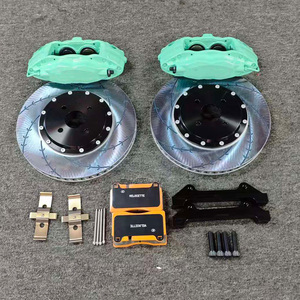
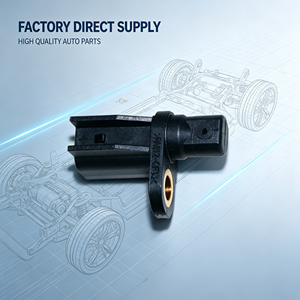
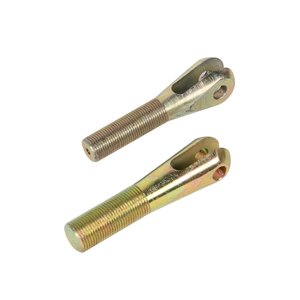
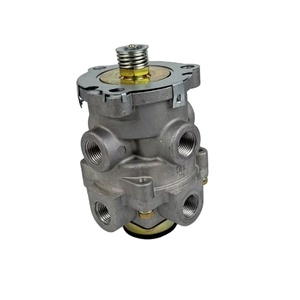
Capability to consolidate diverse heavy-duty lines—from oil coolers and brake systems to air valves and suspension levelers—in one export manifest.
Global Compliance & Export Docs
Full support for international customs clearance: Certificates of Origin, EUR.1, A.TR documentation, SGS pre-shipment tests, and neutral private-label branding.
Procurement FAQ
Frequently Asked Questions on Heavy-Duty Oil Cooler Procurement
Addressing core technical tolerances, verification procedures, testing certifications, and international logistics operations.
Q1 What leak and pressure testing procedures are applied to truck oil coolers?
Every single cooler unit is subjected to automated multi-stage testing prior to packaging: an underwater high-pressure pneumatic test at 1.5 MPa to identify surface pinholes, followed by helium mass-spectrometer leak checks with a sensitivity threshold of 1x10^-6 mbar·l/s. Batch samples undergo 100,000 cycles of pressure pulsation testing (0 to 1.2 MPa at 2 Hz) alongside thermal cycle shocks from -35°C to +135°C.
Q2 Can you manufacture oil coolers according to physical customer samples or CAD blueprints?
Yes. Our in-house reverse engineering department utilizes 3D optical scanning and CMM measuring systems. If an OEM drawing is absent, sending an intact physical sample enables us to analyze fin dimensions, core thickness, alloy grade (such as 3003/4343 aluminum composition), and produce full 3D CAD models and prototype validation tooling within 20 to 25 business days.
Q3 How do you prevent internal cross-contamination between oil and engine coolant circuits?
Cross-contamination is universally caused by incomplete brazing seams or microscopic corrosion pinholes. We utilize Controlled Atmosphere Brazing furnaces with continuous oxygen monitoring below 15 ppm. Furthermore, virgin-grade anti-corrosive aluminum alloys prevent intergranular oxidation caused by aged or acidic anti-freeze coolant mixtures.
Q4 What are the standard Minimum Order Quantities (MOQ) and lead times for export orders?
For standard fast-moving European and American commercial truck models kept in core inventory, our flexible MOQ starts at 20 to 50 units per item. For specialized custom-engineered or bespoke tooling projects, MOQs average 100 to 200 units. Standard production lead times run from 30 to 45 calendar days, supported by rapid container stuffing near major export ports.
Q5 Which heavy-duty truck platforms are covered in your export catalogues?
Our catalog covers European models (Mercedes-Benz Actros/Axor, Volvo FH/FM, Scania R/Streamline, MAN TGX/TGS, DAF XF, Renault Trucks, Iveco Stralis), North American configurations (Detroit Diesel DD13/DD15, Cummins ISX15, Caterpillar C12/C15, Mack, PACCAR MX), and Asian utility models (ISUZU Giga/Forward, Hino 700, Sinotruk Howo, Shacman).
Q6 Do you support private-label packaging and customized marking for global aftermarket brands?
Yes. We provide complete OEM/OES white-label execution. This includes precision laser-engraving of internal part codes, customer logo branding, customized barcode labeling, drop-tested color packaging, and anti-static moisture-barrier packaging tailored to long ocean transit schedules across humid tropical routes.