
Engineered to endure prolonged duty cycles, abrasive quarry routes, and international long-haul logistics. Select proven assemblies cataloged by precise engineering parameters.
Heavy commercial fleets face expanding electrical loads driven by auxiliary refrigeration, advanced telemetry, and electrified chassis systems. Sourcing must shift from commodity replacements to high-efficiency, thermal-resilient generation units.
Traditional 28V 55A/80A alternators are rapidly becoming obsolete in modern commercial transport. Long-haul tractor-trailers equipped with driver hotel loads, electric power steering (EPS), and electric APUs demand 140A to 180A outputs.
Global procurement teams must specify units with hair-pin stator winding technology, which achieves an 85%+ slot fill factor compared to 45% in conventional round-wire alternators, providing high output even when the engine idles at 600 RPM.
Under-hood packaging constraints in Euro 6 and EPA 2024+ engine bays generate ambient operating temperatures exceeding 115°C. Conventional slip-ring brushes suffer accelerated carbon depletion and arcing under these conditions.
Tier-1 factories now prioritize brushless rotor architectures with encapsulated silicone avalanche diodes. This design prevents thermal runaway, eliminates wear surfaces, and extends the B10 maintenance lifespan beyond 1,000,000 operational kilometers.
Fixed-voltage internal regulators are being supplanted by micro-controllers communicating via LIN 2.x and SAE J1939 protocols. These smart alternators adjust excitation currents in real time based on battery state-of-charge (SoC), deceleration energy recapture, and cabin thermal draw.
Procuring alternators without verifying regulator protocol handshake profiles risks parasitic battery drains and fault codes on modern European and North American commercial tractor ECUs.
Direct comparison between legacy truck charging units and contemporary heavy-duty, high-efficiency alternating current architectures produced by premier manufacturing plants.
| Evaluation Parameter | Legacy Round-Wire Units (24V 80A) | Next-Gen Hairpin Brushless Units (28V 150A) | Operational Fleet Impact |
|---|---|---|---|
| Stator Fill Efficiency | 42% – 48% (Loose random wind) | 82% – 88% (Segmented square copper) | +28% thermal conduction; reduced coil hot spots |
| Idle Output Capacity (800 RPM) | < 35 Amperes | > 95 Amperes continuous | Eliminates deep battery discharge during city driving |
| Mechanical Commutation | Carbon brushes & copper slip rings | Inductive brushless field transfer | Zero brush dusting; no spark hazard in ADR/oil tank hauling |
| Harmonic Distortion & Ripple | High AC ripple (> 2.5V pk-pk) | Precision clamped (< 0.8V pk-pk) | Protects sensitive fleet telematics, ECUs, and radars |
| Bearing Ingress Protection | Standard rubber lip seals (IP54) | Labyrinth mechanical seals (IP66 / IP69K) | Withstands high-pressure steam cleans and winter road salt |
Rooted in dedicated commercial-vehicle supply hubs and backed by tenured international foreign trade operations, we bridge raw component machining with zero-defect cross-border distribution.
Situated within primary manufacturing zones alongside premier automotive foundries and CNC clusters. Rapid access to high-grade silicon electrical steel, vacuum-impregnated copper wire, and precision die-cast tooling minimizes supply chain lead times.
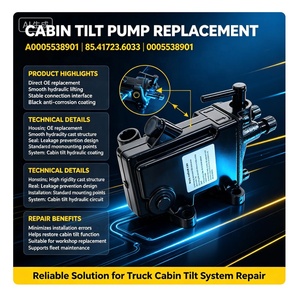
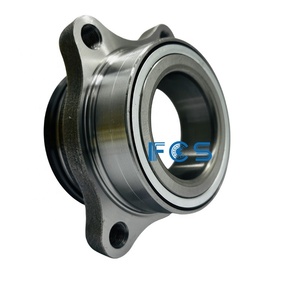
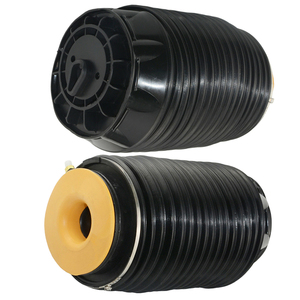
Every commercial item—from air valves and hub assemblies to alternator stators—is mapped to dozens of global OEM part numbers (including Mercedes-Benz, Volvo, Scania, DAF, MAN, and Isuzu), ensuring zero-error cross-matching.
Direct communication in English, French, German, and Turkish. Commercial engineers evaluate your dimensional drawings, port threads, electrical curves, and customs profiles without intermediary agents.
Streamlined international logistics execution. Full preparation of commercial invoices, detailed packing lists, certificates of origin, and trade documents including preferential customs paperwork (A.TR, EUR.1, and Form A) where applicable.
Essential technical, validation, and logistical considerations for procurement professionals ordering commercial truck components.
Submit your OEM part numbers, technical drawings, or fleet procurement schedule for rapid BOM cross-referencing, container consolidation analysis, and competitive factory-direct quotations.