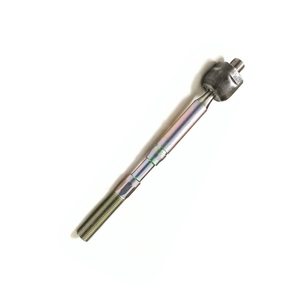

Precision-ground axial ball studs, induction-hardened housings, and proprietary synthetic chloroprene seals built for global passenger models, electric platforms, and heavy commercial applications.
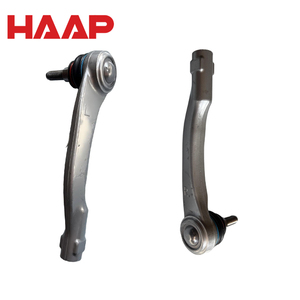
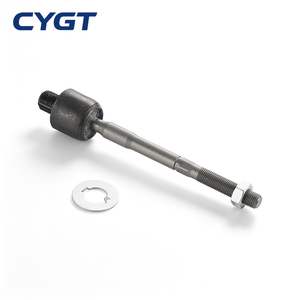
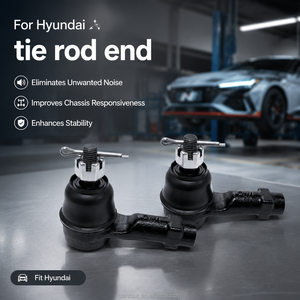
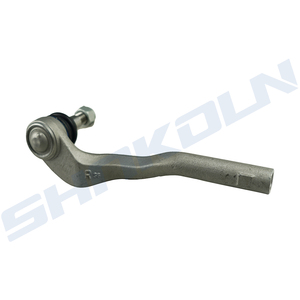
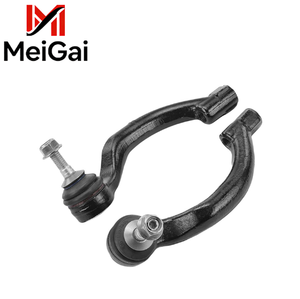
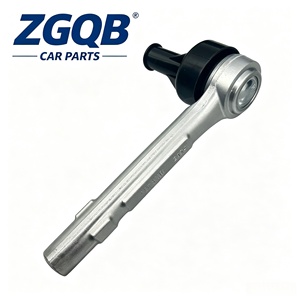
In modern commercial and passenger vehicle engineering, the track rod end (tie rod end) functions as the definitive mechanical bridge between the steering rack/axial rod and the steering knuckle. It is subjected to constant cyclic loading, severe torque variations, high-frequency road vibrations, and corrosive environmental exposure. As an ISO/IATF 16949-certified China manufacturer, our production philosophy eliminates structural micro-porosities, stress concentrations, and thermal deformation through advanced closed-die multi-stage warm forging.
Every ball pin is forged from certified 40Cr or 42CrMo high-tensile alloy structural steel, subjected to controlled quench and temper induction hardening. This produces a core toughness exceeding 28–34 HRC alongside a case-hardened ball surface measuring 58–62 HRC. This dual-phase microstructure prevents catastrophic brittle shear under high-impact road shocks while delivering near-zero friction wear across millions of oscillating steering strokes.
Sealed with UV, ozone, and grease-resistant CR/HNBR boots and 304 stainless steel retaining rings to ensure operational integrity down to -45°C.
High-density self-lubricating POM/PTFE bearing liners embedded with molybdenum disulfide maintain constant pre-load without sticky slip.
Robotic circular orbital riveting processes ensure minimum ball pin push-out/pull-out forces that exceed OEM benchmarks by more than 35%.
Understanding shifting requirements in automotive aftermarket distribution, heavy fleet management, and next-generation chassis platforms.
The heavier curb weight of battery packs combined with high initial torque delivers up to 40% higher shear stresses to tie rod assemblies. Global importers are rapidly transitioning procurement to EV-rated track rod ends that feature enlarged ball stud spheres and heavy-duty reinforced housings.
B2B distributors are avoiding single-line sourcing models. Procurement leaders now require comprehensive suspension & steering package deals covering outer track ends, inner rack axial joints, drag links, and ball joints within single consolidated containers to control shipping logistics.
With road de-icing agents becoming chemically aggressive in North America and Northern Europe, standard black phosphate is obsolete. Leading procurement standards now mandate 720+ hour salt-spray-resistant electrophoretic paint or Dacromet eco-friendly multi-layer anti-corrosive coatings.
As vehicle platforms migrate toward autonomous navigation and steer-by-wire (SbW) systems, the physical steering linkage is undergoing a technological reinvention. In SbW applications, steering feel and stability are no longer directly felt through a manual steering column; the mechanical track rod end must deliver exceptionally low breakaway friction alongside zero backlash to prevent sensor oscillation.
Our R&D department utilizes advanced finite element analysis (FEA) to engineer topology-optimized forging shapes that remove redundant unsprung mass by up to 18% while simultaneously increasing torsional rigidity. Incorporating self-healing micro-lubricant capsules into composite resin liners ensures track rod ends maintain smooth rotational torque over their entire operating lifetime without grease decay.
Direct manufacturer capabilities paired with extensive foreign trade experience, structured cross-referencing, and end-to-end export coordination.
Comprehensive OEM, KNB, and leading aftermarket cross-matching database ensures verified fitment before production, preventing costly return shipments.
Full support for commercial invoices, packing lists, Certificate of Origin, and applicable customs documentation for hassle-free customs clearance worldwide.
Direct commercial assistance in English, Turkish, German, and French, providing clear technical communication straight from the engineering desk.
Custom packaging, laser branding, and multi-category consolidated shipments allow distributors to establish and scale their private aftermarket brands.
Direct answers regarding manufacturing standards, minimum order quantities, cross-referencing, and global logistics execution.
Every tooling layout is engineered directly from OEM drawings and CMM reverse engineering of genuine parts. We cross-verify cone taper angle, thread pitch (standard or fine, metric or imperial), thread reach, and ball socket depth before tooling release.
Each production run undergo tensile pull-out load testing, push-out force validation, 3-axis dynamic fatigue life endurance cycles (minimum 500,000 cycles without play), rotational torque tests, and a 720-hour neutral salt spray test on coated surfaces.
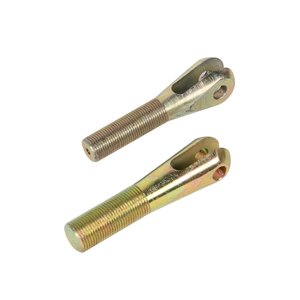
Yes. In addition to standard OEM passenger car replacements, our engineering facility produces high-strength chromoly clevis ends, Teflon-lined racing rod ends, and reinforced commercial vehicle steering assemblies based on your CAD drawings or physical samples.
Our standard manufacturing MOQ is 100 to 300 pieces per specific SKU depending on whether the forging dies and tooling are active. For container-consolidated orders spanning multiple steering and suspension categories, flexible MOQs can be arranged.
Standard lead times for high-volume orders are 35 to 45 days after deposit confirmation and sample approval. Fast-turnaround air-freight samples for dimensional verification are dispatched within 5 to 7 working days.
Yes. We offer complete custom branding solutions including high-contrast laser part etching, custom branded color boxes, barcoded master cartons, and pallet stretch-wrapping matching your brand identity and retail requirements.
Connect with our technical export team today. Provide your OEM numbers, vehicle application list, or technical drawings for an immediate quotation and comprehensive cross-reference validation.