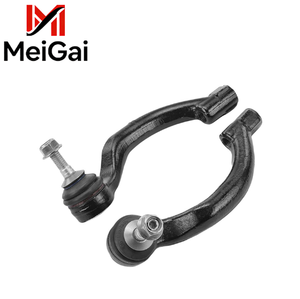
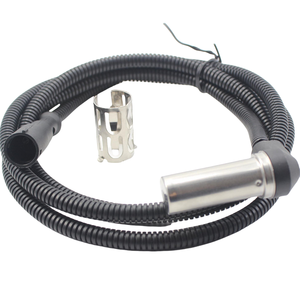
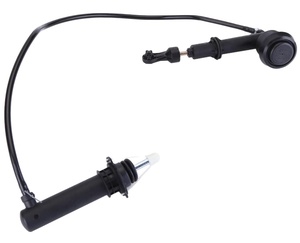
Verified mechanical assemblies, linkage Bushings, and high-wear steering parts calibrated for heavy haulage operations.
In heavy-duty commercial vehicles, the torque rod bushing (frequently designated as the radius rod bushing or torque arm core) serves as the primary pivot suppressing axle windup, braking torsion, and lateral tracking instabilities. When procuring from a China top torque rod bushings factory, understanding material dynamics distinguishes standard commercial replacements from genuine fleet-grade components.
Modern commercial vehicle suspensions—including those mounted on Mercedes-Benz Actros, Volvo FH/FM, Scania, MAN, and heavy-duty trailer bogies—require torque arm bushings capable of withstanding torsional deflection angles of ±15° while isolating high-frequency road excitations. Premature degradation typically manifests not through catastrophic metal fatigue, but through interfacial delamination between the outer metal sleeve and the vulcanized elastomer core.
Top-tier Chinese production hubs utilize automated phosphating lines combined with automated Chemlok® or Megum® adhesive application. This guarantees a chemical bond strength exceeding 12 MPa, preventing core slippage under emergency braking loads. Furthermore, leading facilities incorporate natural rubber (NR) compounded with high-dispersion carbon black (N330/N220) to maintain optimum shore A hardness (typically 75±5 Shore A) across extreme temperature gradients ranging from -40°C to +100°C.
How supply chain digitalization, material innovations, and geopolitical shifts are reshaping global aftermarket and OEM procurement.
Global procurement teams are moving away from unit-purchase price evaluations toward Total Cost of Operation metrics. High-grade polyurethane and vulcanized natural rubber bushings that double maintenance intervals from 120,000 km to 250,000 km significantly reduce fleet unscheduled downtime, offsetting initial acquisition costs.
Next-generation torque rod bushings leverage cross-linked molecular bonding. Emerging Chinese factories are actively deploying hybrid elastomeric compounds that mitigate micro-fissure propagation induced by corrosive road salts, petrochemical residues, and continuous dynamic shock loads.
Procurement efficiency relies on automated cross-reference mapping across OE codes (such as BPW, SAF-HOLLAND, Hendrickson, and European truck brands). Advanced suppliers now offer real-time compatibility lookups matching technical dimensions, bolt bores, and load charts.
Insights into tooling sophistication, mold automation, and material science across leading factories.
Modern manufacturing utilizes automated vacuum compression molding machines. Vacuum extraction eliminates internal air pockets and porosity within the rubber matrix, ensuring uniform tensile resistance across 100% of the bushing volume.
Through forged 40Cr or 45# carbon steel with quenching and tempering treatment, internal pins achieve a yield strength surpassing 600 MPa. Surface induction hardening reduces pin ovality wear during extreme axle articulation.
Direct OEM validation requires Chinese manufacturing plants to maintain tri-axial dynamic endurance benches. Prototypes undergo millions of oscillation cycles under multi-ton vertical, longitudinal, and lateral forces to map precise S-N fatigue curves.
Navigating cross-border procurement requires technical transparency, precise documentation, and disciplined logistics. Our operational framework bridges advanced industrial manufacturing with international B2B commerce standards.
1. Direct Regional Manufacturing Integration: Located at the center of precision automotive clusters, our factories maintain integrated forging, rubber mixing, chemical bonding, and precision CNC finishing under one roof. By eliminating sub-tier outsourcing, we maintain strict control over metallurgy and vulcanization consistency.
2. Exhaustive Cross-Reference Architecture: Operating with structured technical databases, every torque rod bushing, king pin kit, and suspension component is indexed against authentic OEM numbers, European aftermarket codes, and chassis specifications. This guarantees error-free ordering and zero assembly mismatches for distribution partners.
3. Comprehensive Export Documentation & Trade Terms: Our global desk manages complete commercial compliance, providing custom commercial invoices, packing lists, Mill Test Certificates (MTC), chemical formulation compliance reports, Certificate of Origin, and international shipping routing across EU, MENA, North American, and South American lanes.
Critical answers concerning specifications, quality control, minimum order quantities, and custom configurations.
Common red flags include uneven rubber flashing, non-concentric inner pins, microscopic voids along the bonding interface, and poor phosphate coating on the steel sleeves that leaves the metal vulnerable to atmospheric rust. Lab inspection should check rubber hardness variations exceeding ±5 Shore A and inadequate shear adhesion strength under push-out testing.
Yes. By utilizing precision tooling rooms, factories can develop custom molds based on physical samples, engineering CAD drawings, or chassis load specs. Tooling lead times generally span 15 to 25 working days, followed by full dimensional CMM inspection and vulcanization testing before batch sign-off.
Polyurethane bushings exhibit higher tear resistance and oil impermeability, making them suitable for severe vocational conditions and mining applications. However, natural rubber (NR) remains the global standard for long-haul highway fleets due to its superior dampening characteristics, wider thermal operating resilience, and lower noise/vibration transmission.
For standard catalogue sizes covering popular European and North American truck chassis, MOQs range from 50 to 200 units. For specialized, custom-tooled dimensions requiring custom outer sleeves or unique pin forgings, initial batch requirements typically begin at 300 to 500 pieces to amortize tooling setups.
Production samples undergo dual-axis or tri-axial hydraulic fatigue testing. The bushing is subjected to continuous angular rotation (±10° to ±15°) under static radial preloads of 50 to 120 kN, running for 500,000 to 1,000,000 cycles to confirm there is zero delamination, rubber cracking, or plastic deformation in the pin.
To prevent rubber oxidation and rust on bare steel, components receive rust-preventive oil dipping, VCI (Vapor Corrosion Inhibitor) polybag sealing, reinforced inner corrugated boxes, and fumigated solid timber or composite pallets wrapped in moisture-barrier film for transoceanic container handling.
Connect directly with our engineering export desk for technical datasheets, cross-reference verifications, and competitive factory-direct volume quotes.