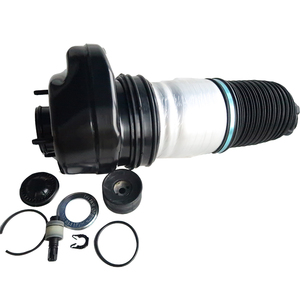

Direct OEM-grade replacement parts, heavy-duty pneumatic valves, friction brake calipers, and chassis steering units tailored for European, Asian, and American commercial logistics applications.
Modern commercial vehicle air brake architectures—encompassing Electronic Braking Systems (EBS), Advanced Emergency Braking Systems (AEBS), Air Suspension Control (ECAS), and automated manual transmissions—require absolute pneumatic purity. In atmospheric air compressors, reciprocating piston action produces extreme thermal discharge, propelling micro-fine vaporized lubricating oil, ambient water vapor, and sub-micron soot particles directly into pneumatic supply lines. If unmitigated, this virulent chemical emulsion fouls proportional solenoid valves, dissolves nitrile rubber valve diaphragms, causes EBS axle modulator stiction, and induces winter line freeze-ups.
As China's premier heavy-duty air dryer cartridge engineering facility and international exporter, our manufacturing operation approaches air drying through a dual-mechanism physical process: Macro-porous Molecular Sieve Adsorption paired with Graded Micro-fiber Depth Coalescing Filtration. Standard aftermarket spin-on canisters rely solely on generic activated alumina or low-density silica gels. In contrast, our premium cartridges utilize Type 4A synthetic crystalline aluminosilicate zeolite beads calibrated with high crush strength, maintaining adsorption kinetics even under intermittent pulsation cycles up to 14.5 bar operating pressure.
Uniform pore apertures of 4 Ångströms selectively capture dipolar H2O molecules while rejecting bulk nitrogen and oxygen molecules, delivering consistent -40°C pressure dew point suppression.
Multi-density oleophobic fiberglass layers agglomerate microscopic oil aerosols (0.1–0.8 µm) into macroscopic droplets, shedding liquids before reaching the dry desiccant column.
Deep-drawn cold-rolled steel canisters cold-seamed to cold-forged baseplates with roll-formed threads (M39×1.5, M41×1.5, G1-1/4"), validated for over 1.2 million impulse pressure cycles.
The operational lifespan of desiccant is severely attenuated by oil contamination. In unprotected canisters, lubricating compressor oil blankets the molecular sieve's crystalline micro-pores, creating an irreversible organic barrier known as "oil poisoning". Once coated, desorption during the unloader purge cycle becomes chemically impossible. Our integrated coalescing cartridges resolve this vulnerability by forcing incoming compressed air through an upstream, multi-stage micro-fiber fleece. Oil content is curtailed to less than 0.005 mg/m³, safeguarding the desiccant bead matrix for service intervals exceeding 240,000 kilometers under grueling heavy-haul duty cycles.
| Performance Parameter | Standard Aftermarket Canister | Coalescing High-Efficiency Cartridge | Testing & Compliance Standard |
|---|---|---|---|
| Desiccant Type & Chemistry | Recycled silica gel / loose alumina | Virgin Type 4A / 13X Zeolite Spheres | ASTM D3838 (Crush Strength >80 N) |
| Liquid Oil Separation Ratio | < 70% (surface screening) | ≥ 99.95% (coalescing micro-fiber) | ISO 12500-1 / ISO 12500-3 |
| Pressure Dew Point Depression | -15°C to -22°C | -38°C to -45°C | DIN 74075 / SAE J2318 |
| Burst Pressure Rating | 22 - 25 bar | ≥ 38 bar (Hydrostatic destructive test) | SAE J1853 Pneumatic Safety Protocol |
| Pressure Drop (ΔP at nominal flow) | 0.45 - 0.65 bar | 0.18 - 0.25 bar | ISO 5011 Flow Restriction Assessment |
| Vibration Resistance | Spring fatigue leads to bead attrition | Pre-stressed calibrated Belleville retention | IEC 60068-2-6 / ISO 16750-3 Sine/Random |
As commercial fleet operations shift from traditional internal combustion powertrains to battery-electric vehicles (BEVs) and hydrogen fuel cell electric vehicles (FCEVs), the operating profile of pneumatic systems is transforming drastically. Sourcing executives, tier-one distributors, and global importers must anticipate these structural shifts to protect margin structures, minimize warranty return rates, and build defensible market advantages.
Electric transit buses and battery-electric heavy trucks utilize electric scroll or multi-stage screw compressors that run intermittently at lower continuous duty cycles, but higher peak pressure deltas. This creates rapid condensation cooling. Air dryer cartridges require enhanced water adsorption rates at low ambient inlet temperatures.
Next-generation air processing units (APUs) incorporate relative humidity and differential pressure sensors within the cartridge mounting block. Cartridges are being engineered with embedded RFID chips and uniform flow distributions to feed predictive life telemetry directly to fleet fleet management networks.
With stringent European Union CSRD reporting and global circular economy directives, fleet buyers are requesting desiccant spin-ons designed for cradle-to-cradle material separation. Our production line incorporates crimped seams that allow automated shredding and desiccant regeneration without toxic residue.
Procuring low-cost, unbranded air dryer cartridges represents an existential false economy for long-haul transport operators. While an inferior cartridge may save $3.00 to $6.00 USD at the purchasing desk, catastrophic downstream pneumatic valve failures routinely generate vehicle down-time losses exceeding $1,800 to $3,500 USD per incident. When moist, oily air bypasses an inferior dryer, it directly damages the EBS axle modulator, trailer relay valves, parking brake actuators, and automated transmission shifting servos.
Our Bursa export desk and direct Chinese manufacturing infrastructure empower international procurement departments to de-risk their supply pipelines. By combining deep-tier cross-referencing capabilities (covering Wabco, Knorr-Bremse, Haldex, Bendix, Meritor, and Fleetguard part matrices) with direct, unmediated factory shipping containers, commercial buyers capture OEM-spec tier-one performance at scalable wholesale cost structures.
Every single air dryer cartridge manufactured within our high-speed automated facility undergoes automated testing protocols that surpass typical aftermarket sampling norms. We operate under stringent IATF 16949 automotive quality management compliance, ensuring continuous statistical process control from base metal stamping to final palletization.
100% of finished cartridges are subjected to helium mass spectrometry vacuum chamber leak screening, identifying hairline seam faults down to 10⁻⁶ mbar·l/s.
Multi-stage wave or Belleville steel compression springs maintain a uniform, constant 120 N axial downward load on the desiccant bed, preventing vibration-induced bead pulverization.
Deep-drawn steel outer canisters receive an electro-deposited primer followed by a 60-micron electrostatic powder polyester coat, withstanding 960 hours of ASTM B117 salt fog exposure.
Comprehensive cross-indexing linking genuine OEM numbers for Mercedes-Benz Actros/Atego, Volvo FH/FM, Scania R/S, DAF XF, MAN TGX, Iveco Stralis, and Renault Trucks.
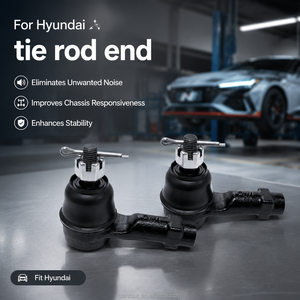
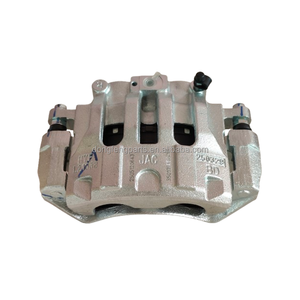
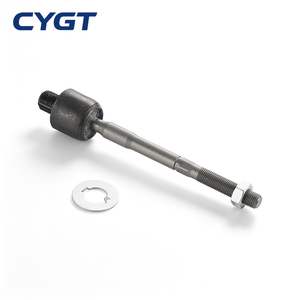
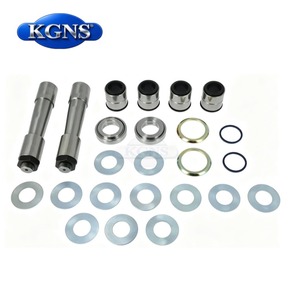
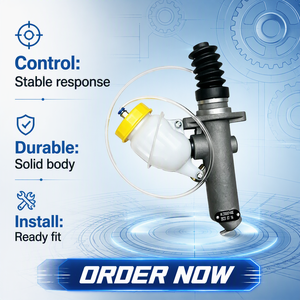
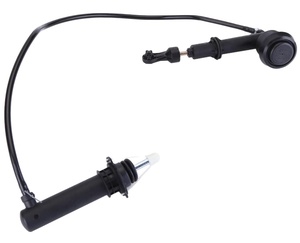
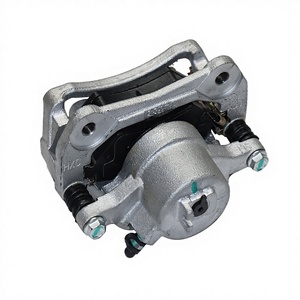
Our logistical operations integrate Bursa's proven foreign trade hub with extensive production bandwidth in China. Whether consolidating multi-category chassis spares—such as air suspension bellows, tie rod axial joints, air brake calipers, king pin knuckles, and clutch master cylinders—or shipping 40-foot full container loads (FCL) of specialized coalescing air dryer cartridges, our export desk manages the complete procedural lifecycle: comprehensive commercial invoicing, customized packing lists, Certificates of Origin, EUR.1, and A.TR movement documentation.
A standard cartridge contains only molecular sieve desiccant beads designed exclusively for vapor-phase water adsorption. When liquid or aerosolized compressor oil reaches these beads, it blankets the crystalline micropores, permanently destroying drying functionality.
An oil-separating (coalescing) cartridge introduces a graduated borosilicate micro-fiber coalescing filter upstream of the desiccant. It forces 0.1–0.8 µm oil aerosols to merge into heavier droplets that drop out through the automatic purge valve, ensuring the desiccant bed only processes moisture-laden air.
Air dryer cartridges utilize distinct mounting threads and sealing gaskets depending on the Air Processing Unit (APU) manufacturer. The three primary global thread standards are:
M39 × 1.5 (Right-hand or Left-hand thread, common in Knorr-Bremse and Wabco European platforms), G 1-1/4" BSPP, and 1-1/4" - 16 UN (common across North American Bendix and Haldex configurations). Our production lines utilize CNC-machined, roll-formed threads with strict Go/No-Go thread gauge calibration to eliminate field cross-threading.
Desiccant dusting occurs when internal spring preload is insufficient. Under continuous road vibration and pneumatic pulsation, desiccant beads rub against each other (attrition), grinding down into fine white powder that travels downstream and jams brake valves.
We prevent this by utilizing high-crush-strength virgin aluminosilicate zeolite beads (rated >80 N) coupled with multi-wave pre-stressed Belleville compression springs. This design maintains constant axial compression throughout severe thermal swings from -40°C to +85°C.
For standard line-haul operations under normal ambient conditions, conventional desiccant cartridges require replacement every 12 months or 100,000 km. However, high-efficiency coalescing cartridges maintain optimal adsorption and oil retention up to 240,000 km or 24 months.
Severe-duty applications—such as mining dump trucks, transit city buses with high cycle counts, and cement tankers—require bi-annual inspections or cartridge replacement before the onset of winter freezing cycles.
Yes. We support end-to-end OEM and private label manufacturing for established aftermarket brands and parts distribution groups. Customization options include canister silk-screen printing, laser etching of batch codes and OEM cross-references, custom box packaging, and branded plastic thread protectors.
All private label production runs undergo the same rigorous batch-level burst pressure and moisture adsorption testing as our primary product lines.
We understand that international importers prefer to optimize container freight utilization by combining various fast-moving commercial vehicle components. We routinely consolidate full container loads containing air dryer cartridges, brake calipers, steering tie rods, clutch master cylinders, and king pin kits.
Our centralized logistics desk coordinates unified customs declarations, HS-code alignment, container weight balancing, and complete export documentation (EUR.1, A.TR, COO, Form E) for frictionless border clearance.
Connect directly with our engineering and export desk to review our comprehensive OEM cross-reference directory, request custom wholesale price matrices, or initiate trial batch sampling.
Get Catalog