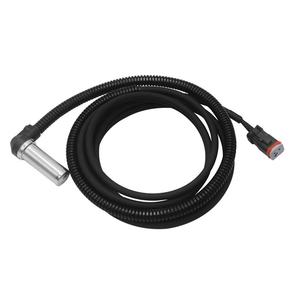

Inspect our top-tier precision assemblies built to exceed international standards, spanning anti-lock sensing, chassis pneumatic valves, adaptive air suspension, and severe-duty steering kits.
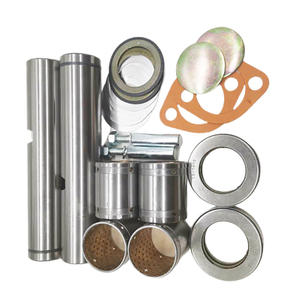
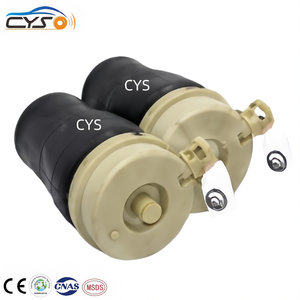
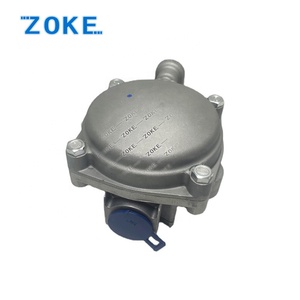
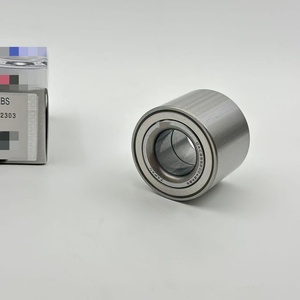
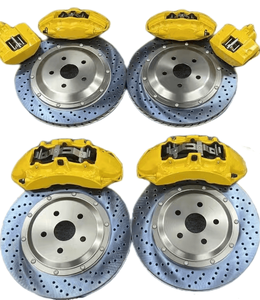
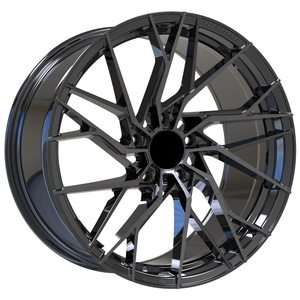
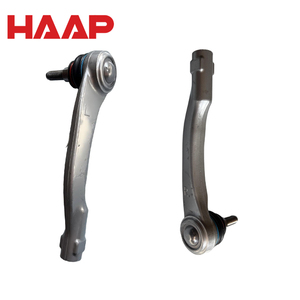
In modern Class 7 and Class 8 commercial vehicles, solenoid valves operate as the primary electromechanical interface executing electronic control unit (ECU) commands. Achieving precision actuation within millisecond latency requires robust metallurgy, thermal insulation, and advanced magnetic circuits.
High-tier Chinese manufacturing operations utilize Class H (180°C) and Class N (200°C) copper enameled wire with continuous vacuum-pressure impregnation (VPI). This eliminates microscopic air voids within the coil pack, guaranteeing consistent magnetic pull across ambient temperature swings ranging from -40°C to +125°C under continuous 24V DC excitation.
Dynamic cycling introduces friction, oil aerosols, and moisture. Tier-1 factories adopt hydrogenated nitrile butadiene rubber (HNBR) and specialty fluorocarbon (FKM) compounds. These prevent swelling, hardening, or cracking during rapid pressure differential transitions up to 13.0 bar pneumatic load over 1.5 million cycles.
To fulfill stringent Electronic Braking System (EBS) and ABS response times (<12ms), valve armatures are machined from low-remanence electromagnetic stainless steel (e.g., 1J117 or 430FR). Surface finishes undergo diamond-like carbon (DLC) coating to prevent stiction and mechanical hysteresis.
| Evaluation Parameter | Benchmark Chinese Top-Tier Factories | Conventional Aftermarket Workshops | Standard Acceptance Criteria |
|---|---|---|---|
| Internal Leakage Rate | < 0.2 sccm (Helium Mass Spectrometry) | 3.0 - 5.0 sccm (Bubble Chamber) | ISO 19973-2 Compliance |
| Electromagnetic Response | 8 ms - 12 ms rapid pull-in time | 22 ms - 35 ms delayed pull-in time | SAE J2625 Transient Testing |
| Salt Spray Corrosion Proof | > 960 Hours (Neutral NSS, ASTM B117) | 120 - 240 Hours standard zinc plating | ISO 9227 Accelerated Exposure |
| Operating Voltage Threshold | Pulls in at 16.8V under hot coil status (24V rated) | Fails to pull in below 20.4V when hot | VDE 0580 Dynamic Voltage Margin |
Global fleet operators, system integrators, and distributors face rapid technological evolutions. Aligning procurement programs with technical mega-trends prevents inventory obsolescence and reduces the total cost of ownership (TCO).
Standalone on/off pilot solenoids are transitioning into intelligent Pulse-Width Modulation (PWM) multi-functional valve manifolds. Advanced commercial trucks demand proportional flow control with embedded Hall-effect sensors providing real-time armature position telemetry directly back to vehicle telematics nodes.
International buyers are shifting away from fragmented sub-tier brokerage models. Procuring directly from certified Chinese component hubs (such as Zhejiang and Jiangsu automotive manufacturing clusters) eliminates intermediary markups and enables complete auditability from raw ingot casting to finished packaging.
Zero-emission transport configurations, including heavy hydrogen fuel cell trucks and high-voltage BEV powertrains, require specialized thermal management valves, desiccator drain controls, and high-pressure media isolation valves certified against explosive and gaseous environment standards.
Capitalizing on vertically integrated production lines, comprehensive cross-reference libraries, and end-to-end export compliance, we deliver uncompromised reliability across severe commercial service duty.
Our engineering database maps thousands of active part numbers across top-tier truck applications including Scania, Mercedes-Benz Actros/Axor, Volvo FH/FM, MAN TGX, DAF XF, Renault, and Iveco. From WABCO and KNORR references to genuine chassis codes, compatibility is verified before line assembly.
Every pneumatic solenoid valve leaving our facility undergoes automated leak testing, high-voltage breakdown proofing (>1,500V dielectric isolation), cycle time verification, and differential sealing pressure audits logged with serialized batch traceability.
Tailored for B2B distributors across the European Union, North America, the Middle East, and Latin America. We support customized private-label brand packaging, laser etching, Certificate of Origin paperwork, and complete freight consolidation across chassis, brake, and electrical parts.
Direct answers to the most common engineering, verification, and logistics concerns raised by international procurement managers.
We cross-index OEM part numbers, aftermarket identification schemes, schematic line drawings, thread geometry (such as Voss, metric, and NPT ports), operating pressure limits, and operational pinouts against our CAD archives to ensure 100% mechanical and electronic interchangeability.
Severe thermal shock and environmental chambers simulate temperature gradients down to -40°C with moisture condensation. Armatures and spring seats feature hydro-repellent surface modifications to prevent ice seizing and valve locking in Nordic or Arctic winters.
For standardized, high-volume catalogue numbers, trial consignments can begin with lower batch counts. Custom coil winding specifications, proprietary bracket fabrication, or custom-molded connectors usually carry a modest MOQ based on raw tooling runs.
Our heavy-duty commercial solenoids integrate robust transient voltage suppression (TVS) diodes and internal suppression circuits within the connector housing, protecting internal windings from inductive load dumps and reverse polarization errors during battery maintenance.
Yes. We specialize in supply consolidation. Buyers regularly bundle relay emergency valves, ABS sensors, tie rod ends, wheel hub bearings, and air suspension bags into unified consignments, dramatically lowering per-unit ocean freight and customs brokerage fees.
Standard product guarantees cover 12 to 24 months depending on the component category. Every unit is laser-etched with unique production dates and inspection serials that correspond to raw material mill sheets and EOL inspection logs.
Whether you require replacement solenoid valves for European fleet applications, custom-engineered manifolds, or consolidated chassis hardware, connect directly with our technical engineering desk.