High-stress chassis components engineered to meet DIN, SAE, and ISO standard performance metrics across long-haul, vocational, and trailer applications.
In the demanding realm of heavy commercial vehicles (HCVs), medium-duty freight haulers, and specialized trailers, truck leaf springs remain the primary structural spine of mechanical suspension systems. While modern commercial chassis design integrates pneumatic leveling and auxiliary electronic braking modulators, heavy-duty parabolic and multi-leaf steel configurations absorb dynamic axle loads, resist severe longitudinal braking forces, and counteract transverse cornering stresses.
As China’s leading manufacturer and exporter of commercial vehicle leaf springs, our manufacturing architecture adheres stringently to IATF 16949 automotive quality management systems. Our processes eliminate premature fatigue fractures, excessive permanent deflection (settling), and inter-leaf fretting through rigorous raw-material selection, automated computerized tapering, precision quenching, and continuous stress shot peening.
The functional integrity of a leaf spring under continuous sinusoidal dynamic loading depends primarily on its elastic limit, tensile yield strength, and surface decarburization resistance. Cheap market alternatives utilize standard scrap-melt carbon steels that succumb to hydrogen embrittlement or surface micro-cracking within 80,000 to 120,000 road cycles. In contrast, our export-grade leaf spring lines employ vacuum-degassed chrome-vanadium and silicon-manganese alloy steels conforming to EN 10089, JIS G4801, and ASTM A322 standards.
| Steel Grade Standard | Carbon (C %) | Silicon (Si %) | Manganese (Mn %) | Chromium (Cr %) | Vanadium (V %) | Target Yield (MPa) |
|---|---|---|---|---|---|---|
| 51CrV4 (EN 10089 / 1.8159) | 0.47 – 0.55 | ≤ 0.40 | 0.70 – 1.10 | 0.90 – 1.20 | 0.10 – 0.25 | ≥ 1,200 |
| 60Si2Mn (GB / ISO Equivalent) | 0.56 – 0.64 | 1.50 – 2.00 | 0.60 – 0.90 | ≤ 0.35 | N/A | ≥ 1,175 |
| SUP9 / SUP9A (JIS G4801) | 0.52 – 0.60 | 0.15 – 0.35 | 0.65 – 0.95 | 0.65 – 0.95 | N/A | ≥ 1,080 |
| 55Cr3 (DIN 17221 / SAE 5155) | 0.52 – 0.59 | 0.25 – 0.50 | 0.70 – 1.00 | 0.70 – 0.90 | N/A | ≥ 1,100 |
Raw rolled spring steel bars are heated via computer-regulated stepping walking-beam furnaces to precisely 920°C ± 15°C to guarantee complete, homogenous austenitization without excessive crystal grain growth. Decarburization depth is restricted to under 1.2% of total leaf thickness. Upon exiting the rapid-cambering press, each leaf is submerged in high-efficiency quenching oil maintained at 60°C–80°C, yielding a fully martensitic microstructure.
Subsequent tempering at 460°C – 510°C relieves internal cooling stresses, converting unstable martensite into homogeneous tempered troostite. This critical metallurgical balance yields a surface core hardness of 388 to 461 HBW (40 to 48 HRC), imparting the requisite fracture toughness and dynamic elastic memory to resist shock impact during sudden axle bottoming.
Fatigue failures overwhelmingly originate on the tension side of the spring leaf. To counteract cyclic tensile degradation, our fully automated shot peening bays subject the tension face of every leaf to continuous bombardment with high-carbon spherical steel shots (S280 to S330 size). Operating under pre-stressed fixturing, this process achieves an Almen intensity of 0.40 to 0.55 mmA with minimum 98% coverage saturation. This imparts a beneficial compressive residual stress layer extending 0.35mm to 0.50mm beneath the surface, elevating fatigue life from an industry standard 100,000 cycles to over 250,000 continuous full-load cycles.
Modern fleet procurement requires understanding the engineering divergence between conventional semi-elliptical multi-leaf assemblies and parabolic tapered leaf designs:
How global supply-chain shifts, fleet total-cost-of-ownership (TCO) benchmarks, and regulatory mandates are redefining commercial vehicle procurement.
Fleet managers increasingly calculate payload revenue against unsprung axle tare weight. Replacing 12-leaf conventional assemblies with 3-leaf or 4-leaf high-stress parabolic designs saves up to 140kg per tandem axle, generating substantial fuel economy improvements and long-term carbon offset compliance across multi-million-kilometer fleet lifespans.
Distributors are cutting out regional trading middlemen to establish direct partnerships with Chinese export foundries. Direct OEM cross-referencing capabilities, automated barcoding, and standardized palletized logistics eliminate order discrepancies while safeguarding margins against domestic tariff and currency fluctuations.
Battery-electric haulers and zero-emission delivery platforms impose higher static tare weights and instant regenerative braking torque on chassis suspension points. Modern procurement contracts require specialized variable-rate progressive spring designs with enhanced horizontal stiffness to stabilize electric drivetrains.
From carbon-fiber composite hybrids to robotic eye-rolling and automated Almen test controls.
Glass-fiber reinforced polymer (GFRP) leaves hybridized with core spring steels represent the bleeding edge of suspension research. Offering weight reductions up to 60% compared to traditional alloy steels and complete immunity to chemical road de-icing salt corrosion, composite leaves are entering commercial testing across specialized lightweight municipal delivery platforms.
The mechanical spring eye undergoes intense dynamic torsional loading during steering deflection and articulation. Our automated servo-electric hot eye-forming lines maintain inside diameter tolerances within ±0.25mm. Fitted with high-wear bronze, bi-metallic, or vulcanized polyurethane silent bushings, each eye assembly prevents ovalization and high-stress pin shearing.
Traditional industrial bituminous spray paints break down under aggressive European or North American winter salt slush within months. Modern production utilizes multi-stage zinc-phosphate pre-treatment followed by cathodic electrophoretic coating (E-coat), guaranteeing over 1,000 hours of ASTM B117 salt spray resistance without blistering, flaking, or leaf-to-leaf bonding.
Drawing on mature manufacturing hubs in China alongside international logistics export offices in Nilüfer, Bursa, we provide international B2B buyers with seamless cross-border sourcing, structured technical data, and complete trade compliance.
Our catalog integrates over 10,000 active references linking directly to genuine OE numbers from Scania, Volvo, Mercedes-Benz Actros/Axor, MAN TGA/TGX, DAF, Renault Trucks, Iveco, Ford Trucks, BMC, BPW, SAF-Holland, and Hendrickson.
We eliminate customs delays and clearance friction by providing fully compliant commercial invoices, packing lists, Certificates of Origin, SASO certifications, and where applicable, A.TR and EUR.1 movement certificates for seamless EU customs clearance.
Our foreign trade desks handle commercial, metallurgical, and shipping inquiries natively in English, Turkish, German, and French, ensuring precise alignment between your engineering drawings and factory production runs.
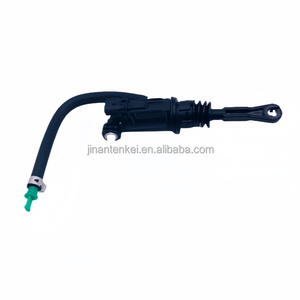
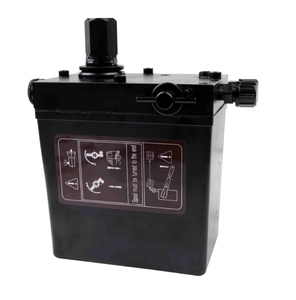
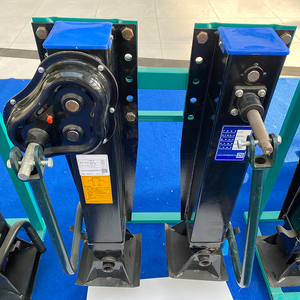
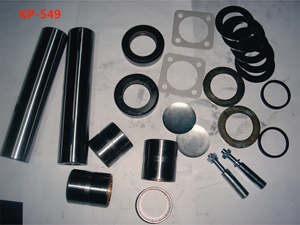
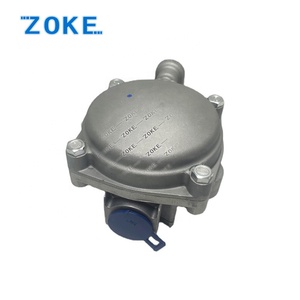
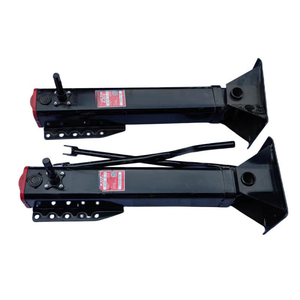
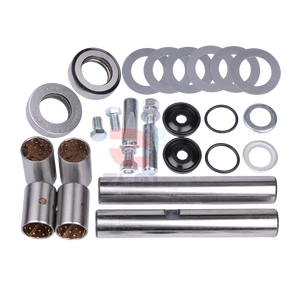
Maximize container space and reduce shipping costs by consolidating leaf springs with compatible chassis hardware—such as spring U-bolts, king pin repair kits, air brake relay valves, hydraulic cabin tilt pumps, and semi-trailer landing gear.
Clear, technically accurate answers covering metallurgical testing, container packing, OEM customization, and warranty terms.
Yes. In addition to our cross-referenced OEM standard library, our engineering lab reverse-engineers specialized leaves from physical samples, CAD 3D models, or 2D technical drawings. We precisely duplicate free arch camber height, center-hole offset, leaf width, graduated thickness tapers, and leaf-eye inner bore dimensions.
Under standardized servo-hydraulic fatigue bench testing (pulsating load from 0.5G to 2.0G dynamic stress), our 51CrV4 parabolic springs consistently exceed 250,000 cycles without fatigue cracking or exceeding the 3% plastic settling limit, far exceeding the 120,000-cycle threshold common among entry-level aftermarket replacements.
To prevent maritime salt-fog rust and physical distortion, all assemblies undergo anti-rust oil application, protective shrink-wrapping, and heavy-duty steel-band strapping. They are securely mounted on solid fumigated wooden skids (ISPM 15 certified) with reinforced corner protectors, engineered for stable forklift handling and container stripping.
For existing catalog items with available raw steel stock, our MOQ starts at 50 pieces per part number. For fully customized metallurgical specifications or unique non-standard parabolic profiles requiring new tooling, MOQ is typically 3 to 5 metric tons to balance rolling-mill setup economics.
We utilize atmosphere-controlled natural-gas stepping furnaces with real-time oxygen probe feedback. By continuously monitoring and regulating furnace dew point and carbon potential, decarburization layer depth on tension surfaces is rigorously kept under 1.2% of leaf thickness, eliminating brittle surface crack nucleation.
Every production run includes an EN 10204 3.1 Mill Test Certificate detailing spectral chemical analysis, tensile yield testing, Brinell hardness reports (HBW), Almen intensity shot-peening records, and dimensional camber inspection data.
We provide a comprehensive 12-month or 100,000-kilometer structural warranty against metallurgical cracking, eye separation, and excessive camber settling when springs are operated within specified manufacturer gross vehicle weight ratings (GVWR).
Yes. We regularly assemble mixed-cargo consolidated containers featuring leaf springs, brake drums, automatic slack adjusters, brake chambers, air spring bellows, and kingpin kits, enabling distributors to optimize inventory turns and container load factors.
Have an OEM cross-reference, technical drawing, or custom fleet requirement? Submit your technical specifications, volume needs, and target delivery ports to receive a factory-direct quote within 24 hours.
Send an Inquiry