
100%
OEM Spec Cross-Checking
13T – 20T
Standard Axle Load Ratings
ISO/TS 16949
Certified Precision Forging
50+
Export Destination Markets
Recommended Axle Assemblies & Critical Running Gear Components
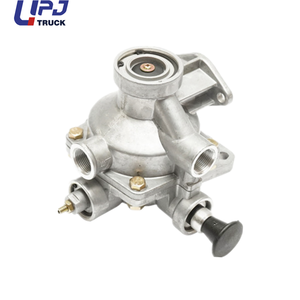
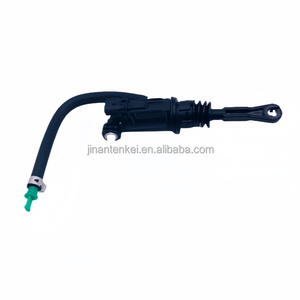
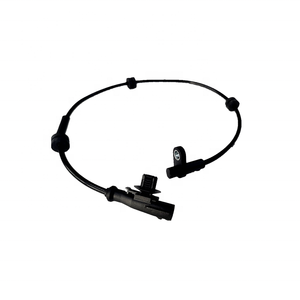
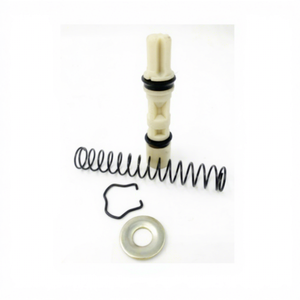
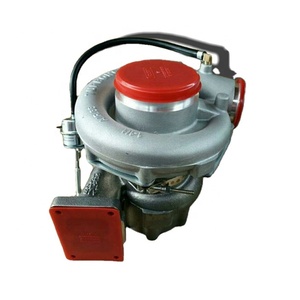
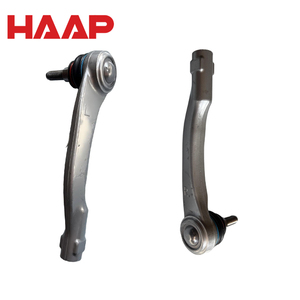
Engineered for endurance across severe haulage profiles. Explore our factory-direct trailer axle assemblies, pneumatic braking valves, ABS telemetry modules, and wheel-end solutions.
Enterprise Strengths: Full-Lifecycle Axle Engineering & Sourcing
Combining metallurgical expertise, rigorous cross-reference checks, and seamless export coordination to eliminate downtime for commercial trailer builders.
One-Piece Axle Tube Forging
Our partner manufacturing facilities implement integral hot-spun induction heat treatment. By avoiding welded spindle ends, structural micro-fractures under alternating dynamic stress are eliminated, providing superior tensile strength across heavy haulage configurations.
OEM Metrology Verification
Every axle assembly, brake drum, camshaft, and automatic slack adjuster undergoes rigorous coordinate measuring machine (CMM) inspections. We guarantee dimensional adherence to international standards such as BPW, SAF, and Meritor cross-fitments.
Consolidated Supply Chain Coordination
Leveraging deep industrial logistics experience, we eliminate the complexity of multi-vendor sourcing. Whether consolidating braking chambers, ABS modulators, hubs, and rims into dedicated containers, or managing customs documentation, buyers deal with a single accountable desk.
Commercial Vehicle Trailer Axle Engineering: Technological Evolution
A comprehensive examination of structural metallurgy, smart brake integrations, and electrification in contemporary heavy-duty transport running gear.
1. The Shift from Fabricated Tubular Beams to One-Piece Integrated Spindles
Historically, commercial semi-trailer axle assemblies utilized three-piece fabricated construction: a cold-drawn carbon steel tubular body joined to forged wheel spindles via friction welding. Under extreme cyclical loading and uneven axle distribution, the heat-affected zone (HAZ) adjacent to the weld often served as the initiation site for fatigue micro-cracking.
Modern Chinese tier-one manufacturing utilizes single-piece high-strength low-alloy (HSLA) structural steel (such as 20Mn2 or 45Mn). Axle blanks undergo continuous induction hardening along the entire beam length, with spindle sections shaped via automated CNC rotary hot-spinning. This eliminates transverse welds entirely, boosting yield strength beyond 850 MPa and fatigue cycle limits by upwards of 35% compared to multi-segment fabrications.
2. Transition from S-Cam Drum Brakes to Air Disc Brakes (ADB)
While traditional 420×180mm drum configurations maintain high adoption across off-highway and heavy bulk transport due to debris protection, global regulatory frameworks (UN ECE R13 and FMVSS 121) increasingly mandate shorter stopping distances and fade-free thermal dissipation. Consequently, trailer running gear is rapidly shifting toward ventilated Air Disc Brake (ADB) assemblies.
Ventilated 22.5-inch brake discs paired with sliding caliper assemblies substantially reduce heat fade during prolonged alpine descents. Furthermore, the modularity of disc brake hubs allows seamless integration of sealed unitized wheel bearings, extending lubricant life to over 500,000 kilometers and slashing routine maintenance hours for logistics operators.
3. Smart Trailer Axles and Telematics Integration (TPMS & ABS/EBS)
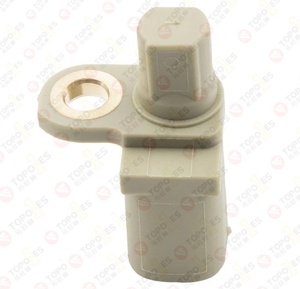
Commercial haulage efficiency is now directly tied to sensor-driven chassis management. Standard axle assemblies are evolving into intelligent mechatronic nodes. Modern hubs feature integrated tone rings and precision mounts for digital Wheel Speed Sensors (WSS) and Tire Pressure Monitoring Systems (TPMS).
Real-time telemetry communicates axle load variances, bearing temperature spikes, and brake pad wear data directly to Electronic Braking System (EBS) modulators and fleet control platforms. This mitigates catastrophic bearing seizures, minimizes uneven tire scrubbing, and directly contributes to operational safety.
Future Procurement Trends for International Fleet Buyers
Key supply-chain developments shaping how fleet owners, OEMs, and distributors procure axle assemblies over the next five to ten years.
Lightweighting via Advanced Metallurgy
Payload optimization and emissions mandates dictate aggressive weight reductions. Procurement strategies prioritize axle beams engineered with ultra-high-strength thin-wall alloys alongside cast-aluminum hub options, achieving 25–40 kg savings per axle line without sacrificing structural load margins.
Regenerative e-Axles for Refrigeration & Hybridization
With refrigerated transport decarbonizing, trailer axle assemblies increasingly incorporate center-mounted or hub-mounted regenerative motor-generators. Procurement teams are specifying axles that capture kinetic braking energy to charge auxiliary lithium batteries, powering electric reefers independently of tractor fuel.
Direct OEM Cross-Reference Digital Sourcing
B2B procurement has moved beyond vague product catalogs. Fleet purchasers demand granular cross-referencing capabilities matching part numbers, track widths, spring seat centers, PCD bolt circles, and Voss pneumatic port thread specifications prior to releasing container-volume purchase orders.
Procurement & Engineering FAQ
Clear answers to technical specifications, compatibility verification, export packaging, and logistical lead times.
How do I determine the correct trailer axle specifications for a custom build? +
To guarantee exact fitment, buyers must confirm: nominal axle load rating (e.g., 13T, 16T), total track width (distance between wheel centerlines), spring center distance (mounting centers on the suspension), brake configuration (Drum 420x180mm vs. Disc 22.5"), wheel stud pitch circle diameter (PCD, typically 10x335mm), and brake chamber operating bracket angle.
What is the difference between American-type and German-type axle designs? +
American-style axles (often based on Pro-Par or Dana geometries) typically feature a straight round tube beam (Ø127mm) with parallel or tapered spindle bearings and outboard-mounted drum configurations. German-style axles (BPW/SAF profiles) frequently feature square beams (150x150mm) or heavy-wall round tubes with specific stepped spindles, integrated spherical thrust bearings, and inboard drums designed for high-torsion European roads.
Can your factory supply complete suspension and running gear assemblies? +
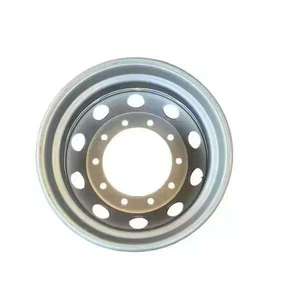
Yes. We coordinate complete matched running gear: mechanical leaf spring suspensions (tandem, tri-axle, bogie), parabolic springs, heavy-duty air suspension linkages, automatic slack adjusters, brake chambers (Type 24/24 or 30/30), ABS telemetry, and machined steel or alloy wheel rims, fully balanced and ready for chassis installation.
What quality control certificates accompany export shipments? +
Every production batch is backed by mill test certificates for base steel chemistry, non-destructive ultrasonic flaw detection reports on spindles, dynamic fatigue test certifications exceeding 2 million cycles, and ISO/TS 16949 audit documentation. Complete commercial invoices, packing lists, and Certificates of Origin are standard.
What are standard lead times and container loading capacities? +
Standard lead time for regular production configurations is 20 to 35 calendar days. For maritime shipping, a standard 40ft HQ container accommodates approximately 58 to 64 complete bare axle assemblies or roughly 38 complete assemblies bundled with leaf suspension hardware, packaged on heavy-duty treated steel cradles.
Do you accommodate custom OEM branding and private labeling? +
Yes. For distributor-level volumes, we provide custom steel hub cap stamping, laser-engraved serial and part numbers on the axle beam, customized color electrostatic powder coating, and buyer-specific packaging designed for direct regional distribution.
Ready to Upgrade Your Trailer Fleet Sourcing?
Consult with our engineering and foreign trade specialists today. Submit your technical drawings, OEM references, or vehicle project specifications for an immediate quotation and complete lead-time evaluation.