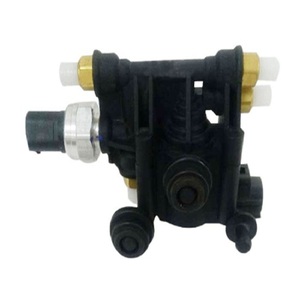

Manufactured under strict IATF 16949 quality protocols, our air leveling valves deliver precise mechanical feedback, responsive dead-band calibration, and structural reliability across vocational chassis, luxury coaches, and heavy transport semi-trailers.
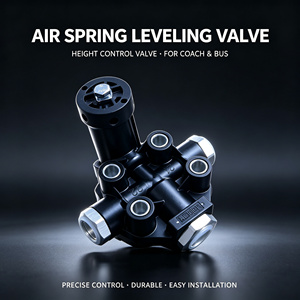
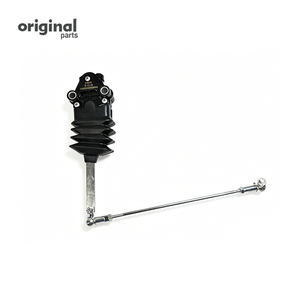
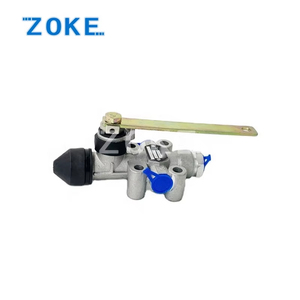
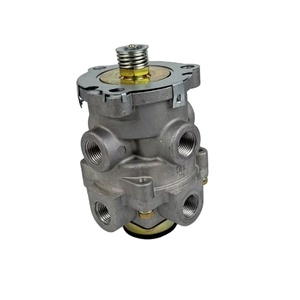
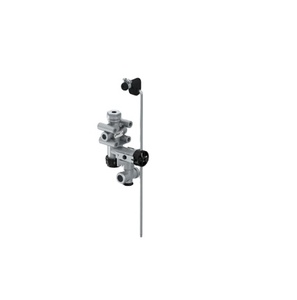
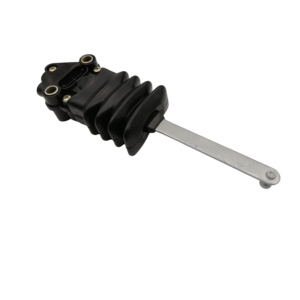
A systematic analysis of mechanical dead-band control, proportional pneumatic response, and materials optimization in modern commercial vehicle suspensions.
In modern commercial vehicle dynamics, the suspension leveling valve (frequently designated as a Height Control Valve or HCV) serves as the primary pneumatic regulator linking chassis ride clearance directly to axle kinematics. By mechanically monitoring vertical displacement between the axle housing and vehicle frame rail through linkage rods, the valve proportionally pressurizes or vents bellows air springs. This operational loop preserves constant driveline angularity, stabilizes roll center metrics, and prevents progressive driveline wear during dramatic static payload transitions.
As global fleet operators transition toward fuel-efficient aerodynamic profiles and electronic load sensing, the functional integrity of leveling valves has expanded beyond simple pneumatic balance. Contemporary designs demand integrated time-delay damping (preventing superfluous air exhaustion during dynamic road irregularities), cross-circuit isolation, and minimal internal friction hysteresis. Sourcing directly from an established China manufacturer guarantees access to high-precision CNC multi-axis tooling, aerospace-grade dielectric aluminum die-casting, and rigorous sealing metallurgy optimized for ambient operation ranging from -40°C to +80°C.
| Evaluation Parameter | Standard Aftermarket Casting | OEM-Tier Engineering (Our Factory Standard) | Electronic Solenoid ECAS Manifolds |
|---|---|---|---|
| Body Metallurgy | Recycled Secondary Cast Aluminum | High-Density Die-Cast ADC12 / A380 Aluminum Alloy | Anodized 6061-T6 Extruded Billet Aluminum |
| Dead-Band Precision | ± 4.0° to ± 6.5° (Wide clearance) | ± 1.5° to ± 2.5° (Calibrated dead-band zone) | Closed-loop Hall-Effect Sensor Feedback (±0.5 mm) |
| Elastomeric Seals | Standard Nitrile (NBR), prone to ozone cracking | Hydrogenated Nitrile (HNBR) / Fluorocarbon (FKM) | Low-Friction Fluorosilicone / HNBR Compound |
| Pneumatic Exhaust Damping | Unrestricted Venting (Higher air wastage) | Calibrated Fluidic / Restrictor Restraint Orifice | PWM Solenoid Modulated Air Dosing |
| Pressure Rating | Max 8.5 bar operating limit | 10.0 to 13.0 bar Burst-Certified (16 bar static proof) | 12.5 bar rated line pressure tolerance |
| Service Life Cycle | 250,000 – 400,000 cycles | > 1,200,000 Full Actuation Cycles | > 2,000,000 Solenoid Pulse Actuations |
Standard leveling valves often react to transient road vibrations, cycling valuable air compressor reserve needlessly. Our internal damper circuits implement calibrated fluidic delays that disregard short-frequency axle jolts while reacting decisively to sustained grade and cargo shifts.
Vocational vehicles endure caustic de-icing salts, mud, high humidity, and extreme road spray. Our valve bodies undergo multi-stage electrodeless nickel diffusion and micro-anodizing to withstand over 1,000 hours of standardized ASTM B117 neutral salt spray testing.
Pressure leakage leads directly to compressor overheating and dangerous stationary chassis sag. We implement precision-lapped seat geometries matched with vulcanized FKM dynamic poppets, guaranteeing zero leakage under full system holding pressure.
Market dynamics, supply-chain resilience, and key operational factors dictating global procurement strategies through 2026–2030.
Fleet operators are shifting rapidly toward Electronic Controlled Air Suspension (ECAS). Procurement heads are consolidating orders with manufacturers capable of producing traditional mechanical leveling valves alongside integrated solenoid manifold blocks.
Distributors require rapid OEM cross-referencing capabilities to manage complex SKU inventories. Modern factories in China now provide extensive digitised cross-cataloging spanning European (WABCO, Knorr, Haldex), American (Haldex, Bendix, Hadex), and Asian OEM codes.
International tier distributors prioritize suppliers that maintain verified raw material reserves, automated EoL testing, and export documentation capabilities supporting seamless customs clearance worldwide.
How lightweight composite alloys, IoT telematics integration, and autonomous load balancing will redefine suspension leveling systems over the next decade.
Tomorrow's leveling valves will integrate digital Hall-effect angle transducers within the mechanical pivot body. These assemblies relay live axle displacement, payload variations, and valve duty cycles directly to vehicle fleet telemetry systems for proactive maintenance.
With electric commercial vehicles placing extreme emphasis on curb-weight reduction, next-generation leveling valves utilize engineered glass-filled polyphenylene sulfide (PPS) and polyphthalamide (PPA) bodies, achieving a 42% weight reduction over aluminum while resisting chemical attack.
Modern highway aerodynamic regulations require trailers to automatically lower chassis clearance at high speeds (>80 km/h) to diminish drag coefficients. Dual-stage height control valves capable of software-actuated pneumatic lowering are becoming factory-standard equipment.
Combining decades of automotive pneumatic manufacturing excellence with rigorous export fulfillment, custom branding, and technical cross-referencing support.
Every valve is machined, assembled, and verified within precision facilities adhering strictly to international automotive quality management systems, ensuring zero line-rejection rates.
No valve exits our cleanrooms without computerized End-of-Line verification covering opening pressure, dead-band degrees, seat leak-down, and cross-port integrity under maximum operating pressures.
Our engineering archive maintains tens of thousands of active part mappings across European, American, Japanese, and Chinese commercial commercial platforms, guaranteeing rapid, accurate fitment identification.
From custom laser-etched barcodes and client part numbers to bespoke neutral packaging and consolidated container shipments with air springs and brake components, we tailor supply to your brand.
Clear, direct technical answers regarding specifications, OEM cross-references, MOQ constraints, quality assurance, and international export procedures.
Send our engineering export desk your target OEM cross-reference, technical drawings, or annual procurement volume. We will furnish exact dimensional match-ups, volume pricing tiers, and production samples within 24 hours.