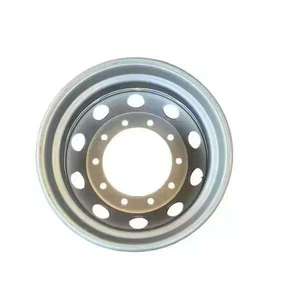

Manufactured under stringent metallurgical control standards to withstand extreme dynamic radial loads, torsional stresses, and temperature fluctuations across heavy transport routes.
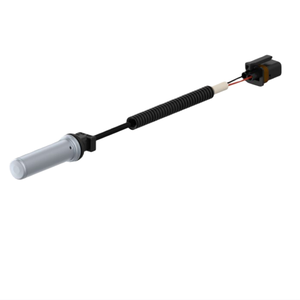
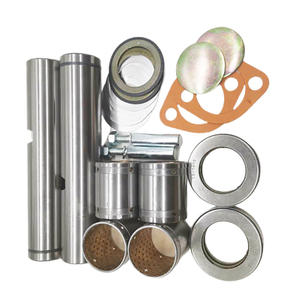
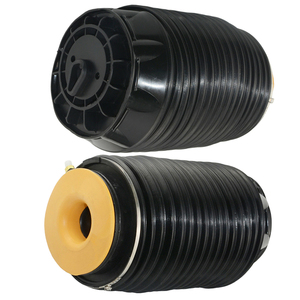
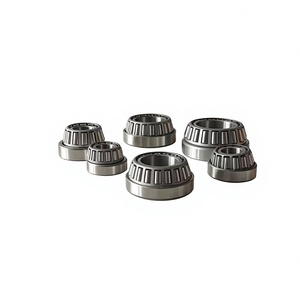
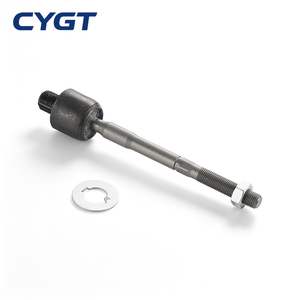
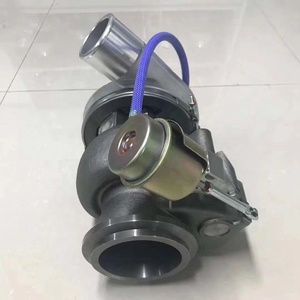
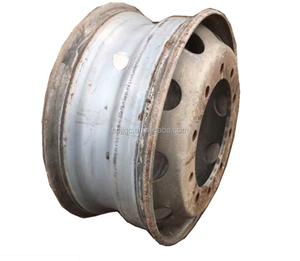
Access our comprehensive OEM interchange cross-reference manual containing over 50,000 commercial part mappings, metallurgical validation dossiers, and wholesale tier pricing.
Combining the robust manufacturing capabilities of dedicated bearing production facilities with an agile export coordination desk to eliminate lead times, reduce total cost of ownership (TCO), and ensure field reliability.
Every wheel hub bearing inner and outer race is forged using vacuum-degassed GCr15 (SAE 52100) chrome bearing steel. Optimized martensitic and bainitic heat treatment ensures core toughness above 60-64 HRC, resisting micro-spalling under severe shock loads.
We eliminate fitment risks. Every assembly is cataloged against strict dimensional tolerances, thread pitch, sensor ring integration, and cross-referenced with major European, American, and Asian OEM codes including Scania, Volvo, MAN, Mercedes-Benz, and BPW.
Benefit from direct trade channels with complete document handling: Commercial Invoices, Certificates of Origin, EUR.1, and A.TR movement certificates. Consolidate mixed drivetrain batches into single containerized shipments without intermediate markup.
Modern commercial transport corridors demand bearing systems capable of withstanding uninterrupted service schedules exceeding 1,000,000 kilometers. In heavy vehicle configurations, wheel hub units (from First Generation classic tapered sets to Generation 2 and Generation 3 integrated complete hub units) endure relentless, multifaceted physical forces: continuous radial loads induced by cargo payload, lateral cornering moments, and high-frequency cyclical vibrations exacerbated by uneven highway surfaces.
The failure of an uncertified hub bearing rarely stems from simple wear; rather, it originates at the microstructural level. Subsurface fatigue initiation, localized stress risers around inclusion voids, and frictional micro-welding due to lubrication breakdown are the primary failure mechanisms observed in sub-standard components. As a dedicated CE Certified Wheel Hub Bearings Factory & Exporter, our engineering paradigm addresses these stress phenomena through rigorous raw material screening and advanced superfinishing technologies.
Our raceway production utilizes precision CNC honing machines that achieve an arithmetic mean roughness value (Ra) below 0.08 µm. This micro-geometric perfection guarantees that rolling elements operate entirely within the elastohydrodynamic lubrication (EHL) regime, forming an unbroken synthetic grease film that prevents direct metal-to-metal contact even under low-speed, high-torque climbing conditions. By pairing these raceways with cold-forged, high-precision steel balls and tapered rollers graded to Grade 10 and Grade 16 sphericity, rotational friction is minimized by up to 28% compared to industry averages, contributing directly to fleet fuel efficiency.
| Performance Dimension | Standard Commercial Bearings | KNB Heavy-Duty Production Grade | Operational Fleet Benefit |
|---|---|---|---|
| Base Raw Material | Standard Carbon Steel / Cr4 | High-Purity Vacuum Degassed GCr15 / 100Cr6 | Eliminates structural inclusions; extends L10h fatigue life by 40% |
| Hardness Profile | 54 - 58 HRC | 60 - 64 HRC (Controlled Bainite Tempering) | Superior resistance to plastic deformation, brinelling, and surface galling |
| Raceway Surface Roughness (Ra) | 0.25 - 0.40 µm | ≤ 0.08 µm Superfinish | Maintains hydrodynamic grease barrier; prevents abrasive friction wear |
| Sealing Integrity | Single Lip Nitrile (NBR) | Multi-Lip Fluoroelastomer (FKM) with Cassette Shield | Impervious to water washdown, chemical road de-icers, and grit ingress |
| Rotational Runout Tolerance | ± 15 - 25 µm | ≤ 5 µm (P5/ABEC-5 Equivalent Precision) | Zero high-speed steering vibration; prevents uneven brake rotor wear |
| Operating Temperature Threshold | -20°C to +110°C | -40°C to +160°C (Synthetic Polyurea Grease) | Prevents thermal runaways and grease liquefaction during prolonged braking |
The global automotive aftermarket and commercial fleet sector are navigating an unprecedented technological shift driven by vehicle electrification, stringent fleet ESG mandates, and predictive maintenance technologies. Sourcing directors must anticipate these architectural transformations when structuring their mid-to-long-term supply chain partnerships.
1. Shift Toward Gen-3 Pre-Packaged, Maintenance-Free Hub Assemblies: The commercial vehicle industry is rapidly phasing out manual grease-packing and loose tapered roller installations in favor of completely sealed, pre-set Generation 3 hub bearing units. Gen-3 assemblies feature fully integrated inner and outer mounting flanges, pre-calibrated axial clearances, and lifetime lubrication. This architecture eliminates human error during axle nut torque adjustments, decreases workshop service times from hours to minutes, and reduces axle-end warranty claims by up to 75%.
2. Integration of Smart Telematics and Multi-Pole Magnetic Encoders: Traditional tone rings are being entirely superseded by high-density, magnetized elastomeric encoder rings embedded directly into the bearing seal structure. These active sensor rings interface with advanced Electronic Braking Systems (EBS), anti-lock brakes, and electronic stability control units to deliver high-resolution wheel speed signals at near-zero velocities. The next frontier involves integrated thermocouple and piezo-vibration sensors inside the outer ring, feeding real-time heat and acoustic emission data directly to fleet telematics hubs to trigger predictive maintenance warnings before critical roadside failures occur.
3. Electrical Discharge Protection in Commercial Electric Trucks: As battery-electric heavy trucks and hybrid haulers scale production, common-mode voltages from inverter pulse-width modulation (PWM) present a new hazard: electrical discharge fluting across bearing raceways. Future-ready hub bearings must utilize non-conductive ceramic silicon nitride (Si3N4) rolling elements or specialized ceramic surface coatings on bearing rings to insulate against parasitic stray currents, ensuring that electric vehicle drivetrains do not suffer premature electrical erosion.
For fleet directors, parts wholesalers, and Tier-1 procurement specialists, unit acquisition price represents only a fraction of the actual cost incurred over a vehicle's operating lifecycle. Sourcing unvetted, low-cost hub bearings leads to catastrophic downstream liabilities: unscheduled depot downtime, missed freight delivery penalties, collateral spindle and steering knuckle ruin, and severe liability risks in the event of wheel separation.
Strategic purchasing protocols prioritize suppliers who demonstrate integrated manufacturing traceability, robust metallographic testing regimes, and cross-category consolidation efficiency. Sourcing directly from an established manufacturing and export desk allows importers to consolidate disparate chassis components—such as tapered roller bearing sets, wheel rims, brake discs, air suspension bellows, and steering knuckle kingpin repair kits—into coordinated shipments. This streamlined approach minimizes ocean freight documentation overhead, lowers customs clearance fees per line item, and maintains uniform component quality across all suspension and drivetrain linkages.
Essential guidance covering technical validation, minimum order quantities, cross-reference mapping, and international export protocol.
We maintain an exhaustive cross-reference database matching original equipment manufacturer (OEM) part numbers against our structured technical codes. Prior to dispatch, each SKU is validated across critical mechanical dimensions: bore diameter (inner d), outer diameter (D), total assembly width (B/T), bolt hole pitch circle diameter (PCD), and ABS encoder resolution.
Our production facilities operate strictly under ISO 9001:2015 and IATF 16949 automotive manufacturing standards, alongside full CE compliance for electrical sensor components. Shipments are accompanied by Mill Test Certificates (MTC), non-destructive testing reports, and batch metallographic analysis documentation upon buyer request.
Yes. We specialize in supply chain consolidation. Importers can combine precision wheel hub bearings with truck wheel rims, ABS wheel speed sensors, air spring bellows, kingpin kits, and turbochargers. This significantly reduces freight expenditure and import handling costs for regional distributors.
Our dedicated export desk handles end-to-end commercial trade paperwork. Depending on destination regulations, we provide Commercial Invoices, Packing Lists, Bills of Lading (B/L), Certificates of Origin, and specialized movement certificates including EUR.1 and A.TR where bilateral trade agreements apply.
We offer full OEM and private label services for wholesale distributors. This includes customized anti-corrosion VCI packaging, laser engraving of your proprietary part numbers onto the outer ring, dynamic QR codes for digital technician manuals, and bespoke full-color master cartons designed to your corporate specifications.
All commercial heavy-duty wheel hub bearings and tapered roller sets are backed by our standard 12-to-24-month manufacturer warranty, designed for an operational service expectancy exceeding 500,000 kilometers under regular operating conditions, verified via simulated dynamic life bench testing.
Send your exact bill of materials (BOM), target OEM reference codes, or vehicle fleet specs for an immediate technical review and wholesale quotation.