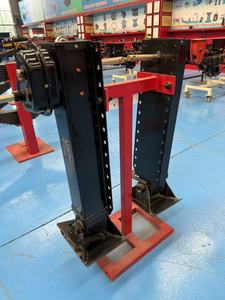
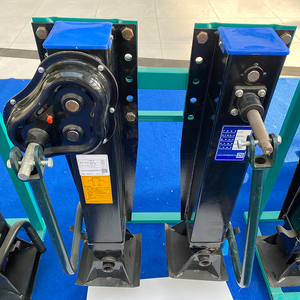
Our validated OEM-replacement line includes heavy-duty tie rod assemblies, steering linkage joints, suspension leveling valves, and critical landing systems engineered for zero field failure under extreme dynamic loads.
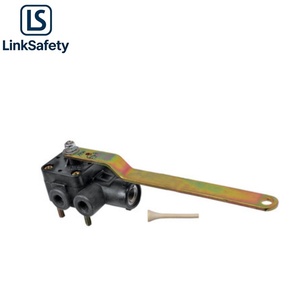
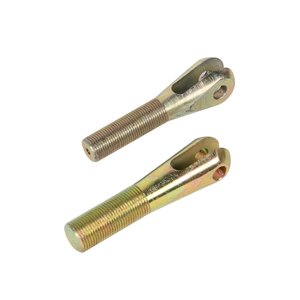
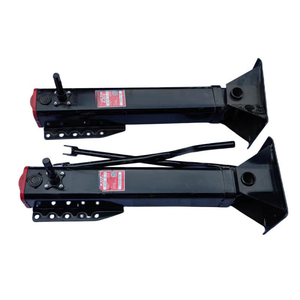
In commercial automotive logistics, commercial steering tie rods and drag links operate as life-critical mechanical links. As heavy transport transitions toward gross combined weights exceeding 44 metric tons, the directional stability of tractors and multi-axle trailers depends strictly on the fatigue tolerance of the front steering linkages. A premier CE Certified Truck Tie Rods Factory and Exporter must bridge the gap between raw metallurgy and functional precision mechanics.
Standard aftermarket tie rods frequently fail prematurely due to micro-fissuring in carbon steel tubes, insufficient induction case hardening on the spherical ball pin studs, or substandard chloroprene rubber dust boot degradation. Our engineering matrix enforces stringent metallurgical parameters: all tie rod housings are forged from normalized 40Cr or 42CrMo alloy structural steel, followed by multi-axis CNC threading to guarantee exact concentricity and torque resistance under extreme angular displacements.
Utilizing high-frequency surface induction, the spherical ball pin achieves a surface hardness of 58–62 HRC with an effective case depth of 2.0–3.5 mm, while retaining a core toughness of 28–34 HRC to prevent brittle fracture under sudden torsional shocks.
Sealed with oil-resistant CR/PUR multi-lip boots tested to operate smoothly between -40°C and +120°C. Designed to withstand pressurized gravel wash, high-saline anti-ice brine, and cyclic articulation without ozonic tearing or lubrication seepage.
Every batch undergoes destructive cyclic fatigue bench testing exceeding 3,000,000 continuous articulation cycles under dynamic bidirectional loading (±15 kN), verifying zero structural hysteresis and compliance with ECE R79 steering mandates.
Commercial chassis engineering is currently undergoing its most transformative period since the introduction of air suspension systems. As Tier-1 global fleets pursue weight-saving targets for battery electric commercial vehicles (BEVs) and hydrogen fuel cell prime movers, steering gear components must evolve. The global steering assembly market is moving beyond passive structural rods into integrated dynamic modules:
By switching to micro-alloyed boron steels and variable cross-section cold-drawn seamless tubing, latest-generation tie rods achieve an 18% to 24% gross weight reduction while exhibiting equal or superior buckling limit loads during emergency steering evasion maneuvers.
Replacing conventional sintered bronze or all-metal ball cups with self-lubricating POM/PEEK composite polymer sockets eliminates maintenance greasing intervals, reduces breakaway steering torque by 35%, and significantly stabilizes road feedback.
With autonomous line-haul platooning requiring lane-centering automation, modern drag links and tie rods are being pre-machined to accommodate integrated magnetic linear Hall sensors, monitoring dynamic wheel angle drift and real-time tie rod deflection.
Professional procurement directors from wholesale aftermarket networks, public transport authorities, and trailer builders are abandoning transactional spot buying in favor of strategic supply resilience. When evaluating a reliable Truck Tie Rods Factory and Exporter, high-volume buyers consistently prioritize four operational pillars:
Nearshoring to established manufacturing hubs like Bursa, Türkiye, providing direct overland trucking into the European Union under the A.TR Customs Union, reducing shipping transit lead times from 45 days (Asia) to under 6 days.
Eliminating parts return friction via rigorous digital mapping linking OE chassis numbers (Mercedes-Benz Actros, MAN TGX, Scania R-Series, Volvo FH, DAF XF) directly to standardized manufacturer SKUs and dimensional thread specs.
Combining high-volume tie rods with air springs, brake disc assemblies, landing gear, and pneumatic leveling valves into consolidated container loads, optimizing freight cube utilization and slashing port handling overheads.
Mandating complete mill test certificates (MTC 3.1 EN 10204), spectroscopic analysis records, and environmentally benign trivalent chromium (Cr3+) zinc flake coating methods meeting stringent EU REACH mandates.
Operating from Nilüfer, Bursa—the epicenter of vehicle manufacturing and chassis engineering in Türkiye—our export desk offers technical agility and commercial dependability directly aligned with global OEM-replacement demands:
Direct integration into the world-class Turkish forging and metallurgical ecosystem. Short lead times, cutting-edge induction machining, and immediate logistics connectivity to major European and Mediterranean container ports.
Each client RFQ is screened by commercial vehicle specialists. We verify cone taper ratios (e.g., 1:10 or 1:8), thread pitches (M24x1.5, M30x1.5), and link rod lengths before packaging to ensure 100% bolt-on assembly accuracy.
Over a decade of hands-on international foreign trade, logistics dispatch, and export customs documentation. Professional B2B communication conducted seamlessly across English, Turkish, German, and French.
Real-world engineering answers covering quality parameters, inspection tolerances, export clearance, and OEM identification.
Connect directly with our Bursa export desk for immediate OEM cross-checking, detailed technical specifications, and competitive export quotations tailored to your regional market.
Get a Quote