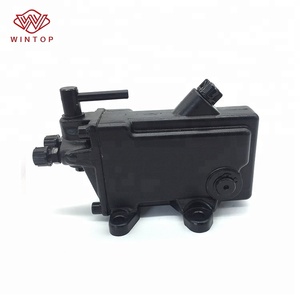

Explore our cross-referenced commercial vehicle systems manufactured according to stringent ISO/TS 16949 and CE standards. Fast dispatch with verified OE compatibility across European, American, and Asian platforms.
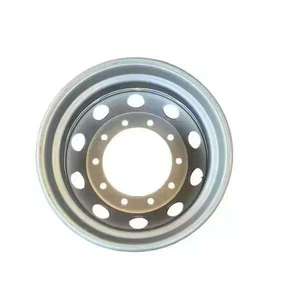
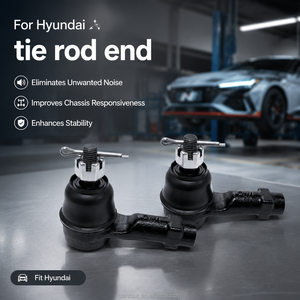
Understanding the micro-mechanics of heavy-duty brake adjustment, mechanical efficiency loss prevention, and heat expansion dissipation.
Automatic Slack Adjusters (ASAs) utilize high-hardness worm gears and one-way directional clutch ratchets. As the brake linings degrade, our clearance sensing mechanism calculates incremental movement, maintaining stroke length strictly between 32 mm and 45 mm under operational pneumatic pressure, ensuring zero pneumatic lag.
Under repeated severe deceleration, brake drums experience substantial thermal expansion. Our CE-certified slack adjusters feature a clearance-sensing bypass chamber, stopping over-adjustment while the drum is thermally distorted, entirely avoiding catastrophic drag, premature shoe burning, and uneven wheel wear.
The control arms are forged using specialized structural alloy steel (40Cr/AISI 5140), quenched to a core hardness of HRC 28-34 and high-frequency surface induction treated. Nitrile rubber lip seals shield internal components against environmental road brine, mud slurry, and salt corrosion exceeding 720h salt spray tests.
| Performance Parameter | CE Certified Premium ASA | Standard Commercial Grade | Operational Safety Impact |
|---|---|---|---|
| Housing Tensile Yield Strength | ≥ 850 MPa (Forged 40Cr Alloy) | 500 - 620 MPa (Cast Ductile Iron) | Eliminates structural fatigue and arm snap under hard emergency braking. |
| Rotational Clearance Backlash | ≤ 0.12 mm precision engagement | 0.30 - 0.55 mm baseline | Immediate drum contact, saving up to 4.2 meters in stop distances at 80 km/h. |
| Bypass Thermal Mechanism | Dynamic stroke-compensating clutch | Fixed torque ratchet | Prevents dangerous brake lockup when drums cool down post-mountain descent. |
| Environmental Sealing Index | IP68 hermetic double O-ring system | Single lip dust boot | Guarantees 24-month zero maintenance in freezing winter de-icing conditions. |
Strategic analysis for enterprise procurement teams, fleet maintenance operations, and Tier-1 distributors preparing for 2026–2030 commercial transport standards.
With battery-electric commercial trucks (BEVs) becoming commonplace, friction foundation brakes experience long intervals of inactivity followed by abrupt emergency actuation. Tomorrow's adjusters require zero-friction seals and pre-lubricated high-viscosity synthetic grease to prevent gear seizure during extended reliance on regenerative retarders.
Predictive maintenance is phasing out manual under-carriage measurements. Smart slack adjusters fitted with wireless Hall-effect sensors communicate pushrod stroke displacement directly to vehicle Electronic Braking Systems (EBS) and fleet cloud dashboards, providing immediate warning of over-stroke conditions before highway roadside inspections.
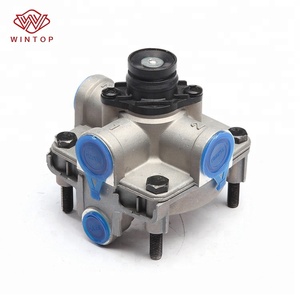
Global transport distributors are avoiding hyper-fragmented purchasing. Modern procurement strategies mandate partnering with manufacturers capable of shipping cross-referenced air valves, leveling units, brake chambers, and slack adjusters in consolidated container configurations with integrated trade documentation.
Combining metallurgical precision, scalable automated assembly, and multi-lingual global trade execution.
All worm shafts and helical gears are machined via multi-axis CNC turn-milling centers, followed by vacuum carburizing to ensure a case depth of 0.8–1.2 mm. Each production batch undergoes magnetic particle inspection to eliminate micro-cracks before spline cutting.
Our adjusters undergo continuous lifecycle testing matching ECE R13 standards: 200,000 continuous full-stroke brake applications under simulated 10-bar pneumatic load, confirming torque absorption capabilities up to 3,500 Nm without internal slippage.
Our engineering database indexes hundreds of original equipment numbers, allowing exact cross-matching to BPW, SAF-HOLLAND, Meritor, Haldex, Bendix, Scania, Volvo, and MAN specifications. No ambiguity, zero installation delays.
Submit your OE part number, spline dimensions, or custom fleet requirements to our technical application engineers.
Essential guidance on interchangeability, setup protocols, CE certifications, and cross-reference validation.