Choosing the right Truck Foot Brake Valves starts with understanding the truck’s air-brake system. The valve must suit the vehicle’s configuration, specified operating pressure, mounting position, and air-line connections. A replacement may look almost identical yet have different ports or a different pedal response. Small mismatch. It can mean extra fitting work or an unsuitable repair.
Before comparing products, check the truck’s make, model, year, and existing valve part number. Review the manufacturer’s service information for connection details and approved specifications. Then inspect the current valve and nearby lines for wear, damaged threads, leaks, or signs of a poor fit. A photo of the label and ports can help when confirming compatibility with a parts supplier. Still, photos do not replace the service manual.
Consider build quality, supplier documentation, warranty terms, and access to technical support. Ask whether the valve is designed for the exact application, rather than relying on a broad “fits most trucks” claim. After installation, a qualified technician should verify connections, perform the required leak checks, and confirm proper brake operation under the manufacturer’s procedure. Brake components are not a good place for guesswork. Even a careful buyer can miss a detail, so pause and verify the part number before ordering. The right choice is the one that matches the documented system—not simply the cheapest or most familiar-looking option.
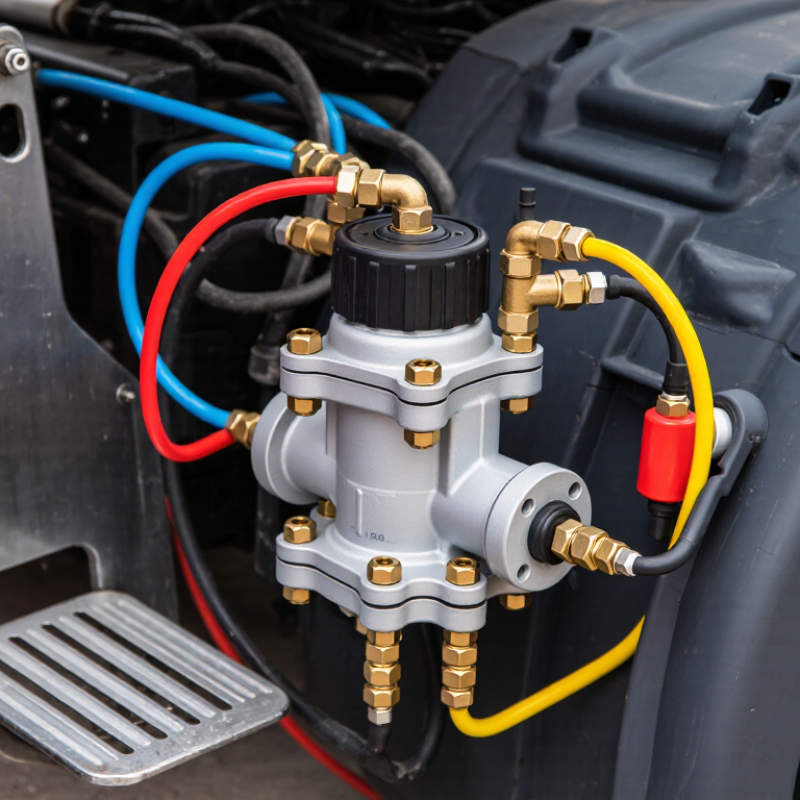
A truck foot brake valve, often called a treadle valve, meters compressed air when the driver presses the pedal. More pedal travel generally requests more braking pressure. Common configurations include single-circuit valves and dual-circuit valves, which control separate primary and secondary brake circuits. Some assemblies integrate the valve beneath the pedal; others connect a pedal mechanism to a remotely mounted valve. The right type depends on the truck’s air-brake layout, port arrangement, mounting space, and specified pressure range. Fit matters.
The Commercial Vehicle Safety Alliance’s 2023 Brake Safety Week report recorded 18,875 inspections; 2,375 vehicles, or 12.6%, were placed out of service for brake-related violations. This figure covers brake issues broadly, not foot-valve failures, but it underscores the value of reliable brake controls. A valve that responds unevenly can make pedal feel inconsistent.
Check the vehicle’s service information for circuit design, connections, and operating specifications, then inspect for air leaks and delayed response. One detail is easy to miss: a matching connector does not prove a valve has the correct delivery characteristics. If pedal response feels abnormal, have a qualified technician test the system rather than relying on appearance alone.
How to Choose the Right Truck Foot Brake Valve?
Identify Your Truck’s Brake System and Operating Requirements
Start with the system. Confirm whether the truck uses a full air-brake system, and identify its circuit layout and existing valve type. Check the vehicle’s service documentation, then compare the valve’s ports, mounting, pressure range, and delivery specifications with the original configuration. A valve that physically fits may still deliver the wrong response.
Consider how the truck works each day. Stop-and-go city routes, steep grades, heavy loads, and frequent trailer changes can place different demands on braking response and durability. The Commercial Vehicle Safety Alliance’s 2024 International Roadcheck report found that 23.2% of inspected commercial motor vehicles were placed out of service. That figure covers vehicle violations overall, not foot brake valves alone, but it underlines why correct parts and careful inspections matter. One easily missed detail is a mismatch between the valve and the truck’s dual-circuit design.
Tips: Record the vehicle’s make, model, year, brake-system details, and current valve markings before ordering. Ask a qualified technician to verify compatibility and test braking operation after installation. Don’t guess from appearance alone.
A truck foot brake valve must match the vehicle’s brake system, not just fit the pedal bracket. Check the service manual for the correct valve type, operating pressure range, and circuit arrangement. A valve intended for a different air-brake layout may connect physically but deliver air incorrectly. That can affect braking response.
Compare every port before ordering: supply, delivery, and exhaust positions, along with thread size and orientation. Check mounting-hole spacing and the pedal linkage’s travel, too. On some trucks, a small difference in pushrod length changes how the valve responds underfoot. Look at the vehicle’s year, configuration, and existing part specifications; model name alone may not be enough. Small details matter.
A practical check is to photograph the old valve and label each line before removal, then compare those details with the replacement drawing. Confirm the specified pressure and connection layout with a qualified technician if records are incomplete. Don’t assume a close-looking valve is interchangeable. That shortcut is tempting. It can also hide a mismatch until installation or testing. Even careful measurements may miss an internal design difference, so verify compatibility against the vehicle documentation and follow the prescribed inspection procedure after fitting.
A truck foot brake valve should deliver smooth, predictable braking, not merely meet a pressure rating. Compare how steadily each valve responds to gradual pedal input and how quickly it releases when the pedal lifts. In a safe workshop test, uneven response or a sticking pedal deserves attention. Feel matters. Match the valve’s operating range and port layout to the truck’s pneumatic brake system; an apparently similar part may not be compatible.
Durability depends on more than a strong housing. Look for suitable corrosion-resistant materials, well-sealed moving parts, and documented testing under vibration and repeated operating cycles. Ask how the valve performs in the truck’s real environment, including road dust, moisture, and temperature changes. Not always obvious. A polished specification sheet can miss service conditions, so compare maintenance guidance and replacement intervals too. Frequent air leaks or inconsistent pedal feel can point to wear, but diagnosis should confirm the cause.
Safety features deserve equal scrutiny. Check whether the design supports the vehicle’s required braking circuits and maintains controlled pressure delivery. Verify its specifications against the truck manufacturer’s service information, then have a qualified technician inspect installation and air connections. A more durable valve is not automatically the safer choice if its response feels abrupt or its fit is wrong. The trade-off deserves a second look.
| Comparison Factor | Conventional Dual-Circuit Pneumatic Valve | Dual-Circuit Valve with Integrated Sensors | EBS-Compatible Electronic-Pneumatic Control |
|---|---|---|---|
| How it controls braking | Uses pedal movement to meter pneumatic control pressure to separate brake circuits. | Meters pneumatic pressure and provides sensor signals for pedal position or pressure, depending on design. | Uses electronic pedal signals to request braking; pneumatic control or backup functions depend on the vehicle system design. |
| Pedal feel and modulation | Direct pneumatic operation provides a progressive relationship between pedal travel and control pressure when correctly matched to the vehicle. | Provides pneumatic modulation while sensor feedback can support electronic monitoring or control functions. | Pedal response is coordinated with the vehicle’s electronic braking system; feel and response depend on system calibration. |
| Circuit separation | Typically has separate delivery circuits to help retain braking capability if one circuit develops a fault. Verify the valve and vehicle circuit layout. | Retains the valve’s pneumatic circuit arrangement; sensors add signals but do not replace pneumatic circuit separation. | May combine electronic control with pneumatic circuits or backup provisions. Confirm the specific vehicle’s fault-response design. |
| Response consistency | Depends on valve condition, air-system pressure, plumbing, and correct installation. | Can provide additional data for system monitoring; performance still depends on pneumatic condition and sensor integrity. | Can coordinate braking requests with other electronic braking functions; correct configuration and calibration are essential. |
| Durability considerations | Inspect for air leaks, contamination, corrosion, sticking, and wear at the pedal linkage and valve connections. | Requires the same pneumatic checks, plus inspection of wiring, connectors, and sensor mounting. | Requires pneumatic checks and inspection of wiring, connectors, electronic components, and system fault indicators. |
| Environmental suitability | Choose a unit specified for the vehicle’s operating temperature, vibration, moisture, and contamination exposure. | Check environmental ratings for both the valve and its sensors and connectors. | Check the specified environmental ratings for the electronic module, connectors, and pneumatic components. |
| Maintenance and diagnosis | Primarily diagnosed through air-system checks, leak tests, and inspection of pedal operation and delivered pressure. | Supports pneumatic diagnosis and may allow sensor-signal checks using vehicle service procedures. | Usually requires compatible diagnostic procedures for electronic faults in addition to pneumatic inspection. |
| Installation compatibility | Match port layout, mounting, pedal linkage, circuit arrangement, and specified operating requirements to the vehicle. | Confirm pneumatic compatibility as well as sensor type, connector, signal, and vehicle-system requirements. | Must be compatible with the vehicle’s electronic braking architecture, software configuration, connections, and pneumatic system. |
| Best suited to | Vehicles designed for conventional pneumatic foot-brake control where a compatible replacement is required. | Vehicles that use pneumatic control and require pedal or pressure signals for monitoring or related functions. | Vehicles designed for electronically coordinated braking and the corresponding electronic-pneumatic components. |
| Safety checks before purchase | Verify the specified application, circuit function, and applicable vehicle requirements; do not select by appearance alone. | Verify the application, circuit function, sensor specifications, and compatibility with the vehicle’s control system. | Verify exact system compatibility, required configuration, and the vehicle manufacturer’s service and approval requirements. |
How to Choose the Right Truck Foot Brake Valve?
Verify the valve’s certification and technical documents before comparing prices. Check that the markings, test records, and stated operating range match your truck’s brake system and local requirements. A certificate alone does not prove correct fit. Paperwork matters. Confirm the part number and connection details against the vehicle’s service information, not just a sales description. If documents are missing or unclear, ask for written clarification.
Maintenance needs affect long-term reliability. Review the recommended inspection interval and whether seals or other service parts are available. During routine checks, look for air leaks around fittings, damaged lines, corrosion, or a change in pedal response. Small leaks can be easy to miss in a noisy workshop. A maintenance schedule helps, though real operating conditions may call for more frequent checks. That is worth reconsidering after severe weather or heavy use.
Installation support should include a clear diagram, connection guidance, and access to knowledgeable technical help. Before fitting, confirm the valve’s orientation and port labels; similar-looking connections can serve different functions. Use a qualified technician and follow the truck’s service procedure for installation and testing. Afterward, check for leaks and verify operation using the specified test method. If instructions leave room for guesswork, pause and request better guidance.
It meters compressed air when the driver presses the pedal. More pedal travel generally requests more braking pressure.
Single-circuit valves control one brake circuit. Dual-circuit valves control separate primary and secondary circuits. Fit matters.
Check the service manual for circuit design, pressure range, and valve type. Compare port positions, thread sizes, and mounting-hole spacing.
No. A matching connector does not confirm correct pressure delivery or internal design. I would not trust appearance alone.
Photograph the valve and label each air line. Note the pushrod length, port orientation, and mounting-hole spacing.
Uneven response, air leaks, or delayed release may signal a problem. A qualified technician should test the system and confirm the cause.
Check corrosion resistance, sealed moving parts, and documented vibration testing. Road dust, moisture, and temperature changes matter too.
A 2023 inspection report recorded 18,875 checks and 2,375 vehicles taken out of service for brake-related violations. The figure covers brake issues broadly, not foot-valve failures.
Verify its specifications against vehicle service information. Have a qualified technician inspect the connections and test the system using the prescribed procedure.
Choosing the right Truck Foot Brake Valves starts with understanding how the valve controls braking pressure and which valve type suits your vehicle’s braking system. Identify the truck’s configuration, typical loads, driving conditions, and operating demands before comparing options. These details help narrow the choices and ensure the valve is appropriate for the way the truck is used.
Next, confirm that the valve’s connections, pressure range, and other specifications match the vehicle. Compare performance, durability, and safety features, and consider whether the product has suitable certifications and clear maintenance requirements. Installation guidance and dependable technical support can also make selection and servicing easier. By reviewing these factors together, you can choose a compatible, reliable valve that supports consistent braking and safe truck operation.