0%

The 2026 commercial vehicle market is demanding safer, lighter, and longer-lasting braking components. Commercial Vehicle Brake Discs remain critical in trucks, buses, trailers, and specialized fleet vehicles. Their performance affects stopping distance, heat control, maintenance costs, and driver confidence. A disc may look simple. Its engineering is not.

Industry data supports this growing attention. The International Organization of Motor Vehicle Manufacturers reported global vehicle production above 90 million units in 2023, creating a broad replacement and original-equipment market. Grand View Research’s Automotive Brake System Market report also identifies rising vehicle production, stricter safety expectations, and advanced braking technologies as major growth factors. Meanwhile, reports from Fortune Business Insights and MarketsandMarkets highlight increasing demand for lightweight materials, ventilated designs, corrosion resistance, and electronically supported braking systems. These trends matter even more for heavy vehicles carrying several tonnes.

This guide examines the 2026 top Commercial Vehicle Brake Discs manufacturers through practical criteria. These include casting consistency, metallurgical control, friction-surface accuracy, thermal performance, certifications, testing capacity, fleet support, and aftermarket reliability. Product claims require evidence. Factory scale alone is not enough. A large supplier may still provide uneven regional support. Smaller manufacturers may offer strong engineering but limited global coverage. That is where comparisons become difficult. Market rankings also vary because private companies disclose different levels of information. Therefore, this overview combines published industry reports, manufacturer documentation, technical experience, and realistic purchasing considerations. It is not a perfect ranking. It is a useful starting point for buyers seeking dependable braking performance in demanding operating conditions.
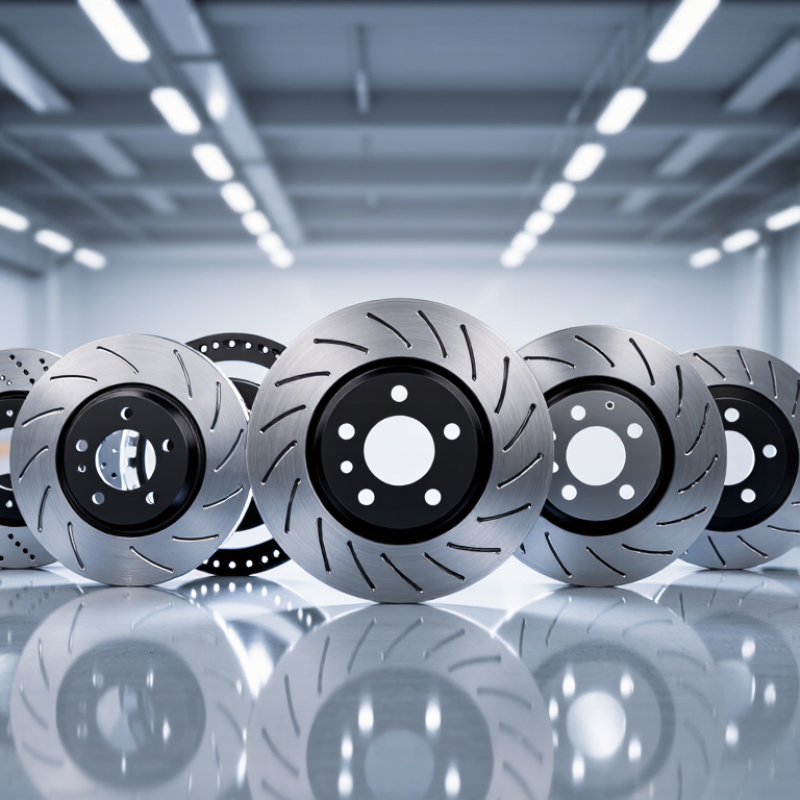
2026 Top Commercial Vehicle Brake Disc Manufacturers?

What Defines a Top Commercial Vehicle Brake Disc Manufacturer in 2026

2026 Top Commercial Vehicle Brake Disc Manufacturers?

What Defines a Top Commercial Vehicle Brake Disc Manufacturer in 2026

A top manufacturer proves performance beyond a polished catalogue. It controls metallurgy, machining, coating, and final inspection. Material consistency matters because uneven cooling can create cracks, vibration, or uneven pad contact.

The World Health Organization reported 1.19 million road deaths annually in its Global Status Report on Road Safety 2023. That figure gives brake reliability serious context.

A strong supplier therefore documents test results, batch numbers, and failure investigations.

Thermal testing should reflect real vehicles, not only laboratory averages. Repeated downhill braking, heavy axle loads, corrosion exposure, and emergency stops reveal weaknesses quickly. Compliance with UNECE Regulation No. 90 and applicable national requirements supports credibility.

However, compliance alone is not excellence. I would also examine dimensional tolerances, ventilation design, surface hardness, and production traceability. No supplier gets every variable right. Even experienced teams can underestimate fleet-specific heat cycles. That is where independent testing becomes valuable.

Tips:

Ask for dynamometer data, salt-spray results, and maximum operating temperatures. Check whether reports identify test loads and disc dimensions. Compare warranty claims by vehicle application, not only by annual volume. Visit the factory if possible. A clean laboratory cannot hide poor process control forever. Also review technical support response times, because a failed disc rarely waits for convenient office hours.

Key Technologies Used in Commercial Vehicle Brake Disc Production

2026 Top Commercial Vehicle Brake Disc Manufacturers?

Key Technologies Used in Commercial Vehicle Brake Disc Production

Commercial vehicle brake discs face heavy loads, repeated heat cycles, and dusty operating conditions. Manufacturers now use carefully controlled metallurgy to balance strength, thermal stability, and wear resistance. High-carbon cast iron remains common because it manages heat effectively. Alloy adjustments can improve crack resistance and reduce distortion.

Digital engineering supports the production stage. Engineers use CAD and finite element analysis to model stress around vents, hubs, and mounting holes. Thermal simulation helps identify hot spots before physical testing begins. Prototype discs then undergo dynamometer testing, where repeated braking cycles reveal vibration, noise, and fatigue behavior. Real-world road testing still matters. Laboratory results cannot copy every mountain route or overloaded delivery schedule.

Precision machining is equally important. CNC turning controls disc thickness variation and runout within tight limits. Automated vision systems inspect drilled holes, surfaces, and casting defects. Some factories apply protective coatings to exposed surfaces, especially around non-friction areas. These coatings can slow corrosion during storage and winter operation. Traceability systems record furnace batches, machining data, and inspection results. That evidence strengthens quality control.

No process is flawless. Tiny casting differences may still appear. Experienced teams review failures instead of hiding them, then adjust materials, tooling, or cooling methods. This practical feedback often improves reliability more than another attractive laboratory claim. Strict process discipline remains essential for every production batch.

2026 Top Commercial Vehicle Brake Disc Manufacturers? - Key Technologies Used in Commercial Vehicle Brake Disc Production

Production Dimension Key Technology Used Typical Technical Data Quality or Performance Objective Commercial Vehicle Relevance
Disc Material High-strength gray cast iron selected for thermal conductivity, damping and wear resistance EN-GJL-200 to EN-GJL-250 grades are commonly specified for cast-iron components, with nominal minimum tensile strengths of 200–250 MPa according to the grade designation Balance braking durability, vibration control and resistance to thermal cracking Suitable for heavy axle loads and repeated braking cycles in trucks, buses and trailers
Metallurgical Control Controlled carbon equivalent, inoculation and graphite-flake structure Typical gray-iron brake-disc chemistry uses approximately 2.8%–3.6% carbon and 1.8%–2.5% silicon; the exact window depends on the casting design and grade Reduce porosity, distortion and localized hot spots while maintaining consistent friction behavior Improves batch-to-batch consistency for high-volume replacement and original-equipment production
Casting Process Automated green-sand or resin-sand casting with controlled mold filling Process control commonly monitors mold moisture, permeability, pouring temperature and filling time; actual settings are design-specific Maintain dimensional repeatability and minimize shrinkage cavities, sand inclusions and misruns Supports complex vented-disc geometries and large production volumes
Casting Temperature Induction melting with spectrometric chemistry verification and controlled pouring Gray cast iron is generally poured at approximately 1,350–1,500°C, depending on alloy composition, section thickness and mold system Promote complete mold filling without excessive oxidation or undesirable microstructure Important for thick commercial-vehicle discs that require uniform mechanical and thermal properties
Ventilation Design Finite-element-assisted design of internal vanes, ventilation channels and friction rings Common designs include solid, internally vented and directional-vane discs; vane geometry is matched to airflow, rotational direction and available packaging space Increase heat dissipation and reduce temperature gradients across the friction ring Helps manage brake fade during long downhill operation and repeated stop-start service
Finite Element Analysis Thermal, structural and thermo-mechanical simulation before tooling release Models evaluate stress, deformation, modal behavior and heat flow under defined braking loads and boundary conditions Identify high-stress regions around mounting holes, vanes and the disc-to-hat transition Reduces prototype iterations and supports weight optimization without compromising safety margins
CNC Machining Multi-axis turning, milling and drilling with in-process measurement Typical finished-disc controls include friction-face thickness variation below 0.015 mm and lateral runout commonly controlled below 0.05 mm; vehicle-specific limits may be tighter Prevent pedal pulsation, uneven pad contact and abnormal wear Critical for large-diameter discs operating with high clamp forces and heavy wheel-end assemblies
Surface Finish Precision turning followed by controlled surface finishing and edge treatment Typical friction-surface roughness is approximately Ra 1.5–3.0 μm after machining, subject to the applicable design specification Support controlled bedding-in between the disc and friction lining Promotes stable braking response and reduces noise during initial service
Dynamic Balancing Computer-controlled balancing of the complete rotating disc assembly Residual unbalance is commonly specified in accordance with ISO 21940 principles; the allowable value depends on disc mass, speed and vehicle application Reduce vibration, steering-wheel shake and bearing loading Especially important for high-speed coaches and long-haul vehicles
Dimensional Inspection Coordinate-measuring machines, laser gauges and automated optical inspection Inspection commonly covers disc diameter, thickness, mounting pitch circle, center bore, bolt-hole position, runout and parallelism Verify interchangeability and compliance with drawing tolerances Protects against installation problems in mixed commercial-vehicle fleets
Non-Destructive Testing Magnetic-particle inspection, dye penetrant testing and visual examination Testing is focused on friction rings, mounting areas, ventilation windows and other stress-concentration zones Detect surface cracks, laps and casting-related discontinuities before shipment Reduces the risk of early failure under severe thermal and mechanical loads
Thermal Fatigue Testing Repeated dynamometer braking cycles with controlled cooling intervals Test programs typically record disc temperature, brake torque, speed, pressure, wear and crack development; cycle count and temperature limits are application-specific Evaluate resistance to heat checking, distortion, cracking and friction instability Replicates demanding routes such as mountainous, urban and high-payload operation
Brake Dynamometer Validation Inertia dynamometer testing using representative axle load, speed and brake pressure Measurements commonly include torque output, stopping energy, fade, recovery, wear and temperature response Confirm braking performance before vehicle-level testing Provides repeatable comparison of disc designs across different commercial applications
Corrosion Protection Water-based or solvent-based protective coatings applied to non-friction surfaces Common methods include inorganic coatings, zinc-aluminum systems and painted hats; friction faces are normally left machinable or protected for removal before use Limit rust formation during storage, transport and early vehicle service Useful for fleets operating in coastal regions, winter-salt environments or high humidity
Traceability Digital batch control linking raw material, melt, mold, machining and inspection records Typical records include heat number, casting date, machine identification, operator or system ID and final inspection results Enable root-cause analysis, controlled containment and consistent quality audits Supports fleet maintenance programs and regulatory documentation requirements
Environmental Efficiency Electric induction melting, sand reclamation, machining-fluid recovery and scrap recycling Cast-iron production can recycle internal machining chips and rejected castings back into the melt when chemistry and contamination are controlled Reduce material waste, energy consumption and manufacturing emissions Improves lifecycle sustainability without changing the basic cast-iron disc architecture
Compliance Framework Quality systems and vehicle-braking validation aligned with recognized automotive requirements Common references include IATF 16949 for automotive quality management, ISO 9001 for quality systems, and applicable UNECE or national vehicle-braking regulations Standardize process control, product validation and corrective-action procedures Supports approval and supply qualification for commercial-vehicle programs in multiple markets
Note: The figures shown are representative engineering ranges or commonly used production controls for commercial-vehicle cast-iron brake discs. Final material grades, tolerances, test conditions and regulatory requirements must be confirmed against the applicable vehicle, axle, disc drawing and market standard.

Leading Commercial Vehicle Brake Disc Manufacturers for 2026

Leading commercial vehicle brake disc manufacturers for 2026 are defined by measurable performance, not marketing claims. Fleet buyers should examine casting consistency, metallurgy, heat-treatment control, and machining accuracy. A dependable disc should resist thermal cracking during repeated downhill braking. It should also maintain stable dimensions after severe heating and cooling cycles. In workshop testing, technicians can compare runout, thickness variation, hardness, and surface finish. Useful evidence includes batch traceability, independent testing, and clear production tolerances. Certification matters, but it does not replace real fleet data.

Strong manufacturers also design around actual commercial vehicles. Load ratings, axle layouts, electronic braking systems, and regional road conditions affect disc selection. Some suppliers use fatigue testing, dynamometer trials, and corrosion exposure before release. Others provide installation guidance, inspection limits, and technical support for maintenance teams. Details matter. A disc that fits the hub may still perform poorly under a fully loaded trailer. In 2026, credible producers should publish test methods and explain limitations instead of promising universal durability. No factory gets every decision right. Material choices can improve heat resistance while increasing cost or machining difficulty. Buyers should question unusually long service claims and request evidence from comparable fleets. Consistent quality, responsive warranty handling, and transparent corrective actions reveal more than a polished catalogue.

How to Compare Commercial Vehicle Brake Disc Manufacturers

When comparing commercial vehicle brake disc manufacturers in 2026, examine engineering evidence rather than catalogue claims. Check the disc material, casting consistency, ventilation design, and machining accuracy. Ask for measured thickness variation and lateral runout, not only stated tolerances. A reliable manufacturer should explain its testing process clearly.

Request samples from the same production batch. Inspect the hub face, cooling channels, and surface finish under practical workshop conditions. Then review results from thermal cycling, corrosion exposure, and repeated braking tests. Fleet experience matters too. Ask whether the discs have performed on loaded trucks, buses, or delivery vehicles with frequent stops. Service records can reveal patterns that laboratory tests miss.

Traceability is another useful comparison point. Each batch should connect to inspection records, raw material data, and production dates. Examine warranty handling, technical response times, and replacement procedures. These details show operational reliability. A low price may hide inconsistent machining or short service life. Still, a premium specification does not guarantee perfect field performance. Testing should remain independent where possible. A polished catalogue can mislead. Compare measurable results, not impressive language. Allow room for doubt, because real roads, uneven loads, and rushed maintenance can change brake disc performance.

Industry Trends Shaping Commercial Vehicle Brake Disc Manufacturing in 2026

Commercial vehicle brake disc manufacturing in 2026 is moving toward lower emissions, tighter traceability, and longer service life. Manufacturers are refining gray cast iron formulas to reduce cracking under repeated heavy braking. Some facilities now use recycled metal feedstock, but quality consistency remains difficult. Material control matters.

Automation is also changing production floors. Laser scanning checks disc thickness, runout, and ventilation geometry within seconds. Digital records connect each disc to its melt batch, machining line, and inspection results. Dynamometer testing still exposes weaknesses that software can miss, especially heat checking after repeated downhill braking. Practical testing remains essential.

Demand is growing for lighter discs that preserve thermal capacity. Engineers are studying optimized ventilation channels, corrosion-resistant coatings, and sensor-ready designs for fleet maintenance systems. Regional production is gaining attention as transport costs and supply disruptions affect purchasing decisions. Yet automation does not solve every problem. Smaller plants may lack advanced testing equipment, while large facilities can struggle with complex data management. Reliable manufacturers will need skilled metallurgists, disciplined process control, and honest reporting when a design fails to meet expectations. Some assumptions will need revision.

FAQS

Why is high-carbon cast iron widely used for commercial vehicle brake discs?

It handles repeated heat cycles and heavy loads effectively. It also offers useful wear resistance. No material is perfect.

How do engineers check a brake disc design before production?

They use CAD and finite element analysis to study stress around vents, hubs, and mounting holes. Thermal simulations help locate hot spots before physical testing.

What does dynamometer testing reveal?

It repeats braking cycles under controlled conditions. The tests can expose vibration, noise, fatigue, and heat checking. Laboratory results still have limits.

Why is road testing still necessary?

Mountain routes, dusty roads, and overloaded delivery schedules create changing conditions. A laboratory cannot copy every route. Real roads may reveal different weaknesses.

How does precision machining improve brake disc quality?

CNC turning controls thickness variation and runout. Accurate surfaces help reduce vibration during braking. Small errors still require review.

What technologies inspect brake discs automatically?

Laser scanning measures thickness, runout, and ventilation geometry within seconds. Vision systems can identify drilled-hole problems and casting defects.

How do protective coatings help brake discs?

Coatings protect exposed non-friction areas from corrosion. They are useful during storage and winter operation. They do not replace process control.

Why is traceability important in brake disc manufacturing?

Digital records connect each disc with its melt batch, machining data, and inspection results. This helps teams investigate failures instead of hiding them.

What challenges are shaping brake disc production in 2026?

Manufacturers are pursuing lower emissions, longer service life, lighter designs, and stronger traceability. Recycled metal can reduce waste, but consistency remains difficult. Some assumptions need revision.

Can automation solve every manufacturing problem?

No. Smaller plants may lack advanced testing equipment. Larger facilities may struggle with complex data management. Skilled people still matter.

Conclusion

In 2026, a top commercial vehicle brake disc manufacturer is defined by consistent quality, reliable safety performance, advanced engineering, and the ability to meet demanding fleet requirements. Leading producers focus on precise casting and machining, strict material control, thermal stability, corrosion resistance, noise reduction, and comprehensive testing under varied loads and operating conditions. Modern production also incorporates automated inspection, digital process monitoring, simulation technologies, and data-driven quality management to improve accuracy and product consistency.

When comparing manufacturers, buyers should evaluate braking performance, service life, dimensional consistency, certification, delivery capability, technical support, and total operating cost rather than price alone. Industry trends are moving toward lighter yet stronger materials, improved heat dissipation, lower environmental impact, recyclable production methods, and smarter manufacturing systems. Manufacturers that combine innovation, dependable supply, sustainability, and responsive customer service will be best positioned to provide high-quality Commercial Vehicle Brake Discs for buses, trucks, trailers, and other heavy-duty applications in 2026.

Nathaniel

Nathaniel

Nathaniel is a highly experienced marketing professional who combines strategic insight, industry knowledge, and a strong understanding of customer needs. As a key contributor to our company’s content and communications team, he regularly updates the corporate website with informative blog articles......